Press
Scotland's assisted dying bill has failed- what happens now?
Images
1 / 10

2 / 10
3 / 10
4 / 10
5 / 10
6 / 10
7 / 10
8 / 10
9 / 10
10 / 10
The Scottish Parliament has voted against legislation that would have given terminally ill people in Scotland the right to choose an assisted death - but what happens now?

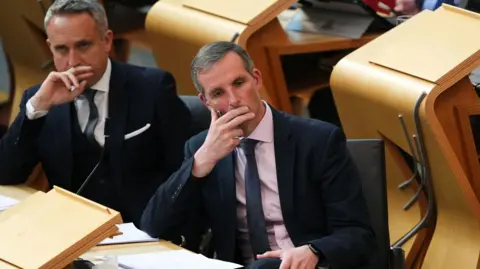
The Assisted Dying for Terminally Ill Adults (Scotland) Bill fell with 69 MSPs voting against and 57 voting for. To pass, it needed the backing of 64 MSPs.

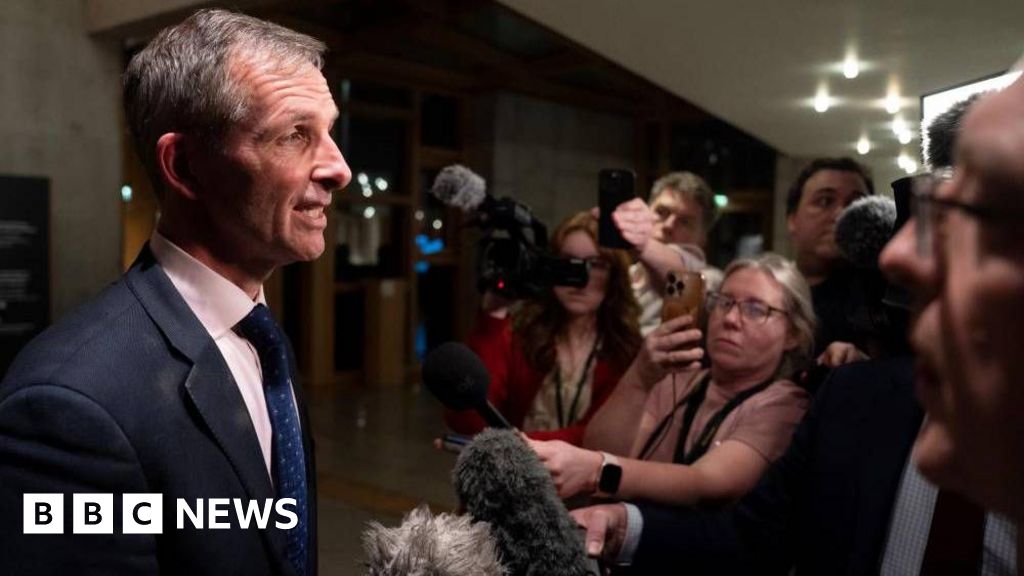
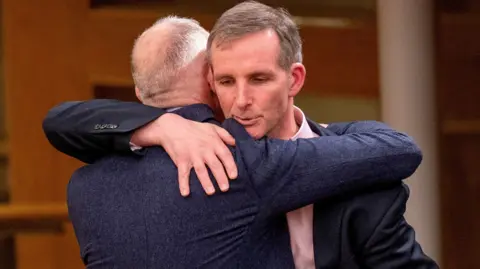
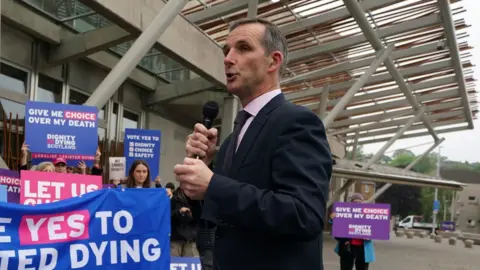
The politician who tabled the bill, Liberal Democrat Liam McArthur, said he was "devasted" following the vote but added that the conversation "isn't going away".

So after hours of emotional debate in the Holyrood chamber, is this the end of the assisted dying discussion in Scotland?

It was a hugely emotional night in parliament, with many MSPs speaking in the chamber for the last time.

Some will return after the election on 7 May while others have already indicated their intention to stand down.

The assisted dying bill was intensely scrutinised and underwent 175 Stage three amendments.

But any future attempt to resurrect the issue would have to start afresh with a new bill in a new parliamentary session.

It had been championed by the Liberal Democrat MSP but if he wanted to bring it forward again he would first need to be re-elected on 7 May.

McArthur has been an MSP since 2007 and also serves as one of Holyrood's deputy presiding officers.

It was after his re-election in 2021 that he took on the cause.

The bill's rejection does not close the debate as the issue could be taken up in the new term by McArthur or another MSP.

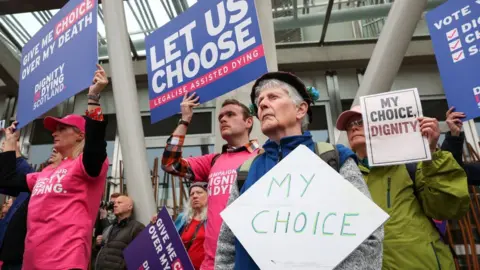
Holyrood has voted on assisted dying several times over the past two decades, and political pressure is unlikely to subside.

But whether anyone has the appetite to try again and how long that might take remains to be seen.

This latest bill is the third that the Scottish Parliament has considered relating to medically assisted deaths in the past 16 years.

The cause was first introduced to Holyrood in 2010 by independent MSP Margo MacDonald.

But parliament rejected her End of Life Assistance Bill by 85 votes to 16.

Macdonald, who had Parkinson's disease, died in 2014.

Her second attempt at legislation, the Assisted Suicide Bill, was taken up by Patrick Harvie of the Scottish Greens.

But it was rejected in 2015 by 82 votes to 36.

Last year, MSPs voted through general principles in the assisted dying bill by 70 votes to 56.

This attempt is the closest any assisted dying legislation has come to becoming law in Scotland.

The current bill to legalise assisted dying in England and Wales was passed by the Commons in June last year but has been stalled in the House of Lords for months and is now unlikely to pass.

Any Westminster move to legalise assisted dying would not alter Scots law, as health is devolved.

But it would almost certainly increase pressure on Holyrood to revisit the issue.

The Isle of Man became the first place in the British Isles to pass its assisted dying bill in March last year.

Jersey voted to pass its own bill last month. Neither have yet become law.

The bill needs to receive Royal Assent, or formal approval, in the UK before it takes effect.

Once approved, the first legal assisted deaths could happen as early as summer 2027.

Various forms of assisted dying are already legal in Australia, Canada and New Zealand.

While we wait to hear if the Scottish Parliament will revisit this issue, what is likely to happen in the meantime?

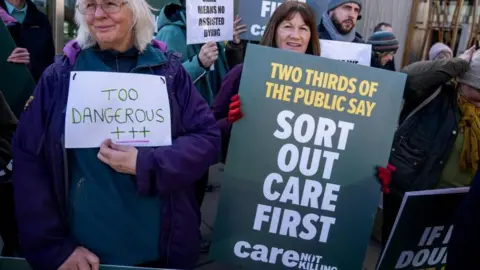
Many MSPs who opposed the bill stressed that Scotland needed to strengthen palliative care, social‑care provision and protections for vulnerable people before considering any change in the law.

As a result, improving palliative care is now expected to feature more prominently on Holyrood's agenda in the short term.

The Scottish Partnership for Palliative Care (SPPC) had also produced detailed briefings throughout the bill's progression, identifying service gaps and warning that inadequate palliative care could exert indirect pressure on patients.

During debates, MSPs repeatedly raised the risk that people might consider assisted dying because they lacked sufficient palliative or social‑care support, further reinforcing the need for system improvements.

McArthur said the debate "shone a light" on the crucial and often misunderstood palliative care sector.

He has repeatedly insisted that "it is not an either/or choice" between assisted dying and palliative care.

McArthur also expressed the hope that, whatever the outcome of the vote, there would continue to be a focus on the quality and availability of the best possible palliative care.

During the amendment phase of the debate, Tory MSP Brian Whittle highlighted the  importance of using this bill to promote more discussion on understanding peoples' wishes at the end of life.

And Scottish Labour MSP Paul Sweeney called for better social work and mental health service signposting for the terminally ill.

Toby Porter, chief executive of UK Hospice, said questions still need to be answered.

"Over 60,000 people die in Scotland each year and the number of people who need palliative care is rising rapidly," he said.

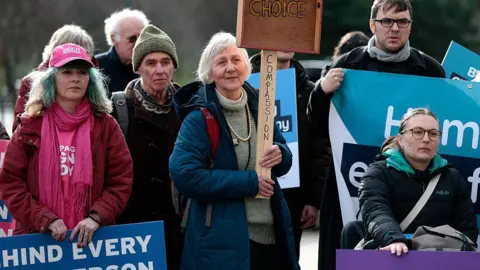
"Assisted dying may not be coming to Scotland, but investing in hospice and palliative care must happen regardless: it is critical to ensure choice, dignity and compassion at the end of life."

Health will be one of the key issues in the forthcoming election and, with assisted dying in the minds of MSPs, could the failed bill provide some momentum to improve end of life care?

A Scottish government spokesperson said it "remains committed" to ensuring that everyone who needed it could "access well co-ordinated, compassionate and high-quality palliative and end-of-life care."

Scotland would have become the first part of the UK to legalise the process had MSPs backed the proposals.

Delivering treatments to someone under the age of 18 is to be outlawed under the legislation.

The Scottish Parliament will soon decide whether to allow terminally-ill adults to end their lives.

The Orkney MSP's profile has been raised significantly by his battle to make assisted dying legal.

The final vote on the Assisted Dying for Terminally Ill Adults (Scotland) Bill is seen as too close to call.