Press
How Los Angeles’s Iranian diaspora is confronting the US war on Iran
Images
1 / 14
2 / 14
3 / 14
4 / 14

5 / 14

6 / 14

7 / 14

8 / 14

9 / 14

10 / 14

11 / 14

12 / 14

13 / 14

14 / 14
California is home to the largest Iranian diaspora community in the world. But opinions are mixed when it comes to support for the war against Iran.

Save

Share

Los Angeles, United States – It was another blue-sky day in southern California, but on the streets of Los Angeles, a stark divide was playing out.

On the city's Westside, protests had erupted to support the United States in its strikes against Iran. Flags of Iran's former monarchy fluttered in the breeze, as demonstrators called for regime change.

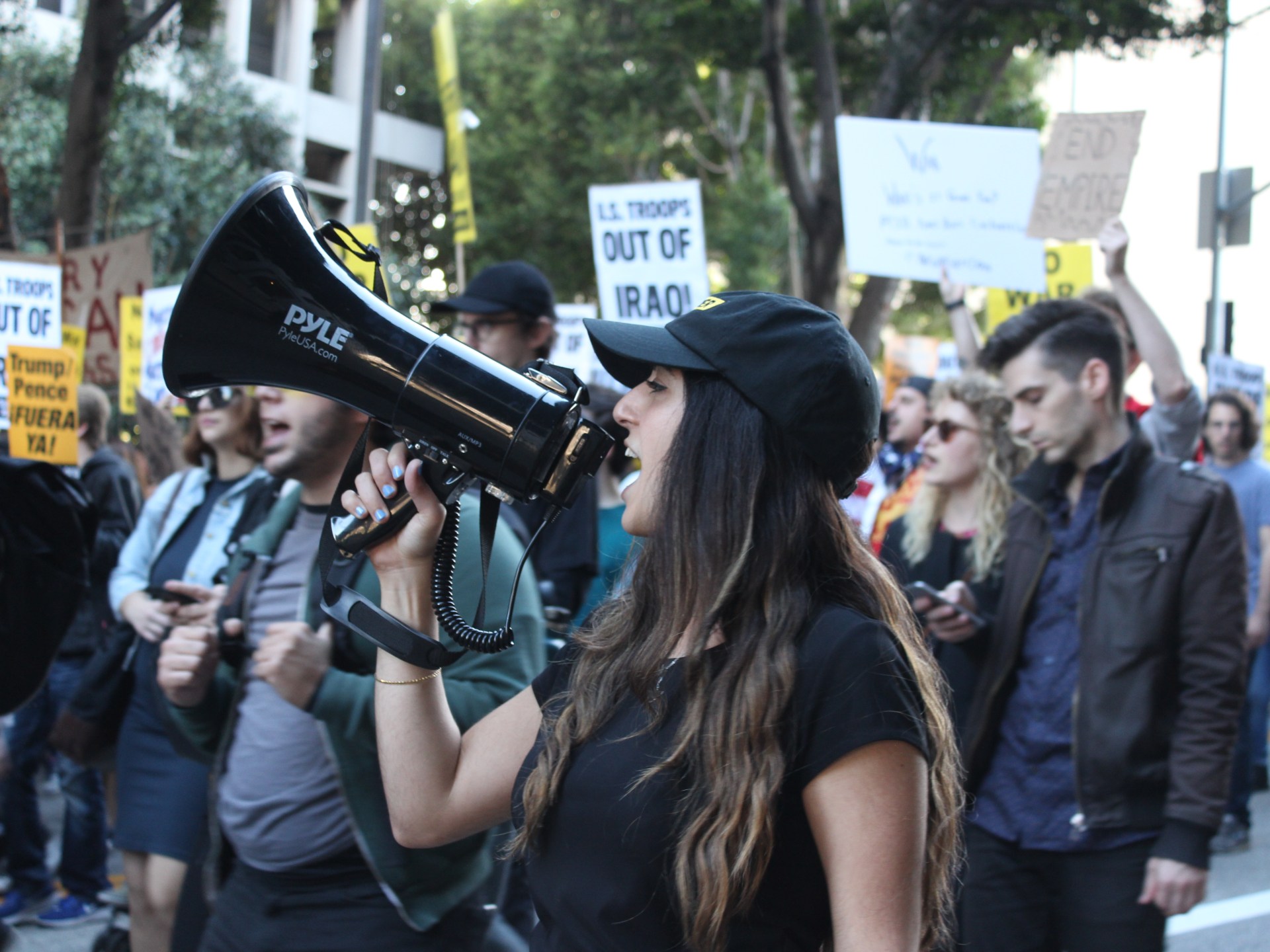
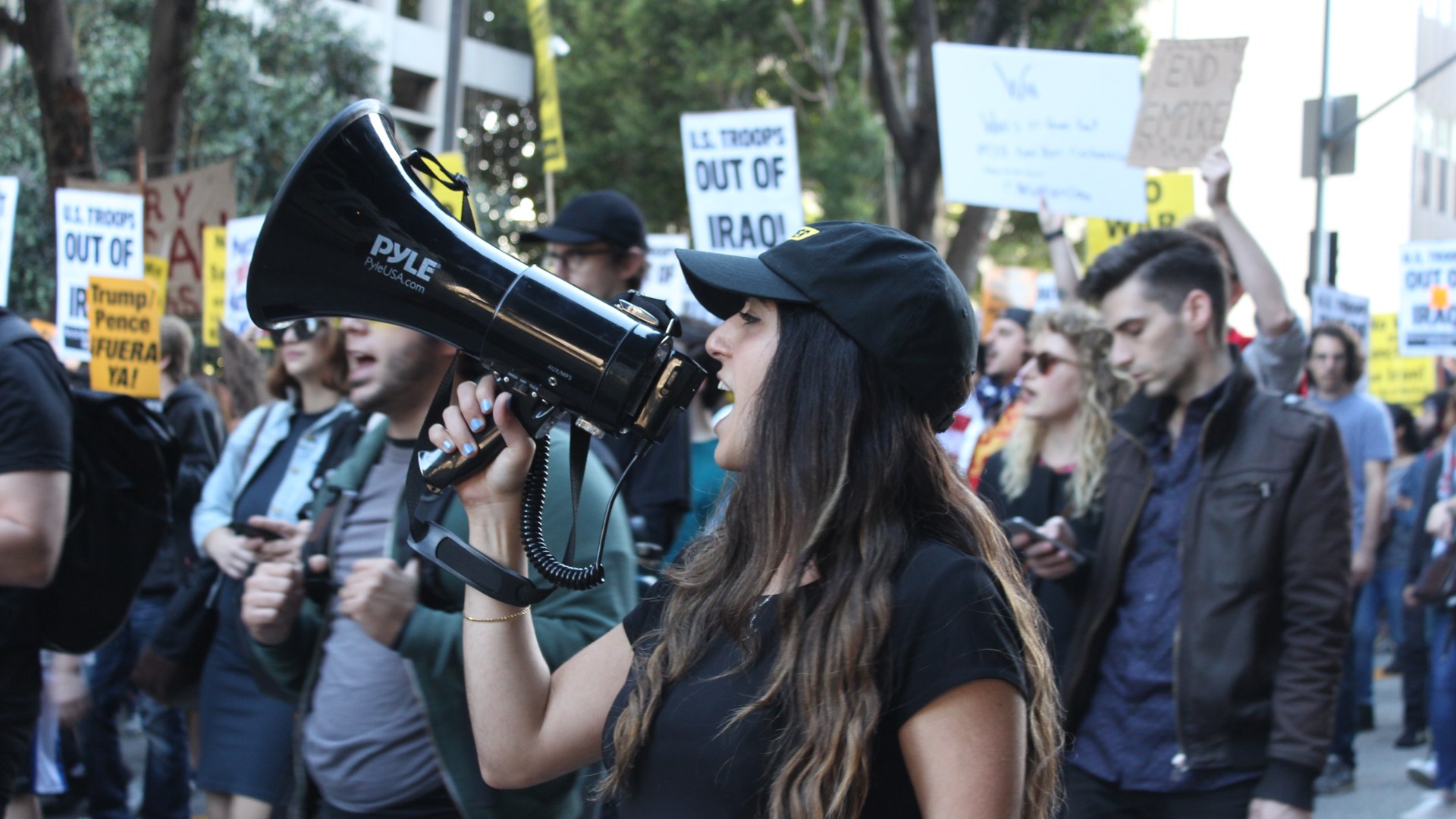
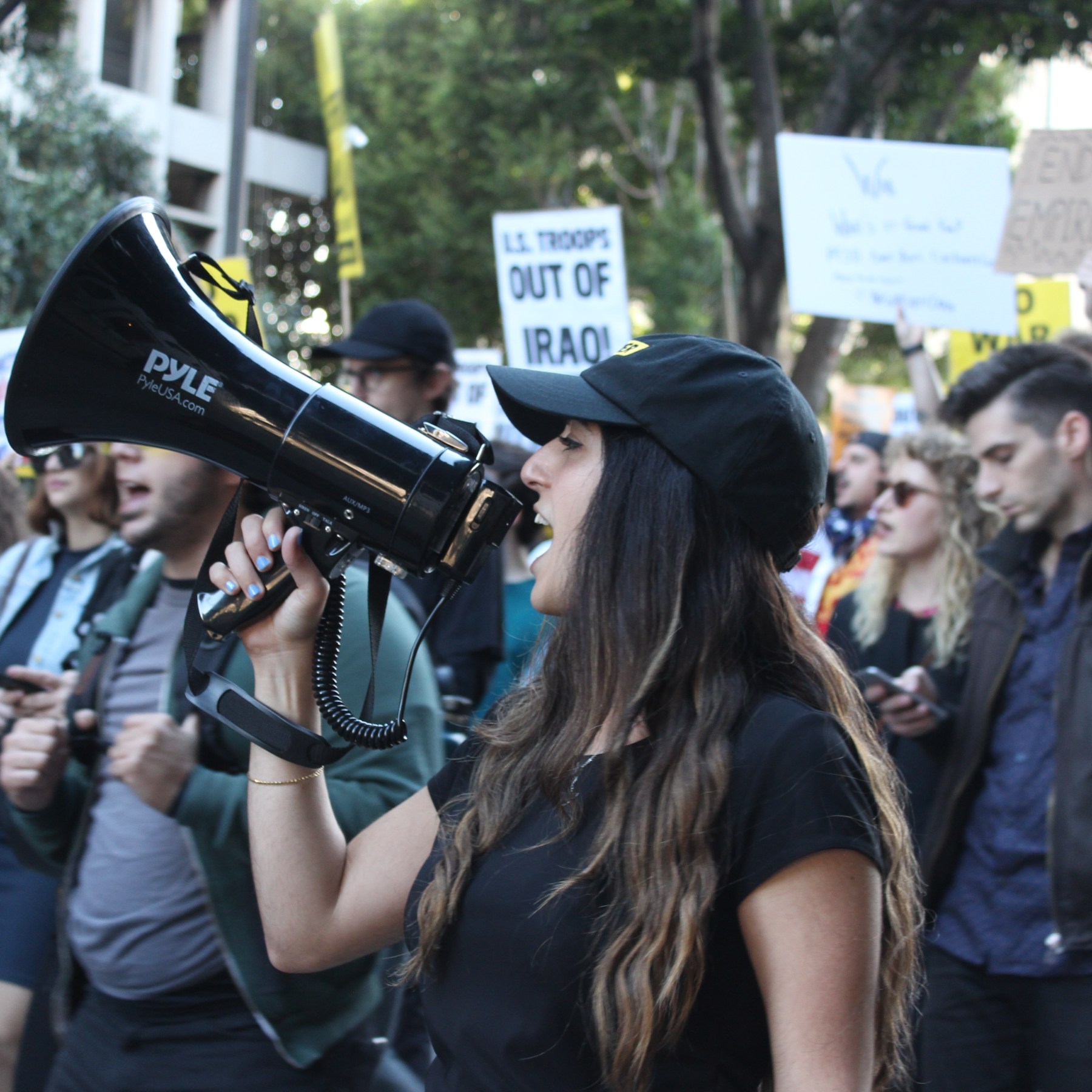
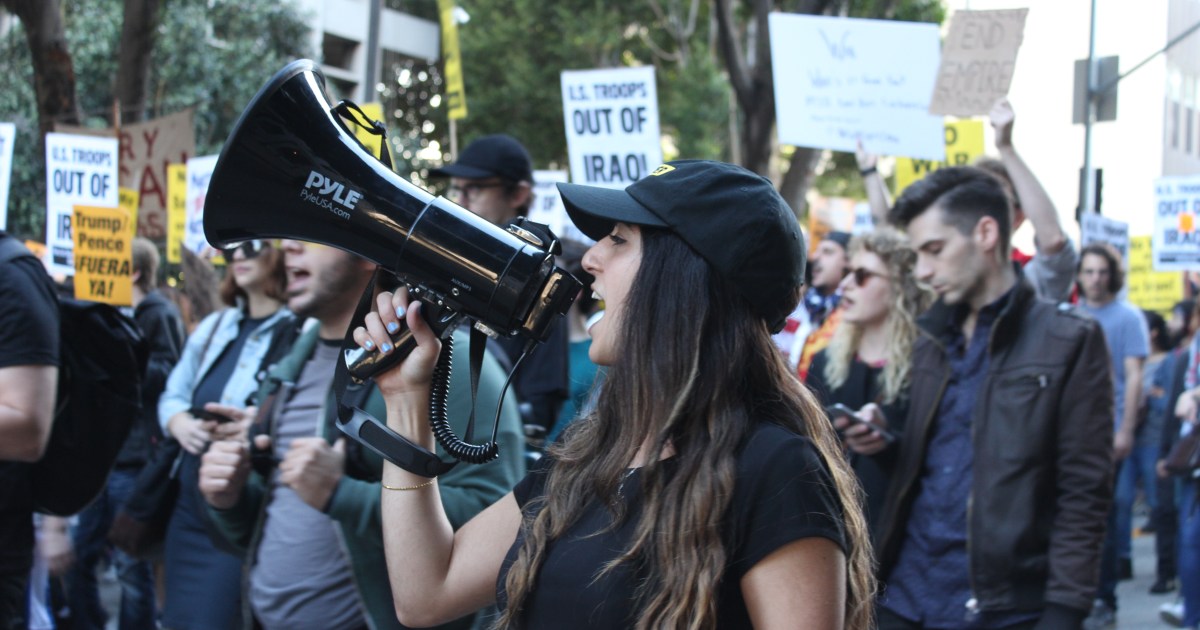
But only miles away, a different group had gathered outside Los Angeles City Hall to protest the war, chanting, “Hands off Iran."

They denounced President Donald Trump and warned that the US and Israel's military intervention could devastate the entire Middle East region.

The duelling protests last month were a symptom of the schism unfolding within Los Angeles's Iranian diaspora.

Sometimes referred to as "Tehrangeles", the city and its metropolitan area are home to the largest concentration of Iranians outside of Iran.

An estimated 375,000 people of Iranian origin live in California, the majority in Los Angeles County.

The Westside is seen as a community hub, with its central artery, Westwood Boulevard, lined with Iranian businesses, restaurants, and cultural establishments.

But while many families share stories of warfare and immigration, they differ greatly in how they perceive the ongoing war in Iran.

For some, the bombing campaign has sparked hope that the Iranian government might fall.

Others view the war as a disaster that will cause immense suffering to Iranians, who already struggle under government repression and US sanctions.

Across "Tehrangeles", however, one feeling seems nearly universal: anxiety.

“I want this regime gone. But there is no reality in that I trust Trump or Israel to have my country, my people’s best interest in mind,” said Sam Golzari, who for years has been attending the regime change protest with his parents.

“I’ve never felt this position. There is no equilibrium."

Now a 46-year-old multidisciplinary artist, Golzari was three years old when his parents fled Iran during the Iran-Iraq War in the 1980s.

That conflict was one of several moments of violence and upheaval that sparked waves of Iranian migration to Los Angeles.

Many families in the area, for instance, left Iran during the 1979 revolution, which resulted in the overthrow of the US-backed monarchy, led by the late Mohammad Reza Pahlavi.

Since then, Iran has been governed as an Islamic republic under the authority of a supreme leader.

Until recently, that leader was Ayatollah Ali Khamenei. But on February 28, the US and Israel launched a joint attack on Iran, triggering the war.

One of the initial strikes targeted Khamenei's compound, killing the 86-year-old, his daughter and other relatives.

Khamenei's death was one of the many moments that stirred mixed feelings in Golzari. He explained that some friends rallied at the local federal building to celebrate the Iranian leader's death.

“I just couldn’t, even though this man and this regime have symbolised so much pain and injustice," he explained.

"To have that figurehead taken out was a relief," Golzari added. "But I’ve never been a person who’s been relieved by someone dying."

Golzari's father, Majid Golzari, has been among those in Los Angeles closely following the US and Israel's bombing campaign. Residents fear for loved ones back home in Iran.

“Bombs never solved anything,” said Majid, who was born in the southeastern city of Kerman. “I don’t understand how people are happy about bombing others.”

Since the war began, an internet blackout in Iran has made it hard for the diaspora in Los Angeles to follow what is happening back home.

Some of the blackout is the result of the bombing campaign's toll on the telecommunications network. But much of it is government-imposed, to limit the flow of information both inside and outside Iran.

Reza Arzanian, an Iranian American living in Los Angeles, said he recently managed to make contact with his parents in Tehran — but they shared alarming news about munitions dropping nearby.

“I spoke with my mom very briefly, and she told me that it is really loud. It is really scary. Her voice is shaky, and her jaw couldn’t stop shaking because she is so scared,” said Arzanian.

“And my father, who is a guy who doesn’t show his emotions, told me he is scared and was trembling from the bombs.”

Arzanian explained that he is worried about their safety. So far, preliminary figures from Iran's Ministry of Health suggest that at least 1,444 citizens have been killed in the war.

Among them were the approximately 168 children whose elementary school in the southern city of Minab appears to have been struck by a US attack.

Such developments have troubled Iranian Americans like Arzanian, who was clear that he had little fondness for the Iranian government and its repressive policies.

“I’ve been part of the protest movement in Iran, and I’ve been beaten by the police in Iran because of my own differences with the government,” Arzanian said. “But when you get bombed, there is nothing good that comes out of it.”

The war has reignited a debate within the Iranian diaspora about what role the US should play in Iran's future.

This question is more than a distant geopolitical issue for Iranians in Los Angeles.

Many residents explained that their family histories had been shaped by US involvement in the region, whether it was through US support for Iran's fallen monarchy or through the US decision to back Iraq's invasion of Iran in 1980.

Aida Ashouri, a human rights lawyer who is running to be Los Angeles city attorney, was among those publicly condemning the latest US campaign in Iran at the city hall protest on February 28.

“This is a US imperialist war, and we have to make that clear," she said. "Call a spade a spade. This war is not to liberate the women of Iran or the people of Iran."

Ashouri was born during the Iran-Iraq war in the 1980s. Her hometown, Isfahan, was also bombed in June last year during the US and Israel's 12-day war with Iran.

For Ashouri, it was telling that the US and Israel once again launched the first strike in the current conflict. For many legal experts, that made the conflict an unprovoked war of aggression, in violation of international law.

“A war implies two sides are actively engaged, but Iran has done nothing to be involved," Ashouri said.

"This is a unilateral military invasion, an aggression of the United States and Israel. They are the ones with the power to end it by stopping the bombing."

She and other protesters drew parallels between the current Iran war and the US-led wars in Iraq and Afghanistan, launched in 2003 and 2001, respectively.

"I lived through the shadow of the war on terror, all the propaganda talking points," said Shany Ebadi, an Iranian American antiwar organiser with the ANSWER Coalition. "What the Trump administration is saying reminds me a lot of the Iraq war.”

As someone who follows the news closely, Ebadi remembers feeling alarm when the first strikes were launched in February.

“When I got the breaking news notification of the initial attack, my whole body felt paralysed. I felt anger and frustration,” she said.

She and Ashouri both said they fear the military operation in Iran could spark a regional war that might further destabilise not just Iran, but the entire Middle East.

“I fear that war will repeat the disasters seen in Palestine, Iraq, Libya, and Afghanistan,” Ashouri said, listing countries targeted in the US's "war on terror" over the past two and a half decades.

The question of whether bombs can pave the way to freedom in Iran is a simple one for Ashouri and her fellow antiwar activists. The answer, they say, is simply no.