Press
Young Venezuelans voice hope and frustration as post-Maduro future unfolds
Images
1 / 11

2 / 11
3 / 11
4 / 11
5 / 11
6 / 11
7 / 11
8 / 11
9 / 11
10 / 11
11 / 11
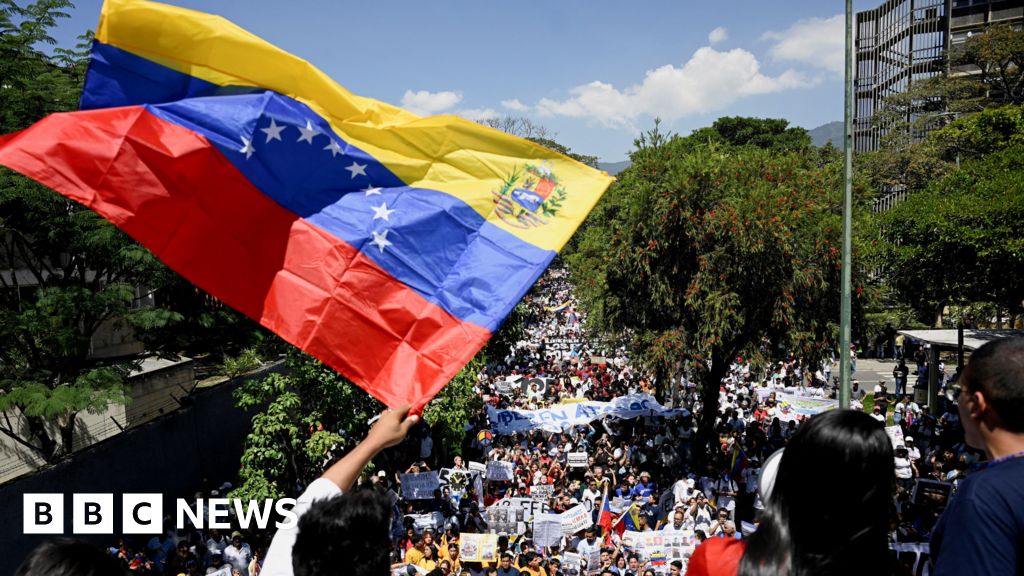
Landing in Caracas, it might seem that little has changed since the US strikes on 3 January and the seizure by US forces of former Venezuelan President Nicolás Maduro.

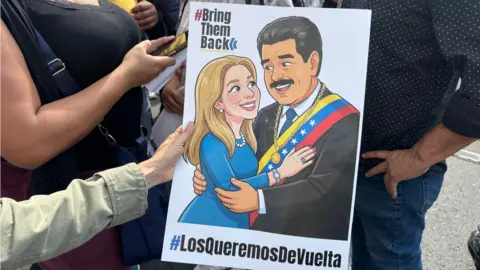
The airport walls are plastered with "wanted" posters for the last election's opposition candidate, Edmundo González, accusing him of violent acts. Roads are lined with billboards of Maduro and his wife, now bearing the hashtag: "We want them back."

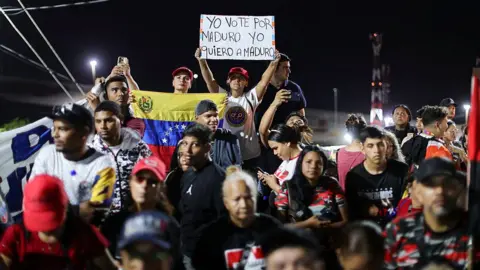
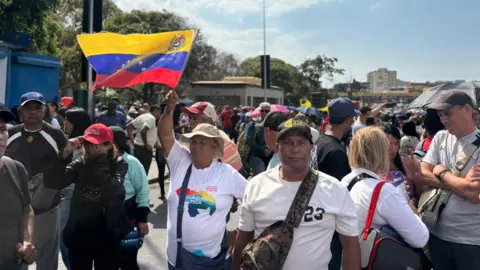
On 3 March, a government rally marked two months since Maduro's arrest, with crowds donning T‑shirts bearing his face, repeating loyalist slogans.

"We have a constitutional president until his term expires who right now is a victim, a prisoner of war Venezuela didn't start, our priority is to recover him," one young protester Alí Rodríguez told the BBC.

But away from the main crowds, some wearing loyalist uniforms whispered a different story: they are public employees, obliged to attend, and still fear speaking freely.

"It's false. It's all a lie," said one 22‑year‑old worker, who asked for anonymity.

Elena, not her real name, said thousands of public workers are ordered to attend rallies or risk punishment. She and colleagues recently received a $150 bonus on top of their $120 monthly salary for turning up.

"Two of my colleagues didn't receive the bonus because they didn't go."

"You're taught you should always preach the truth, but in a country like Venezuela sometimes you have to practice self-censorship."

Since Maduro's arrest, former Vice-President Delcy Rodríguez has taken power and is closely co‑operating with the United States. Washington, once an adversary, now describes a "wonderful" relationship, citing some political prisoner releases and new oil and mining deals.

But many young Venezuelans, who have always been governed by the same political movement, doubt much has changed yet beyond Maduro's removal.

Elena believes a full clear‑out is needed, singling out the Interior Minister Diosdado Cabello and Defence Minister Vladimir Padrino López as those who "most represent terror" and remain in post. Under Cabello, armed paramilitaries known as "colectivos" are used to intimidate the opposition.

"We have to get rid of these people. That's non‑negotiable," she said.

She doesn't want to emigrate like the millions who have fled Venezuela's economic crisis but longs for political and economic reform, saying everything is "too expensive", education is a "privilege", and non-exploitative jobs are rare.

She's been frustrated by an opposition that she describes as being disunited at times, and acting in its own interest, but says she would back María Corina Machado - the Venezuelan opposition leader who won the 2025 Nobel Peace Prize.

Elsewhere in Caracas, Ana, not her real name, a 25‑year‑old teacher from Maracaibo earning $250 a month, has already decided to leave. She plans to emigrate to Spain, saying she has never known what it is like "to not feel like you could get killed, just because you posted the wrong thing on social media".

"I want to earn money and live somewhere that actually has electricity," she said, recalling her mother crying in private when her family didn't have enough money, and people looting shops in Maracaibo when the city went a week without power.

"It can be very lonely. Most of my friends had to flee the country to pursue something better."

Ana feels she has lived through too many cycles of "things getting better, and then worse again", to have any guarantee her life will change now Maduro is gone.

Washington has outlined a three‑stage plan for Venezuela of stabilisation, recovery, and eventual transition, but has not provided a timeframe for elections.

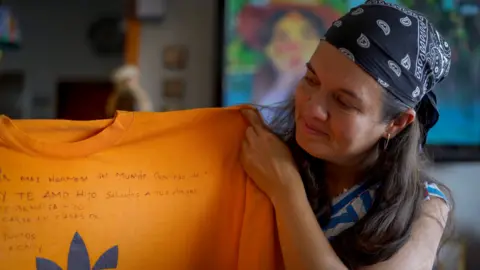
Many activists agree with the US plan as a way forward, including lawyer and opposition activist MarÍa Oropeza, 31, who live‑streamed her arrest in 2024. She was imprisoned in the notorious El Helicoide prison, describing dehumanising conditions like 20 people per cell and no water to flush toilets, even when women were menstruating. She credits the US intervention for her release this year and believes Venezuela is stabilising.

"It was previously almost impossible to protest or raise a banner, now it's happening. In many Venezuelan universities, students are raising their voices."

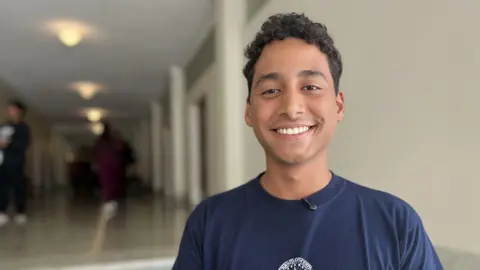
At the Central University of Venezuela, students gather for the first meeting of a new political movement called "Save Venezuela". The mood is pragmatic: they want improvements to the economy, education and healthcare, but say the path to elections must be "gradual" to avoid conflict.

For Samuel Arias, 26, reconciliation means involving all sides, even though he believes there is "popular support" for Machado. He wants better university funding and an end to the energy crisis.

"It's absurd that we as a country with the largest oil reserves in the world have these deficits. I was without power for six hours yesterday. It paralyses the economy."

He and fellow student Valentina Scaloni, 24, don't agree with the principle of US intervention but feel it was necessary to achieve freedom after years of repression by the government.

"All young people want change. Those of us my age haven't seen democracy. We haven't seen freedom. We haven't been able to express anything," Valentina says.

Not everyone buys this justification. Twins Daya and Dana, 25, on the left, fear new US oil and mining deals won't benefit ordinary Venezuelans.

"In macroeconomic terms it's excellent. But we still have inflation, inequality, and meagre salaries," Daya says. "We can't accept a foreign military power attacking leaders of a sovereign state."

They see centre-left politician Enrique Márquez as a more palatable candidate than Machado and her conservative, free-market politics. A former vice president of the electoral council, Márquez was arrested in 2025 for challenging Maduro's claim to victory in the last election and was freed on 8 January.

But Dana warns anyone running against Rodríguez will need Washington's blessing.

Where she agrees with Machado supporters is on the need to reform years of polarisation, corruption, and censorship: "Thinking differently was something that could have harmed you in the country."

This generation feels it has never known anything else, always governed by the same political movement.

Elena, still afraid to speak publicly, says she has lived in "this so‑called revolution for all my 22 years."

When asked how she felt about the prospect of democracy, she pauses.

"I imagine it as a dream."

Additional reporting by Vanessa Silva

The US president has claimed the Cuban authorities “want to make a deal so bad”.

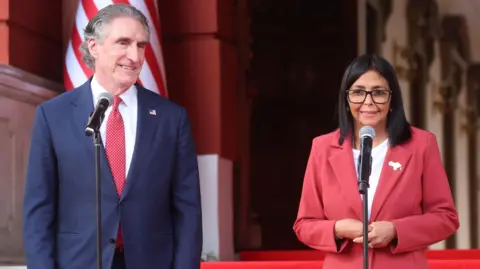
Venezuela's interim president made the announcement after meeting with US interior minister Doug Burgum at the presidential palace in Caracas.

Prisoners recently released from detention in Venezuela describe the conditions under which they were held.

The BBC's Analysis Editor Ros Atkins charts how the Trump administration’s messaging on war has shifted in his second term.

American authorities took control of the Marinera before escorting it to Scotland's Moray coast.