Press
Words of defiance: Iran’s new Supreme Leader Mojtaba Khamenei lashes at US
Images
1 / 7

2 / 7
3 / 7

4 / 7

5 / 7

6 / 7

7 / 7
The newly appointed supreme leader delivers a combative statement, pledging Iran will keep fighting.

Share

Save

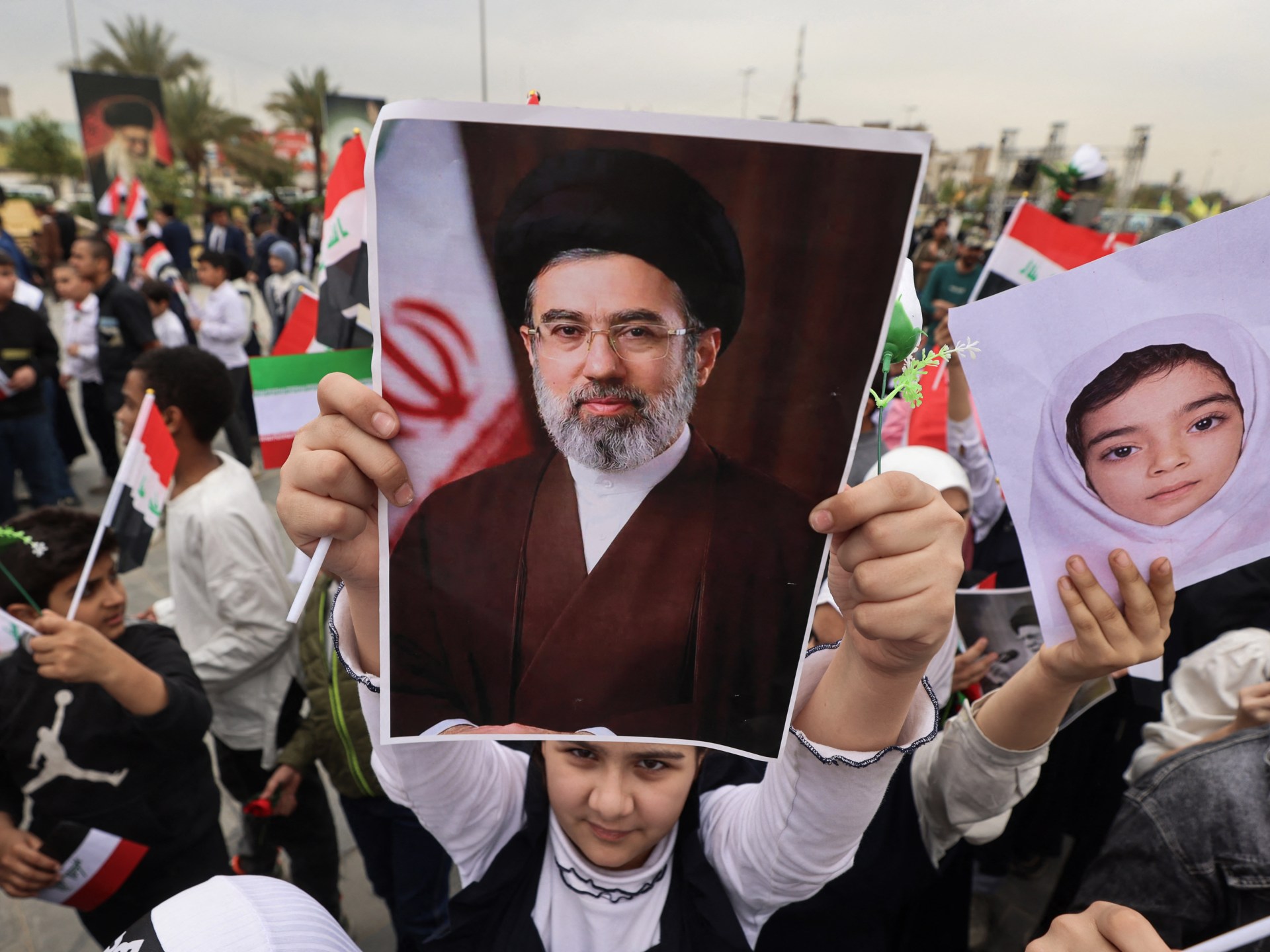
Mojtaba Khamenei has issued his first statement since taking over as Iran’s supreme leader after his father, Ayatollah Ali Khamenei, and several family members were assassinated in the United States and Israeli strikes at the outset of the war that has now embroiled much of the Middle East.

In the statement, which was read on Press TV on Thursday, Khamenei called for national unity and said the vital global artery of the Strait of Hormuz would continue to be closed to pressure Iran’s enemies.

He added that all US bases in the region should be immediately closed or will be attacked. While Iran believes in friendship with its neighbours, Khamenei said, attacks on US bases in the region would continue.

Armed groups in Yemen “will also do the job”, the supreme leader said, adding that those in Iraq also “want to help” the Islamic revolution.

Khamenei thanked Iran’s military, which he said had stopped it from being dominated or divided as it came under attack.

“I would like to thank the brave fighters who are doing a great job at a time when our country is under pressure and under attack,” he said and pledged that Iran would continue fighting.

Ali Khamenei, who ruled Iran for 37 years, was killed in Tehran on February 28.

Iran’s Assembly of Experts reached a consensus on Sunday to appoint his son as his successor.

Al Jazeera’s Tohid Asadi, reporting from Tehran, said the new supreme leader indicated that he would use the Strait of Hormuz as leverage and possibly ramp up the intensity of this conflict.

Asadi added that Iranian society remains divided over Mojtaba Khamenei’s appointment despite his call for unity, mainly due to the same economic hardships that fuelled violent protests in December and January.

Middle East analyst Zeidon Alkinani said focusing on armed resistance allowed the supreme leader to avoid “discussions over economic reform, state building and many other fundamental issues that matter to ordinary Iranians.”

Alkinani told Al Jazeera that Khamenei’s statement contradicted that of Iranian President Masoud Pezeshkian, who on Wednesday suggested Iran would consider ending the war if certain conditions were met.

The analyst also stressed that the speech, which was not delivered or read by Khamenei himself, did little to dispel the rumours that the newly appointed supreme leader had been injured – or even killed – in the ongoing war with the US and Israel.

This “creates a lot of uncertainty about the legitimacy and the ability of the supreme leader to stand strong in the face of major challenges,” Alkinani said.

Khamenei’s remarks were also unlikely to find favour with US President Donald Trump, who had been stressing for days that Iran would follow the path of Venezuela in selecting a leader willing to answer Washington’s demands.

Rob Geist Pinfold, a lecturer in international security at King’s College London, said the supreme leader’s first public statement represented a doubling down on Iran’s established positions.

“Rather than what the Trump administration might have been hoping for – a kind of change in rhetoric from the new supreme leader – what we’re actually hearing here is more of the same,” Pinfold said.