Press
What on earth is going on with the oil price?
Images

1 / 10

2 / 10

3 / 10

4 / 10
5 / 10
6 / 10
7 / 10

8 / 10
9 / 10
10 / 10
The price of oil rarely makes it into dinner table conversation.

But over the last two weeks it has dominated headlines, with huge and unusual rises and falls starting to feel like the new norm.

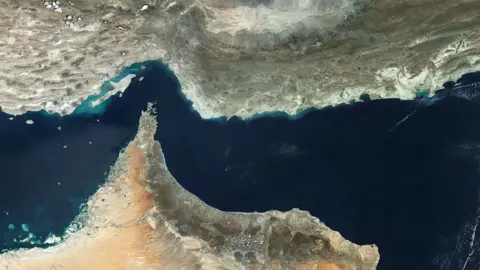
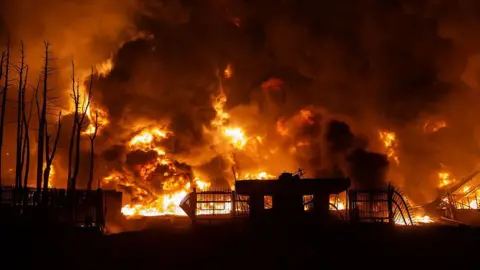
It is currently trading over a third higher than before the conflict began, pushed up by air strikes on shipping and energy infrastructure and the effective closure of the key Strait of Hormuz, a vital waterway that carries a fifth of global oil supplies.

There were wild swings in the price on Monday, which was described by the BBC's economics editor Faisal Islam as the most volatile day of oil trading in history.

Most of the talk around prices concerns the cost of Brent crude - a widely-used international benchmark for oil.

Contracts to buy and sell oil will often use Brent as a reference point, so it has significant influence on global energy costs.

The vast majority of oil is traded for delivery at a future date, says Lindsay James, investment strategist at Quilter, and prices are rising now due to concerns about supplies in the months ahead.

Before the US and Israeli strikes on Iran, oil had been trading at about $71 a barrel, but prices rose sharply as soon as the conflict began.

Comments from world leaders have contributed significantly to price fluctuations.

Last week,  the FT carried an ominous warning from Qatar's energy minister, Saad al-Kaabi, who said he expected all oil and gas exporters in the Gulf to stop production within days and this pushed oil prices to a two-year high.

When markets reopened after the weekend, they peaked at almost $120 a barrel.

But then came reports there could be a huge release of emergency stockpiles co-ordinated by the International Energy Agency.

US President Donald Trump also described the war as "very complete, pretty much", raising hopes the conflict would not be drawn-out.

In response, the oil price went into freefall and by the end of Monday it had fallen by nearly $30 from the peak seen earlier in the day.

Quilter says the dramatic change - in the space of a few hours - was "extraordinary even by the volatile standards of commodities".

The world is now experiencing an "energy shock without modern precedent", adds James.

Behind the big numbers is a huge amount of practical detail, says former BP boss Lord John Browne, such as getting the right type of oil to the right refinery.

"This is not just a speculative activity - it's actually a matter of physical supply of oil, and people are bidding to make sure that they don't run out," he told the BBC.

Another key moment came when US Energy Secretary Chris Wright posted on X that the US had successfully escorted an oil tanker through the Strait of Hormuz.

At one point on Tuesday, the benchmark price plunged to $82 per barrel.

However, it soon jumped back to $86 after the post disappeared from his profile.

The White House later confirmed the social media post was wrong -  the US Navy had not escorted any tankers through the crucial Gulf passage.

On Wednesday, the IEA announced dozens of countries had agreed to release a record amount of oil from their emergency reserves.

Prices fell after the announcement, but they've since risen back above $100 a barrel.

Bill Farren-Price, senior research fellow at the Oxford Institute for Energy Studies, said the release is a "sticking plaster on a much bigger problem".

He said the market had already priced the move in, and then further ship attacks sent the price up again.

"Inevitably the price reaction is going to continue until we see some sort of off-ramp for this conflict and that could be very, very complicated and drawn out," he adds.

There is also a shortage of refining capacity meaning the release is not a magic switch to increase the flow of refined products like petrol and jet fuel.

The releasing of the reserves is more of an attempt to boost confidence by signalling to markets that governments have recognised the threats and are acting  to address them.

In short, it may not help oil prices fall, but it may stop them climbing as much as they otherwise would have done.

We are not yet two weeks into the war between the US, Israel and Iran.

We do not know how long the conflict will last, or how significant its impact will be.

People trading oil "can't see the real direction", says Lord Browne. They do not know how long the Strait of Hormuz will be effectively closed, or whether the strategic releases of oil reserves agreed by the IEA will actually take place.

"I think most people will look at all this and say 'show me what's really happening and I'll tell you what the price is going to be'," he adds.

One thing is clear - movements this month have exposed just how much the trade of one of our most valuable commodities depends on transit through a small strait of water in a very volatile, dangerous part of the world.

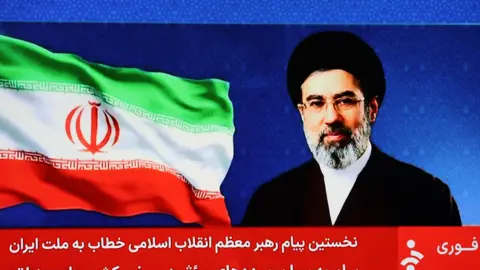
A message attributed to Mojtaba Khamenei also says Iran will continue targeting US bases in the region.

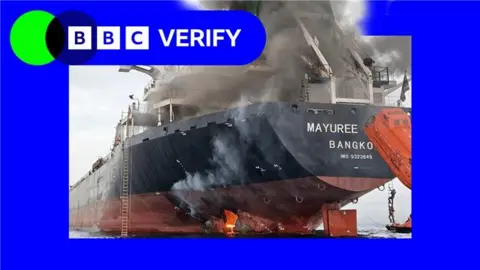
Six ships have been reportedly attacked in the Gulf in less than 48 hours, bringing the total vessels attacked during the war to 18.

British forces based in Iraq shot down two drones overnight, Defence Secretary John Healey has confirmed.

Iran says it will "set fire" to ships trying to sail through the world's most vital oil transit point.

Conflict has spread across the Middle East since the US and Israel launched wide-ranging strikes on Iran on 28 February.