Press
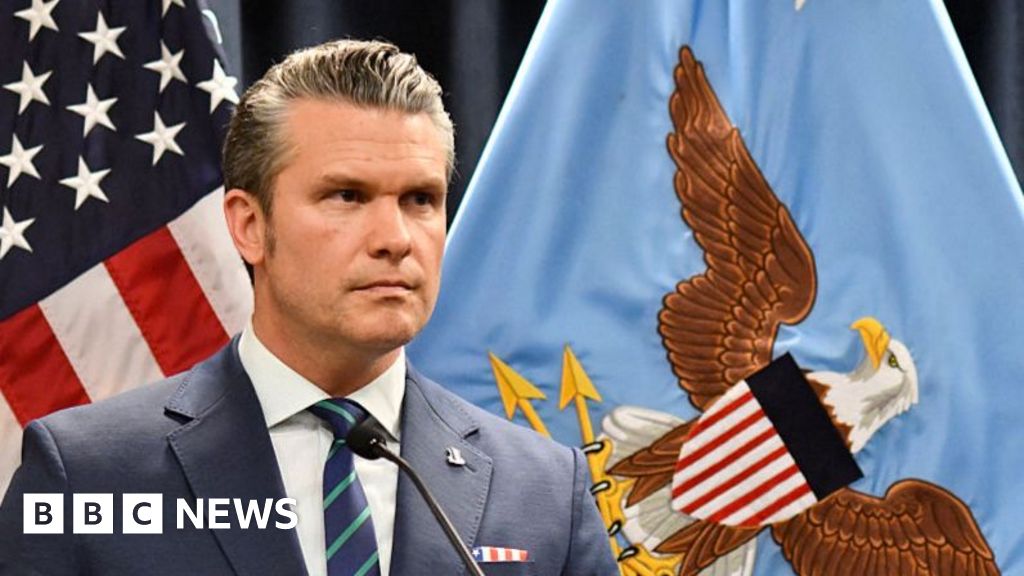
Questions mount for Hegseth over possible US involvement in strike on Iranian school
Images
1 / 7

2 / 7

3 / 7

4 / 7
5 / 7
6 / 7
7 / 7
Democrats in the US Senate have written to Defence Secretary Pete Hegseth demanding answers about the strike on a primary school in Iran that Iranian officials say killed 168 people, including about 110 children.

US media have reported that US military investigators believe American forces were likely responsible for hitting the school unintentionally at the start of the joint US-Israeli operation - but that they have not reached a final conclusion.

The Pentagon said it would respond directly to the authors of the letter, as with all congressional correspondence.

Asked last week by the BBC about the strike, Hegseth said the US did not target civilians and was investigating the issue.

The letter is from nearly every Senate Democrat, and asks a series of detailed questions about the strike in Minab - starting with whether the US carried it out.

It questions whether old or faulty target analysis could have led to the school building being hit.

It also highlights Hegseth's vow during a recent news conference that there would be no "stupid rules of engagement" in the war, and asks if the defence secretary had complied with rules to prevent the commission of war crimes.

The strike, if a US role was to be confirmed, would amount to one of its worst single cases of civilian casualties in decades of US conflicts in the Middle East.

One of the signatories of the letter, Senator Gary Peters, a member of the Armed Services Committee, said the incident had been "a horrific tragedy" and that he wanted to know "exactly what happened".

"Let's try to get those facts as quickly as we can so we know exactly what happened, and then we can discuss what actions to take after we know those facts," he told BBC News.

The letter highlights how the war has become an issue that divides US lawmakers along party lines. No member of President Donald Trump's Republican Party signed it. Meanwhile, the only Senate Democrat not to do so was John Fetterman, who has supported the military action, though said an investigation into the school strike was right.

According to the BBC's partner CBS News and other US outlets, a preliminary assessment of the incident by American officials suggests that the US was "likely" to have been responsible, but that it did not intentionally target the school and may have hit the site in error.

This may have been because the intelligence used by the US was outdated and wrongly identified the area as still being a military site, according to a person briefed on the preliminary assessment who spoke to CBS.

Trump has previously suggested Iran carried out the bombing.

Pressed by reporters about the issue again on Tuesday, he said: "I just don't know enough about it."

Referring to the military investigation that was under way, he added: "Whatever the report shows, I'm willing to live with that report."

Expert video analysis has shown that an Islamic Revolutionary Guard Corps (IRGC) military base next to the school was hit by a Tomahawk missile - a type of US cruise missile that neither Israel nor Iran is known to possess.

A video published recently by Iran's semi-official Mehr news agency - which was confirmed by BBC Verify to be authentic - showed a missile in the moments before it struck the base.

Experts who saw the video said the presence of a Tomahawk missile, along with evidence the area was hit with multiple strikes, indicated that it was a US operation.

Iran has blamed the US and Israel for the attack.

Israel says it was not aware of any operations in the area. Speaking recently to the Washington Post, two Israeli officials said the targeting was not discussed with the Israeli military.

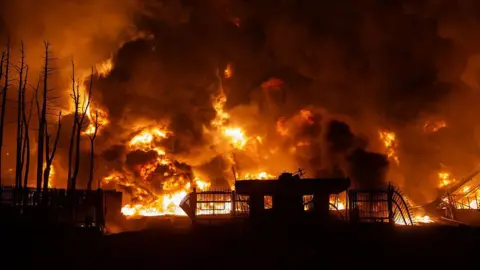
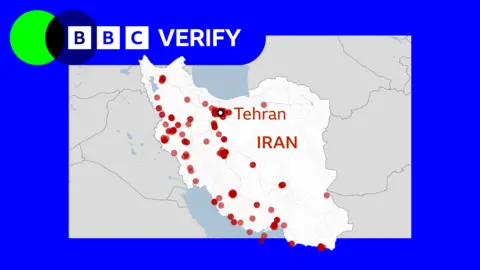
Other civilian sites including a hospital and historic landmarks have been severely damaged since the US-Israeli operation began on 28 February, satellite images and verified videos show, as the number of reported civilian casualties grows.

Iran has continued to respond by launching attacks on Israel and US-allied states in the Gulf, which have also extended to non-military targets, including civilian sites and energy facilities.

Also on Wednesday, General David Petraeus, former CIA Director and Commander of US Central Command, was asked about America's possible role in the attack on the school.

Speaking to the BBC, he said the Americans "tragically, were probably the ones, we were the only ones that have Tomahawk missiles in this particular exercise, this war" - though he cautioned he had not directly seen the evidence under review.

"And it appears that there may have been some old data when this particular building was part of a larger Iranian naval compound... some years ago," he added.

It comes as Iranian attacks on ships intensify in the crucial Strait of Hormuz waterway.

The animal that stowed away on the vessel is now in the care of the Bronx Zoo with veterinary staff.

Conflict has spread across the Middle East since the US and Israel launched wide-ranging strikes on Iran on 28 February.

Three more civilian ships were attacked in the Gulf overnight, killing at least one person.

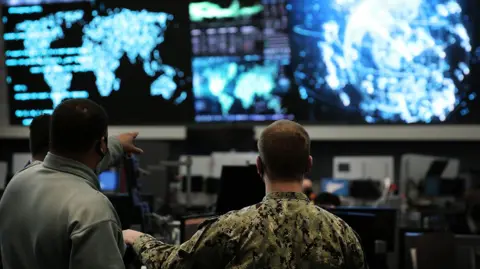
Militaries are often cagey about their cyber activities. But the US has hinted at the role it has played.