Press
Israel pounds Beirut suburbs after Hezbollah launches rocket barrage
Images
1 / 11

2 / 11

3 / 11
4 / 11
5 / 11
6 / 11
7 / 11

8 / 11
9 / 11
10 / 11

11 / 11
The Israeli military has carried out a wave of air strikes across Lebanon, including the capital Beirut, after the Iranian-backed armed group Hezbollah launched about 200 rockets into northern Israel.

Loud explosions were heard overnight coming from Beirut's southern suburbs, a Hezbollah stronghold from which thousands of people have fled because of the intense Israeli attacks over the past week.

Some strikes also hit other parts of Beirut, including the city's Corniche seafront. Lebanon's health ministry said at least eight people were killed.

Hezbollah launched the rocket barrage across the Israeli border on Wednesday evening in an apparently co-ordinated attack with Iran.

Israeli Defence Minister Israel Katz said on Thursday that the Israeli military had been instructed to prepare to broaden its operations in Lebanon in response.

The military subsequently expanded a blanket evacuation order for southern Lebanon, nearly doubling the zone it has said residents should leave for their safety.

It now covers almost the entire area south of the Zahrani river, which flows east to west about 40km (25 miles) from the Israeli border, according to a map posted online.

Lebanon was pulled into the conflict between Iran, Israel and the US 10 days ago, when Hezbollah launched rockets and drones into Israel in retaliation for the assassination of Iran's supreme leader and repeated Israeli strikes since a ceasefire ended their last war in 2024.

Israel said Hezbollah's attack justified launching a broader campaign against the group, including intense air strikes and commando raids inside Lebanese territory. It has said the campaign will continue until Hezbollah is disarmed.

At least 634 people, including 91 children, have been killed in Israeli attacks in Lebanon since then and 800,000 others have been displaced, according to Lebanese authorities.

Two Israeli soldiers have been killed in combat in Lebanon, according to the Israeli military.

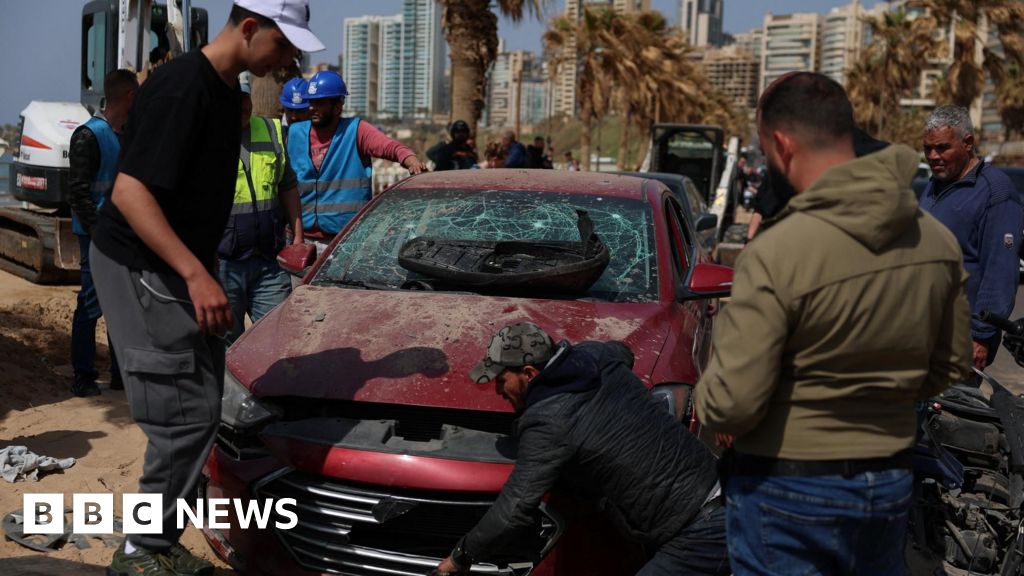
At Ramlet al-Baida, on Beirut's Corniche, a large area was cordoned off on Wednesday morning as officials inspected the scene of a deadly strike.

One military official told the BBC that personnel were dealing with unexploded ordnance.

The Lebanese health ministry said at least eight people were killed after what appeared to be a direct hit on a car. There were reports of a second attack after people gathered to help, causing further casualties.

There were no specific warnings about the strike at the seafront, where hundreds of people displaced by the conflict were sleeping in makeshift shelters.

Khoudor Housseini, whose family was staying there after fleeing the town of Chmestar in the eastern Bekaa Valley, said an Israeli drone flying overhead fired a missile at a parked car.

"After about two minutes, it targeted the car again. One missile didn't explode," he told the BBC. "If it had exploded, maybe we would have all died... God protected us."

"I'm one of the people who wanted to go help, but I couldn't. I have a little baby with me."

Mohammed Ali, whose family was displaced from Beirut's southern suburbs, told the BBC: "We were sleeping here peacefully and didn't feel anything until something exploded and we woke up in a panic."

"They said one strike had happened so we went back to sleep, thinking the targeting was over, but then the second strike happened."

Mohammed said he grabbed two of his children and rushed them away from the area.

He complained that schools which have been transformed into displacement centres in the city were already full, leaving few options for people who have fled from their homes.

The Israel Defense Forces (IDF) has not yet commented on the strike, but it has said its military action in Lebanon is targeting Hezbollah.

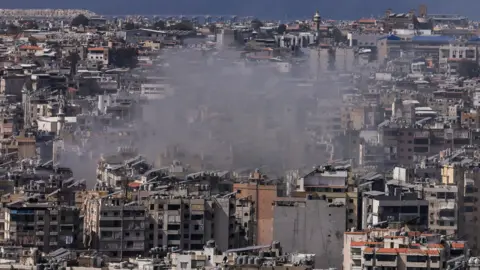
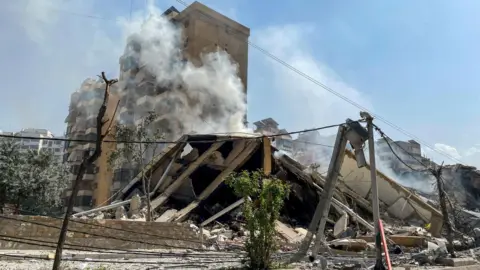
There was also heavy bombing in Beirut's southern suburbs, also known as Dahieh.

The IDF said 10 structures there used by Hezbollah were struck, including an intelligence headquarters and a headquarters of the elite Radwan force, along with dozens of rocket launchers and Hezbollah operatives preparing to use them.

"The IDF is operating with determination against the Hezbollah terrorist organisation as a result of the terrorist organisation's decision to deliberately attack Israel on behalf of the Iranian regime," it added.

An IDF spokesperson said Hezbollah's cross-border attack on Wednesday was its biggest so far in this conflict, with approximately 200 rockets and 20 drones launched by the group at the same time as Iran launched a number of ballistic missiles towards Israel.

Hezbollah said on Wednesday night that it had targeted sites in northern Israel in response to what it called "the criminal aggression against dozens of Lebanese cities and towns".

Later, the group said the targets had included the headquarters of the Israeli military's northern command near Safed and two bases in the northern city of Haifa.

Iran's Islamic Revolution Guard Corps (IRGC) also said its forces had carried out a "joint and integrated operation" with Hezbollah that focused on more than 50 targets in Israel.

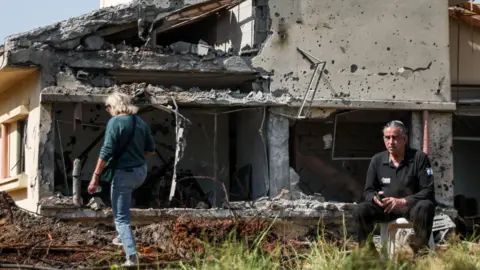
Israeli authorities said one building was hit and damaged in the northern Galilee region, lightly wounding two people.

Another building was damaged by debris from an interception in Haniel, a farming community in the central Sharon region, but no injuries were reported.

On Thursday morning, Israel's defence minister said the Israeli military had been instructed to prepare for "expanding... operations in Lebanon and for restoring quiet and security to the northern communities" in response to the latest Hezbollah attack.

Katz also warned Lebanon's President Michel Aoun that if the Lebanese government "does not know how to control the territory and prevent Hezbollah from threatening northern communities and firing toward Israel, we will take the territory and do it ourselves."

French President Emmanuel Macron said late on Wednesday that he had spoken to Aoun about the threats to Lebanon's security and unity.

"Hezbollah made a major mistake in dragging Lebanon into a confrontation with Israel. It must immediately cease its attacks," Macron wrote on X. "For its part, Israel must clearly renounce any ground offensive in Lebanon."

UN humanitarian chief Tom Fletcher has warned of "a moment of grave peril for Lebanon".

"The Lebanese people are doing everything they can just to stay afloat right now. And what they most need is Iran and Israel to take war somewhere else," he told the BBC.

Oil price moves have made headlines since the Iran conflict started - but why have there been such sharp swings?

Democrats have written to ask the defence secretary whether the US was responsible, but he says the issue is being investigated.

Three more civilian ships were attacked in the Gulf overnight, killing at least one person.

Militaries are often cagey about their cyber activities. But the US has hinted at the role it has played.

Iran's police chief has warned that his forces would treat anyone taking to the streets "at the enemy's request" as an enemy.