foxnews Press
Iran war jeopardizes Trump economic boom before key midterm elections
Images
1 / 20

2 / 20
3 / 20
4 / 20

5 / 20

6 / 20

7 / 20

8 / 20

9 / 20

10 / 20

11 / 20

12 / 20

13 / 20

14 / 20

15 / 20

16 / 20

17 / 20

18 / 20

19 / 20
20 / 20
Interior Secretary Doug Burgum discusses oil prices amid Operation Epic Fury.

Will the Iran war turn President Donald Trump’s 1980s boom into a 1970s stagflation? Only if it drags out, which the president says he plans to avoid. But the enemy gets a vote too, as the saying goes, so what if it’s a long conflict?

As soon as Trump started bombing Iran, markets fell – especially growth stocks like AI. Silver plunged. Bonds fell. Even gold is now down nearly 3%, having replaced its initial war pop with an ominous flight to dollars you see in recessions.

Oil jumped 10% in two days, from $67 to $74 per barrel on the way to $86 as of writing.

Markets always react fast – and they can overreact. The question for the wider economy is how long the war disrupts Middle East oil exports.

SCHUMER ONCE BLOCKED TRUMP'S MOVE TO FILL THE NATION'S OIL RESERVES, NOW HE WANTS THEM OPENED

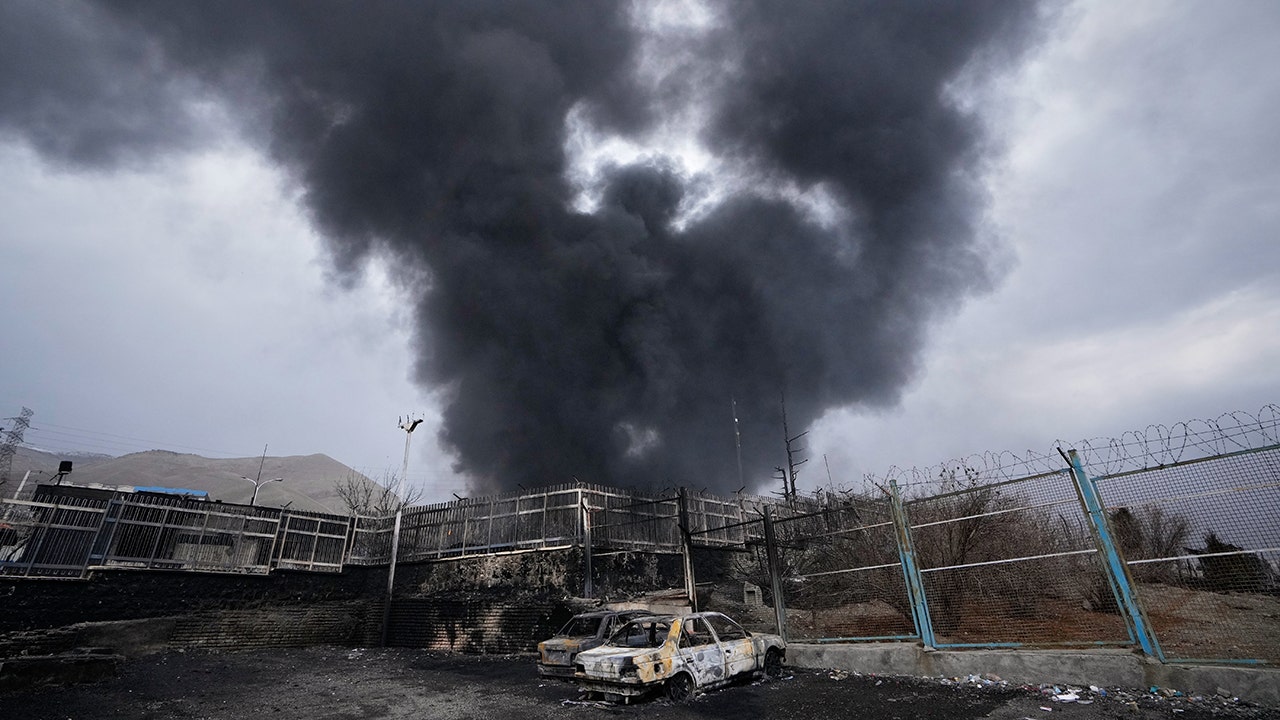
A thick plume of smoke rises from an oil storage facility hit by a U.S.-Israeli strike late Saturday in Tehran, Iran, March 8, 2026. (Vahid Salemi/AP Photo)

About 20% of global oil exports pass the narrow Strait of Hormuz that is next to Iran. Another 30% are in range of Iranian missiles in the Gulf of Oman and Red Sea.

The U.S. actually imports almost none of this – Middle East oil is just 2% of American oil consumption. But oil markets are global, so Middle East disruption drives prices up worldwide.

On the initial attack, ship traffic in the Strait of Hormuz plunged by 70%, according to MarineTraffic. By March 3, it ground to a "total halt," according to Lloyd’s List.

THE WAR HITS HOME: WHY FINANCIAL PAIN AND ECONOMIC UNCERTAINTY THREATEN TRUMP’S DRIVE TO TOPPLE IRAN’S REGIME

Trump then ordered the U.S. International Development Finance Corporation to provide political risk insurance and financial guarantees for maritime trade through the Persian Gulf and the Strait of Hormuz.

This will help by removing risk to shippers. But traffic is unlikely to fully recover until the campaign ends.

Trump is currently suggesting the war might take just four weeks. But the administration is also messaging the war will go "as long as it takes."

EX-NAVY SEAL WARNS WITHDRAWING FROM IRAN NOW WOULD HAND 'VICTORY' TO REGIME

Promising a long war could be tactical, to demoralize the Iranian regime. But opinion polls show the American people have very little appetite for a long war.

A recent CBS poll found a war lasting fewer than eight weeks is +52 in the polls, while a war that lasts longer than that is -8. Polling would likely get worse if American casualties mount.

On the initial attack, ship traffic in the Strait of Hormuz plunged by 70%, according to MarineTraffic. By March 3, it ground to a "total halt," according to Lloyd’s List.

In terms of the economy, there will only be real fallout if the war drags on. And that falls into three baskets: growth, jobs and inflation.

US DESTROYS 16 IRANIAN MINE BOATS AS STRAIT OF HORMUZ OIL SHOWDOWN ESCALATES

Historically, every $10 rise in oil knocks about two-tenths of a percent off economic growth. That's small in an economy that's growing over 3%, according to the Fed’s GDPNow. It might lower annual wage growth by about $300, given the $19 oil has already risen.

Still, that goes on top of expensive oil to heat your home or gas your car. AAA says gasoline prices have already jumped nearly 20%, from $2.98 to $3.56. Between gasoline, transport costs and utilities, that might bump inflation another six-tenths of a percent – translating into another $500 in household costs.

Meanwhile, higher oil prices and slower growth both hit job creation – given the move we’ve already seen, they might drop job creation by 15,000 to 20,000 per month.

TED CRUZ SHUTS DOWN EXTENDED IRAN WAR TALK, SAYS IT'S 'NOT IRAQ' AMID OIL PRICE SPIKE

Flames rise after, according to the authorities, debris of an Iranian intercepted drone hit the Fujairah oil facility, in United Arab Emirates, Tuesday, March 3, 2026. (Altaf Qadri/AP Photo)

So it's painful. But it's not a recession.

What would put us in recession is a long war. A recent study by Deutsche Bank looked at historic oil shocks, concluding you need a 50% to 100% sustained jump in oil to set off a recession.

This would imply oil prices between $100 and $150 that remained high.

Even then, according to Deutsche, oil only causes recession when the economy is already limping. For example, the 1970s is the poster child for an oil crash. But the U.S. economy was already stagflationary because of Washington's so-called guns and butter policy of fighting Vietnam while building a trillion-dollar welfare state. This drove the "Nixon Shock," which pre-dated the oil embargo by several years.

CLICK HERE FOR MORE FOX NEWS OPINION

In contrast, when the bombs started, the Fed’s GDPNow was at a healthy 3% on GDP growth and the most recent productivity was 4.9% – one of the highest since the Reagan boom.

This means $100 oil could knock us into the 1% area on growth. But it’s unlikely to spark a recession unless the Fed panics on oil inflation and hikes rates. Which could mow down enough jobs to tip us over the edge.

CLICK HERE TO DOWNLOAD THE FOX NEWS APP

For now, the biggest war impact is oil prices. But if the war keeps going, oil trickles down to growth, jobs, consumer spending and inflation that could set off a Fed hike doom loop.

If that happens, Trump could be throwing away his hard-won boom just in time for midterm elections that hand Congress to Democrats. They will take us on a two-year journey of paralysis, congressional hearings and repeated impeachments.

CLICK HERE TO READ MORE FROM PETER ST. ONGE

Peter St. Onge is the Heritage Foundation’s Mark A. Kolokotrones Fellow in Economic Freedom.

Get the recap of top opinion commentary and original content throughout the week.

By entering your email and clicking the Subscribe button, you agree to the Fox News Privacy Policy and Terms of Use, and
        agree to receive content and promotional communications from Fox News. You understand that you can
        opt-out at any time.

Subscribed

You've successfully subscribed to this newsletter!