Press
Iran steps up attacks on energy targets as tankers hit
Images
1 / 9

2 / 9

3 / 9
4 / 9
5 / 9
6 / 9
7 / 9
8 / 9
9 / 9
Iran has stepped up attacks on energy targets in the Gulf, as two fuel tankers were hit by explosions and burst into flames.

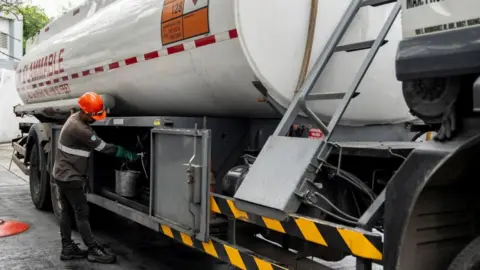
Fires are burning around the region with fuel and oil storage tanks hit in Bahrain and Oman.

Tehran said the world should be ready for oil at $200 per barrel and warned that any tanker bound for the US, Israel and its partners was a legitimate target. The regime has also declared it has the right to strike financial institutions in the region, after an attack on an Iranian bank.

Meanwhile, the Israeli military has said it has begun a new, "large-scale wave" of attacks on Iran.

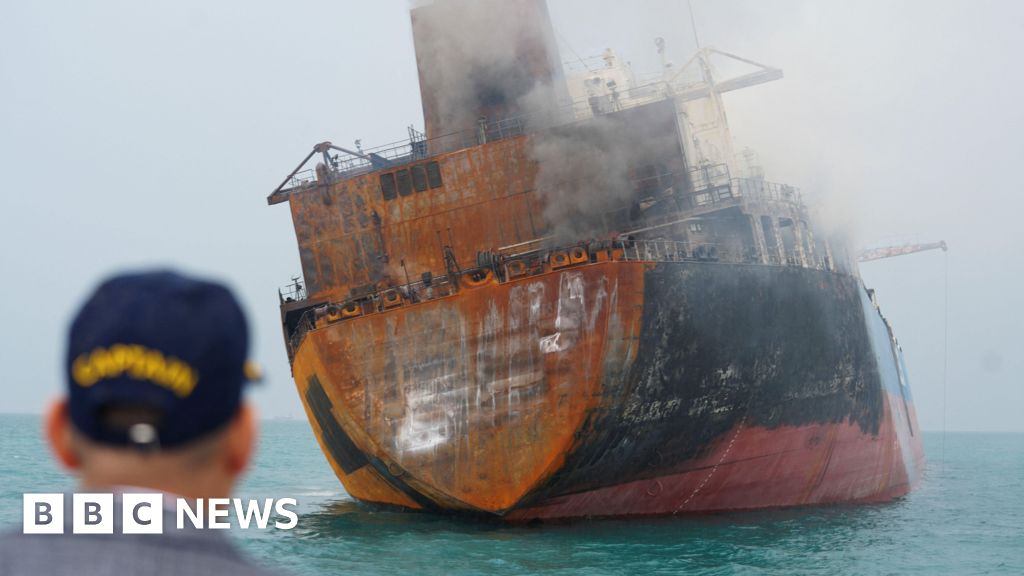
The two tankers were set ablaze near Iraq's southern port of Basra, forcing a pause of operations at the country's oil terminals.

The Iraqi News Agency, citing a military official, reports that 38 crew members were rescued and one person died.

Iran's official news agency IRNA said the Islamic Revolutionary Guard Corps (IRGC) struck one of the two ships – a US-owned vessel, the Safesea Vishnu – because it had ignored warnings and failed to comply with orders.

Indian authorities earlier said the Safesea Vishnu, which sails under the Marshall Islands flag, was attacked by an unmanned speed boat.

A second vessel, Greek-owned and Maltese-flagged Zefyros, was struck while it was in the middle of a ship-to-ship transfer with the Safesea Vishnu, the vessel's manager Benetech Shipping said.

Separately, a Chinese-owned container ship of the coast of the United Arab Emirates (UAE) was "struck by an unknown projectile causing a small fire onboard", the UK Maritime Trade Operations (UKMTO) Centre said.

The cause of the latter two strikes is still being investigated.

About 20% of the world's oil usually passes through the Strait of Hormuz and the war has sent global oil prices soaring – reaching $100 a barrel at one point.

"Get ready for the oil barrel to be at $200 because the oil price depends on the regional security which you have destabilised," Ebrahim Zolfaqari, spokesperson for Iran's military command said.

On Wednesday, President Donald Trump insisted fluctuations in prices were a "matter of war" and "prices are coming down very substantially".

The Iranian military command has also warned it could target US and Israeli banking interests in the region, following a strike on an Iranian bank.

"Our powerful armed forces will exact retribution for this crime," Foreign Minister Abbas Araghchi said on X, who claimed his country's oldest bank was bombed while  employees were inside.

International banks have been closing their Gulf offices – HSBC in Qatar, Citi and Standard Chartered in Dubai – telling employees to stay home.

On Wednesday night, Bahrain authorities accused Iran of targeting fuel tanks near its international airport.

Pictures showed thick plumes of smoke. Authorities urged people to keep their windows closed, before the blaze was contained hours later.

On Thursday morning, fire crews in Oman were still working to contain a blaze at fuel storage tanks from Wednesday's strike on the port of Salalah.

And in Dubai, a high-rise building was pictured with a large hole, after the local government said a drone "fell on a building". It was not clear where the reported drone came from.

Kuwait's state news wire service said drones targeted its international airport causing damage.

On Thursday, the Israel Defense Forces said it had begun a large-scale wave of attacks against Iranian regime infrastructure.

The US Central Command insisted it was eliminating Iran's ability to threaten American forces and partners.

"We have hit them harder than virtually any country in history has been hit, and we're not finished yet," Trump told reporters on Wednesday.

The UN Refugee Agency (UNHCR) said up to 3.2 million Iranians have been temporarily displaced in Iran due to the conflict.

UN humanitarian chief Tom Fletcher told the BBC the war was a "reckless military adventure" and he described the plight of civilians.

Speaking to Radio 4's Today programme, he said: "We've got hundreds of kids killed. We've got the warning lights flashing across the dashboard."

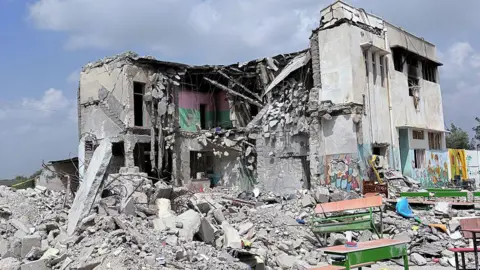
Addressing the strike on a primary school in Iran, that Iranian officials say killed 168 people including around 110 children, he demanded a full and transparent investigation.

Expert video analysis shows a US Tomahawk missile hit a military base near the school in southern Iran.

"Every day that goes by is driving many more people from their homes and from their families, many more people are dying."

Fletcher said the UN was also trying to keep the Strait of Hormuz open in its bid to get aid convoys to sub-Saharan Africa amid a "looming famine" in the region.

The conflict across the Middle East follows the wide-ranging US-Israeli strikes on Iran on 28 February, which killed the country's supreme leader.

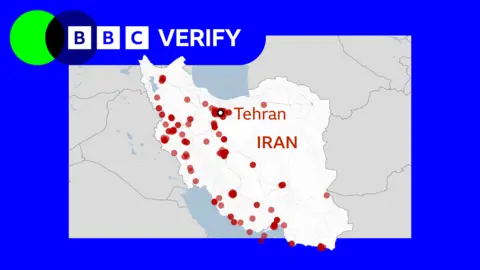
Iran has continued to respond by launching attacks on Israel and US-allied states in the Gulf, which have extended to non-military targets, including civilian sites and energy facilities.

More than 1,300 people have died and 17,000 have been injured in Iran since the conflict began, Iran's Ambassador to the UN Amir-Saeid Iravani has said.

Oil price moves have made headlines since the Iran conflict started - but why have there been such sharp swings?

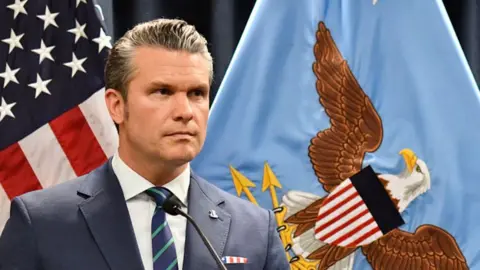
Democrats have written to ask the defence secretary whether the US was responsible, but he says the issue is being investigated.

Three more civilian ships were attacked in the Gulf overnight, killing at least one person.

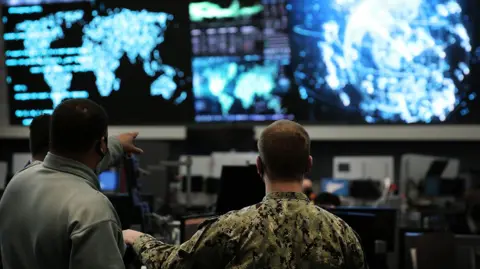
Militaries are often cagey about their cyber activities. But the US has hinted at the role it has played.

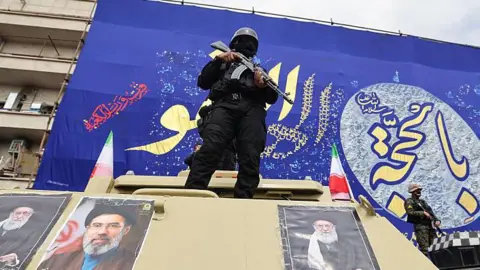
Iran's police chief has warned that his forces would treat anyone taking to the streets "at the enemy's request" as an enemy.