yahoo Press
I blew the whistle on Covid jabs five years ago. Now, I’m fighting for my medical licence
Images
1 / 12
2 / 12

3 / 12

4 / 12

5 / 12

6 / 12
7 / 12
8 / 12
9 / 12

10 / 12

11 / 12

12 / 12
Ancient wisdom tells us that evil grows in ignorance. But worse than ignorance, as Stephen Hawking once warned, is the illusion of knowledge.

I have spent my career as a cardiologist trying to challenge that illusion.

Medicine is not an exact science – it is an applied science: complex, probabilistic and constantly evolving. I often quote Prof David Sackett, widely regarded as the father of evidence-based medicine, who said: “Half of what you learn in medical school will turn out to be either outdated or dead wrong within five years. The trouble is no one can tell which half.”

When I say this to doctors in my lectures, there are audible gasps and nervous laughter. But it reflects an uncomfortable truth about scientific uncertainty.

Over time, my concerns about medical evidence became grounded in data. In 2005, Prof John Ioannidis of Stanford University published a landmark paper in PLOS Medicine titled:“Why Most Published Research Findings Are False”. Using statistical analysis, he showed how bias, selective reporting and financial conflicts of interest can distort results. His conclusion was stark – in fields heavily influenced by money or strong prior beliefs, research findings are more likely to be incorrect.

Some years later, Prof Peter Gøtzsche, one of the co-founders of the Cochrane Collaboration (the prestigious independent network of medical scientists), published research arguing that adverse drug reactions from prescribed medicines represented a major public health burden. In his 2013 book, Deadly Medicines and Organised Crime, he estimated that side effects from prescribed medicines were the third-leading cause of death globally after heart disease and cancer.

These findings shaped my activism.

Long before Covid, I became the first cardiologist in the UK to publicly challenge the role of excess sugar and ultra-processed foods in driving obesity, Type 2 diabetes and heart disease. Through Action on Sugar, which I helped launch in 2014, we pushed for reformulation of processed foods, clearer labelling and a sugary drinks tax. At the time, advocating low-carbohydrate approaches to reverse Type 2 diabetes was considered fringe. The idea that the condition could go into remission through dietary change was widely dismissed. Today, it is supported by a multitude of data and the clinical experience of many other doctors, in addition to my own.

In 2020, after writing in The Telegraph about the strong association between obesity, metabolic disease and increased risk of death from Covid – using Boris Johnson’s hospitalisation as an example – I was invited to advise the Government on improving the nation’s health.

Then came the greatest challenge of my life.

In early 2021, I had no significant safety concerns about the Covid vaccines. I received two doses of the Pfizer-BioNTech mRNA vaccine. I appeared on Good Morning Britain, encouraging uptake in high-risk communities. At that stage, based on the published trial data, I believed the benefits outweighed the risks.

Six months later, my father suddenly died, aged 73.

Dr Kailash Chand – who was a disciplined, active and honorary vice-president of the British Medical Association – suffered a cardiac arrest. His post-mortem revealed severe coronary artery disease that had progressed far more rapidly than I would have expected, given earlier heart scans and how healthy he was.

At first, I rejected any suggestion of a vaccine link outright. But by late 2021, emerging real-world data raised legitimate scientific questions. Protection against infection from Covid appeared to wane rapidly. Countries with high vaccination rates were experiencing significant case surges. At the same time, reports of heart inflammation and other heart-related problems were appearing in drug safety databases.

In October 2021, a paper published in the journal, Circulation, reported raised levels of inflammation in the blood – markers linked to heart attacks – in a group of patients after they received a Pfizer or Moderna Covid mRNA vaccine. Although the study was small and not designed to prove cause and effect, it suggested a possible explanation – that the vaccine could trigger inflammation that affects the lining of the blood vessels.

These issues intensified my scrutiny of the original trial data.

In August 2022, a peer-reviewed re-analysis of serious adverse events from the pivotal Pfizer and Moderna randomised controlled trials was published in the journal, Vaccine. Using data originally submitted to the US regulator, eminent independent researchers calculated that one was two to four times more likely to suffer a serious side effect from the vaccine (at a rate of one in 800) than be hospitalised with Covid without a vaccine. A similar figure was arrived at through real-world evidence in Norway. Around 40 per cent of those serious events involved complications related to blood clotting.

For a medical intervention administered to healthy individuals on a mass scale, that safety signal warranted serious public debate.

For comparison, the 1976 US swine flu vaccine was stopped after it was linked to a serious neurological condition in about one in 100,000 people. In 1999, an early rotavirus vaccine was withdrawn after it was found to cause a bowel complication in about one in 10,000 children. These examples show why the level of risk matters when judging vaccine safety.

I compiled my analysis into a two-part, 10,000-word paper published in the Journal of Insulin Resistance in September 2022. It underwent extensive peer review and remains the most downloaded paper in the journal’s history.

The professional consequences were immediate.

Complaints were submitted to the Royal College of Physicians, and my fellowship was suspended following anonymous allegations that my public comments had brought the College into disrepute. It was a sobering moment in my career, particularly as I believed I was acting in accordance with my professional duty to raise legitimate safety concerns.

Shortly afterwards, the General Medical Council (GMC) received complaints about my conduct. In essence, the accusation is that by scrutinising the data and raising legitimate questions in public (including on social media), I have undermined trust in vaccination, and therefore, in the medical profession itself.

But the arguments made by my critics rest on a dangerous premise – that trust is maintained by silence rather than transparency.

Everything I have said has been grounded in published, peer-reviewed evidence. The re-analysis of trial data was published in Vaccine. My own paper underwent peer review. The cardiovascular safety signals were reported in established medical journals. I have not advised patients to refuse routine immunisation. I have not discouraged uptake of established childhood vaccines. I have consistently stated that my concerns relate specifically to the risk-benefit profile and policy decisions surrounding Covid mRNA vaccines.

If raising documented safety signals and calling for further investigation constitutes “misinformation”, then we are redefining scientific debate as misconduct.

The GMC’s guidance makes clear that doctors must take action if they believe patient safety is at risk. That is precisely what I have done. To discipline a doctor for scrutinising pharmaceutical data sets a precedent that should concern every clinician in Britain – not because they agree with me, but because next time it may be them.

Trust in medicine is not protected by suppressing dissent. It is protected by demonstrating that the profession is capable of self-correction. But as scrutiny over me intensified in Britain, the debate widened internationally. On the day my paper was published in 2022, I received a call from the US.

“Dr Malhotra, it’s Robert Kennedy Jr. I want to thank you for your courage.”

I spoke to the future US health secretary at length about regulatory capture, conflicts of interest in medicine and the importance of informed consent. He later invited me on to his podcast for a detailed discussion. Ultimately, I was appointed as the first chief medical adviser to Make America Health Again (MAHA), a non-profit organisation co-founded by Kennedy.

Around the same time, I was invited on to The Joe Rogan Experience. The conversation lasted several hours, and allowed a depth of analysis rarely possible on mainstream television. We examined the trial data, excess mortality patterns and the regulatory approval process in detail. The episode reached millions around the world.

For supporters, this signalled that legitimate scientific concerns were finally reaching a broader audience. For critics, my appearance on the most influential alternative media platform in the world confirmed that I had stepped outside what they considered acceptable boundaries of an establishment medical narrative.

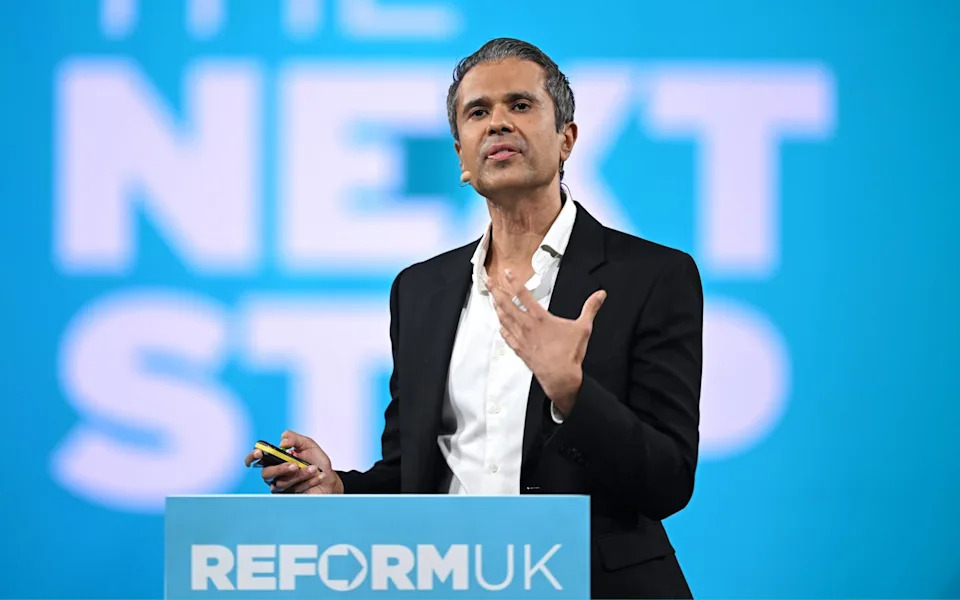
The pressure escalated further after my appearance at the Reform Party conference in September 2025. I spoke about corporate influence over medical knowledge and referred to concerns raised by Britain’s most eminent oncologist, Prof Angus Dalgleish, about a possible link between Covid vaccines and cancer. Quoting him, I mentioned the cancer diagnoses of members of the Royal Family – not as definitive proof of causation, but to reflect the depth of public anxiety about rising cancer rates.

Within minutes, senior Reform figures distanced themselves. Days later in the House of Commons, the Prime Minister, Sir Keir Starmer, misled Parliament by falsely claiming that I’d stated that all vaccines cause cancer. “These dangerous conspiracies cost lives,” he said.

Calls from a vocal minority of doctors for the GMC to strike me off intensified. Now, the GMC is examining the case against me, and I’m waiting to hear whether it will decide to take formal action against me. But this is not really about me.

Medicine has faced moments like this before. In the 19th century, Ignaz Semmelweis was ridiculed for suggesting that doctors wash their hands to prevent maternal deaths. He was right, but the establishment resisted and ridiculed him for years. As a result, he ended up dying in a mental asylum.

We are now witnessing record levels of public distrust in health authorities. You do not rebuild trust by shutting down debate. You rebuild it through transparency, humility and the courage to admit uncertainty. A British Medical Journal global health analysis concluded that Covid vaccine mandates (including vaccine passes for entry into restaurants, gyms or events) have had damaging effects on public trust, vaccine confidence, political polarisation, human rights, inequities and social wellbeing.

At the same time, data reveals that being transparent about negative vaccine information increases trust, and that when health authorities are not transparent, it can increase receptivity to alternative “conspiracy theories”. If regulators punish doctors for raising peer-reviewed safety concerns, what message does that send to younger clinicians watching? That silence is safer than scrutiny.

Let me be clear. I am not anti-vaccine. I have supported routine immunisation throughout my career. My concerns relate specifically to the safety and policy surrounding the Covid mRNA vaccines – not vaccination as a principle. My position has always been that questioning data is not anti-science. It is the essence of science.

The case before the GMC is not simply about one cardiologist’s interpretation of vaccine data. It is about whether doctors in Britain are still free to question evidence without fear of professional destruction. History will judge the pandemic years. The question is whether medicine has the courage to judge itself.

Medicine advances through challenge, replication and debate – not through silence.

Try full access to The Telegraph free today. Unlock their award-winning website and essential news app, plus useful tools and expert guides for your money, health and holidays.