yahoo Press
Dave Ramsey tells homeless, unemployed Ohio man with $14K debt there’s no point declaring bankruptcy. Here’s why
Images
1 / 4
2 / 4

3 / 4

4 / 4
Moneywise and Yahoo Finance LLC may earn commission or revenue through links in the content below.

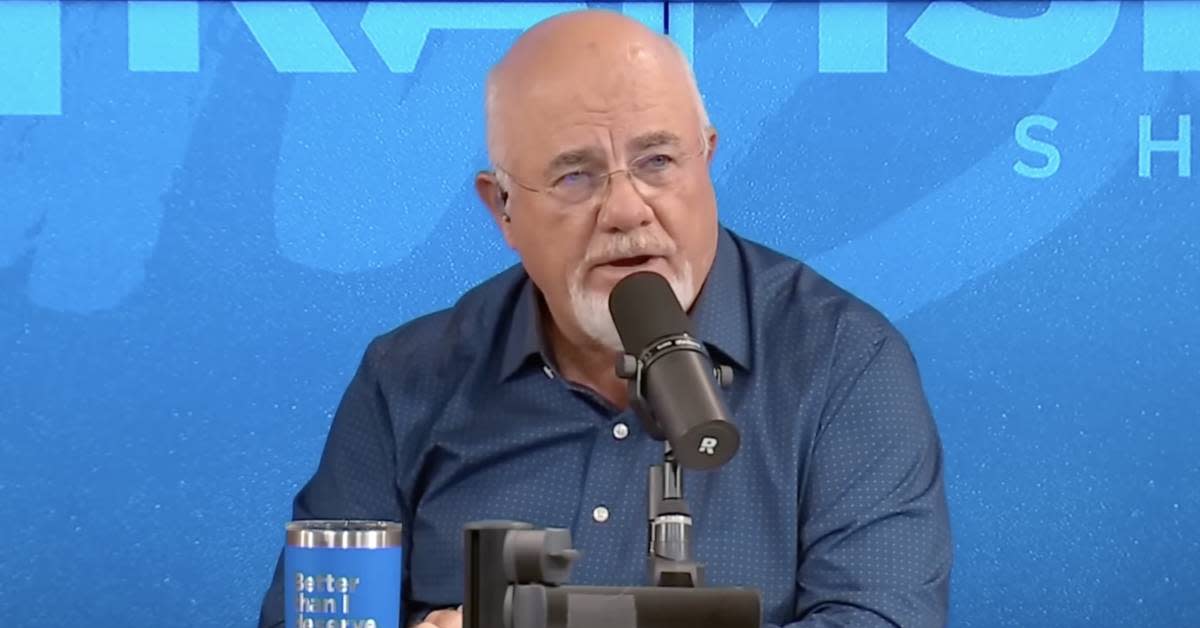
Toby called into The Ramsey Show from Ohio, laying his problems on the line. He’s homeless, unemployed and saddled with $14,000 in debt of which nearly half is a car loan. Even his car’s “broke.”

He was charged with a DUI last year, and added that he had developed a mental block about working.

Thanks to Jeff Bezos, you can now become a landlord for as little as $100 — and no, you don't have to deal with tenants or fix freezers. Here's how

Dave Ramsey warns nearly 50% of Americans are making 1 big Social Security mistake — here’s what it is and the simple steps to fix it ASAP

Vanguard reveals what could be coming for U.S. stocks, and it’s raising alarm bells for retirees. Here’s why and how to protect yourself

Toby asked Dave Ramsey and Jade Warshaw if declaring bankruptcy was a “smart move.”

“Toby, you’re not bankrupt,” Ramsey responded. “You’re broke, homeless and don’t have a job (1).”

Ramsey said debt was simply a symptom of “all the other crap that’s going on in your life — not keeping a job, DUIs and all this other stuff.”

He and Warshaw urged Toby to find a steady job to get his life back on track. Toby asked them to help him with his lack of motivation.

“The problem with your money is the guy in your mirror, and he’s difficult,” Ramsey said. “Controlling the guy in our mirror is every one of us. It’s the thing we struggle with the most.”

Here’s what Ramsey recommended Toby do instead of declaring bankruptcy.

Although it’s possible Toby could pay down his car loan, Ramsey was quick to point out a much more fundamental truth. There’s nothing worthwhile for them to repossess: the car’s broken down.

“If they come find you, they can’t take nothing,” Ramsey said. “You’re what they call judgment-proof.”

Ramsey recommended starting by reaching out to community organizations, like a local Church, to help address the core issues that led to Toby’s DUI and difficulty holding down work.

When it comes to bankruptcy, Ramsey was clear: don’t do it.

Filing for bankruptcy can be helpful if you’re inundated with collection calls or are being sued for payment, but it’s important to note that even if you file for bankruptcy, the court may not grant you one (2).

A Chapter 7 bankruptcy filing allows individuals to forgo paying debt if they can prove their assets are not reasonably sufficient to satisfy their creditors. Chapter 13 Bankruptcy, also called a wage earner’s plan, enables individuals with a regular income to repay all or part of their debts over a period of three to five years (3).

Most financial advisors like Ramsey say to avoid filing for bankruptcy if possible.

There are better alternatives, like out-of-court agreements with creditors, debt counseling services and debt consolidation plans.

That’s because the long-term effects of bankruptcy are serious. You could lose your assets and not be able to take out a loan or mortgage for seven years. If Toby does get back on his feet, a bankruptcy filing could affect his life longer than a debt repayment plan.

It can also have a serious impact on your lifestyle and financial future, so it’s critical to work with a financial advisor if you’re considering this as one option.

Read More: I’m almost 50 years old and don’t have retirement savings. Is it too late to catch up?

Read More: Non-millionaires can now invest in this $1B private real estate fund starting at just $10

The first step to getting help, as Toby demonstrated, is acknowledging you have a problem.

The next? Finding a financial advisor you can trust, which isn’t always easy.

Platforms like Advisor.com make it easier for you to find a FINRA/SEC-registered financial advisor near you.

Here’s how it works: Simply answer a few basic questions about yourself and your financial goals, and Advisor.com’s AI-matching technology will connect you with a vetted expert suited to help you.

Since Advisor.com’s roster is made up of fiduciaries, they’re legally obligated to act in your best interests, so you can trust the advice that you’re getting is unbiased.

But still, financial planning isn’t a one-size-fits-all strategy, and hiring an advisor can be a lifelong commitment. That’s why Advisor.com lets you set up a free consultation with no obligation to hire to see whether you’re on the same page.

Bankruptcy filings can stay on your credit report for up to 10 years, and can have a serious impact on your financial future (4).

For those in the same boat as Toby, consider trying to aggressively pay down your debt before resorting to such a drastic step. Dave Ramsey calls it the second “baby step” on the road to financial freedom (5).

The big two methods for paying debt down are the avalanche and snowball techniques.

The avalanche method focuses on paying down your highest-interest debts first. This can create a cascading effect where, after the big debt is paid, you knock off the smaller ones quickly.

Meanwhile, the snowball method starts with paying down your smaller debts one after another to build up steam. Then, once you're down to one debt, you put all your resources into paying it off.

If you owe a substantial amount like Toby, you may also want to see if you qualify for a debt relief program to help clear a significant portion of your debt.

With Freedom Debt Relief, you can speak with a certified debt relief consultant for free, who can show you how much you can save by partnering with them.

If you’re eligible, they can negotiate settlements with your creditors until all of your enrolled debt is resolved.

Once you consolidate your debts into a single loan, the key is making sure you can keep up with the monthly payments. One predictable bill can make budgeting easier — but only if you have the cash flow to cover it.

Apps like Monarch Money can help. The platform helps you create a custom budget and keep track of where your money is going at all times.

It also might be a good idea to reduce discretionary spending, like subscriptions, when you’re trying to pay down debt.

Once you link your accounts, you will be able to view every transaction through one clean, searchable list. This way, you can spot any unexpected charges, such as unwanted subscriptions, quickly and seamlessly.

What’s more, you can get 50% off your subscription for the first year when you sign up using the code WISE50.

Many young people like Toby are struggling to get ahead. In a recent Bank of America survey, 51% of Gen Z said the high cost of living is a barrier to their financial success (6).

Some turn to unhealthy behaviors to feel temporary relief, like retail therapy, ignoring financial responsibilities (7). Others are obsessed with doomscrolling.

If you’re under stress, feeling anxious or depressed, or have another mental or physical health issue, managing your money can seem overwhelming.

If you’re struggling with your attitude towards money, ask yourself:

What are the emotions driving my spending habits?

Am I avoiding financial responsibility?

Before spending on discretionary purchases, ask: Is this purchase aligned with my goals?

What are my short-term and long-term financial goals?

Do I have any negative or self-limiting beliefs about money?

Once you’ve taken a closer look at the beliefs and emotions shaping your spending, the next step is putting those insights into practice.

The rising cost of living has undoubtedly made it more challenging for Americans to build better financial habits.

It’s tough to set aside 10%-15% of your income towards savings and investments (8) — as experts recommend — when one in four households in the U.S. live paycheck to paycheck (9).

But you don’t need to set aside hundreds of dollars every month in order to build a healthy nest egg. You just need to be consistent.

Platforms like Acorns allow you to automatically turn your spare change from everyday purchases into an investment opportunity.

Once you link all your cards, Acorns will round up each purchase to the nearest dollar and invest the difference into a diversified portfolio of ETFs. So, when you buy your morning coffee for say $4.25, you’re making a $0.75 investment into your future.

It might seem like a drop in the ocean, but those small contributions can quietly grow over time thanks to the power of compound interest.

For instance, investing $20 each week for 30 years can help you save over $179,000, assuming it compounds at 10% annually.

The best part? You can get a $20 bonus investment when you sign up with Acorns and add a monthly recurring contribution of $5.

Are you overpaying for car insurance? This 2-minute check could lower your rate to $29/month — no phone calls required

Robert Kiyosaki begs investors not to miss this ‘explosion’ — says this 1 asset will surge 400% in a year

This 20-year old lotto winner refused $1M in cash and chose $1,000/week for life. Now she’s getting slammed for it. Which option would you pick?

Warren Buffett used these 8 repeatable money rules to turn $9,800 into a $150B fortune. Start using them today to get rich (and stay rich)

Join 250,000+ readers and get Moneywise’s best stories and exclusive interviews first — clear insights curated and delivered weekly. Subscribe now.

We rely only on vetted sources and credible third-party reporting. For details, see our editorial ethics and guidelines.

The Ramsey Show (1); Experian (2); United States Courts (3); Consumer Financial Protection Bureau (4); Ramsey Solutions (5); Bank of America (6); NASDAQ (7); TIAA (8); CNN (9)

This article provides information only and should not be construed as advice. It is provided without warranty of any kind.