huffpost Press
Trump’s War On Iran Will End When He Declares Victory – The Only Question Is When
Images
1 / 5

2 / 5

3 / 5
4 / 5

5 / 5
WASHINGTON – When will Donald Trump declare victory in Iran?

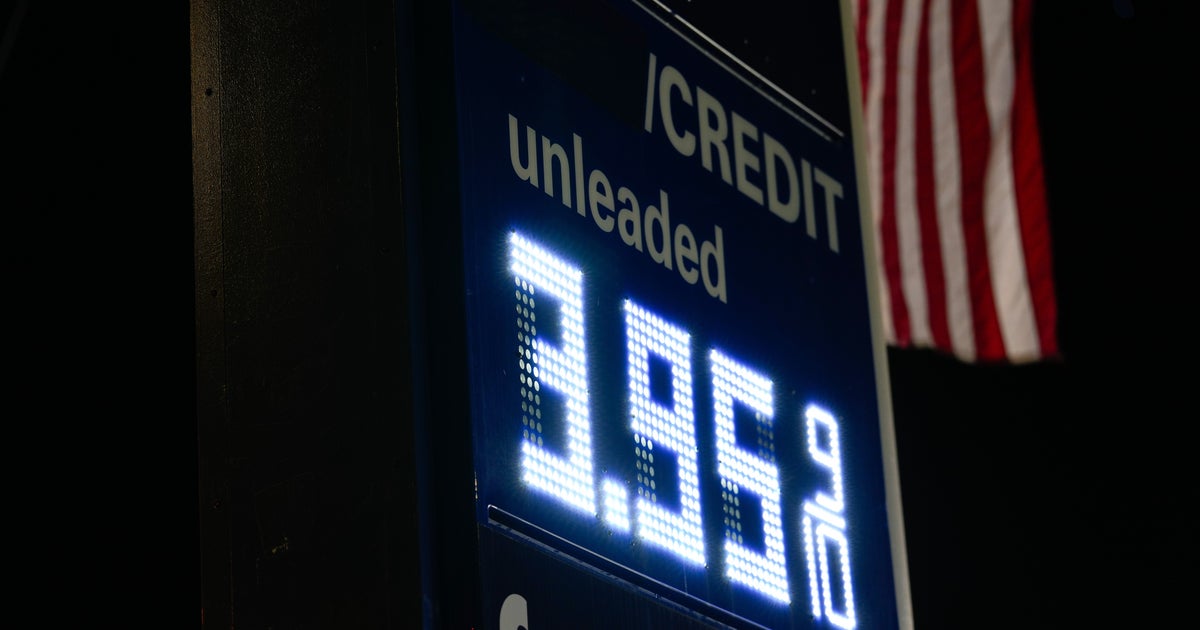
The answer to that question could determine whether it’s a few days, a few weeks, a few months or even longer that American service members remain in harm’s way and gasoline prices at home stay close to or above $4 a gallon.

Trump has famously backed down from previous pronouncements when economic calamity threatened – a process that has even earned the nickname TACO, for “Trump always chickens out” – but economists and national security experts warn that even if that were to happen with his Iran war, much damage has already been done and will not easily be undone.

“Even if this ended today, and it doesn’t look like that, there has already been a large amount of resources expended on the war, the period of high oil prices will take a toll, and I would expect uncertainty to continue elevating oil prices going forward,” said Jason Furman, a top economist in the Obama White House and now an economics professor at Harvard University. “So no matter what, we have and will continue to pay for this.”

Trump White House officials did not respond to HuffPost queries.

On Monday, Trump said he believed the war was ahead of schedule, but gave no concrete indication about how long he will continue attacking Iran with bombs, missiles and drones. He has previously said it would take weeks to accomplish what he wants, but he has also said he will not permit Iran’s regime to replace its “supreme leader,” Ali Khamenei, whom the U.S. and Israel killed, with his son. Over the weekend, Iran did exactly that, naming Mojtaba Khamenei as the new supreme leader.

“I think the war is very complete, pretty much,” Trump told CBS News. “They have no navy, no communications, they’ve got no Air Force.”

Traders on Wall Street, who are credited with creating the “TACO” shorthand, seemed to think a backdown could be coming soon. Stocks closed up on Monday after the price of a barrel of oil plummeted to below $90, following a surge to over $120 earlier.

Trying to predict Trump’s next move, though, is an inexact science. While most observers assumed the president would never deploy ground troops because of the certain political backlash, neoconservative scholar Robert Kagan was not so sure.

“He had his chance to declare victory all last week. Now it looks like a loss. We did this to replace Khamanei with his son? Why is he constantly talking about ground troops? It’s a disaster for the markets just to talk about it. So I assume that as of now that’s what he intends,” said Kagan, a State Department veteran of the Reagan administration and now an analyst at the Brookings Institution. “Could a week of $100 oil change his mind? Sure.”

Even if nothing further happens to exacerbate the situation and crude oil starts to flow out of the Persian Gulf in the coming days, the negative consequences for American businesses and consumers, as well as the country’s global reputation, are likely to last for months, years or even indefinitely, experts warn.

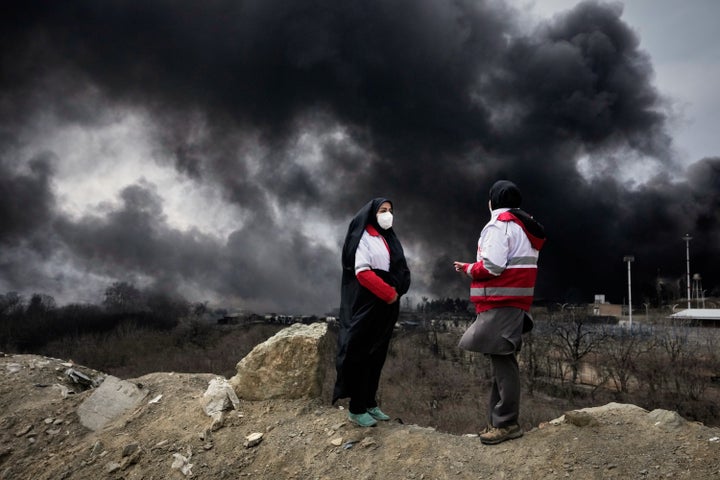
Less than two hours into the massive bombing and missile campaign, an American missile killed some 175 people, most of them children, at a school near an Iranian military base, according to multiple analyses. Seven U.S. service members were killed or mortally wounded in those initial hours. Not long after came the effective closure of the Strait of Hormuz, restricting much of the world’s oil flow, which has been followed by attacks against oil and gas infrastructure across the region by the United States, Israel and Iran.

“I think there will be a ‘new normal’ in the Middle East that is not dependent on the U.S. for defense and an angry, sulking Iran that is even more hard-line and anxious for revenge. The Gulf states will arm themselves to the teeth,” said Jim Townsend, who has worked at both the Pentagon and NATO and is now an analyst with the Center for a New American Security, a center-left think tank. “The oil trade will resume, but not quickly. Too much uncertainty about Iran taking potshots at tankers or laying mines.”

One former national security official from President Joe Biden’s administration, who spoke on condition of anonymity, said that Trump ending attacks on Iran does not necessarily mean that oil would start moving again.

“If Israel were to keep up the strikes, I don’t think it would eliminate the fear of shippers,” the official said.

Trump’s tariffs had already slowed what had been a steadily growing economy. Inflation started edging back up after Trump’s so-called “Liberation Day” tariff announcement last April, and job growth also began slowing. Last month saw a loss of 92,000 jobs, according to federal government figures.

The Iran war has thrown spiking petroleum costs into that stew, sending U.S. gasoline prices back toward $4 a gallon, a threshold many analysts expect will be crossed soon.

On Monday morning, Iranian foreign minister Seyed Abbas Araghchi posted a chart showing the dramatic increases – crude oil up 58% and United Kingdom natural gas up 109% – and acknowledged that the United States is now trying to contain that inflation.

“Iran is fully prepared. And we, too, have many surprises in store,” he wrote, mocking Trump’s Operation Epic Fury attack as “Operation Epic Mistake.”

Beyond what Iran may or may not do are the uncertainties that Trump’s actions have already introduced into the global business climate.

“The economic fallout will not fade quickly, particularly if the Iranian regime remains in power,” said Mark Zandi, chief economist at Moody’s Analytics. “There will be an ongoing risk premium built into global oil and natural gas prices. The conflict also cements the view that President Trump will take other actions around the globe that will add to business uncertainty and increase costs.”

Ending the war, and ending it quickly, is nevertheless better for the country and the world, said University of Michigan economist Justin Wolfers.

“Undoing a reckless choice is always better than not undoing a reckless choice,” Wolfers said. “But yes, there’s ongoing damage either way. Businesses have to build ‘what if Trump starts a reckless adventure?’ into their plans. There are plenty of businesses right now that have made an investment they thought would be economic, but realize it’s no longer economic in the midst of a war in the Middle East. Those folks wish they hadn’t invested or wish they had delayed. They won’t make the same mistake next time.”

By entering your email and clicking Sign Up, you're agreeing to let us send you customized marketing messages about us and our advertising partners. You are also agreeing to our Terms of Service and Privacy Policy.