yahoo Press
Colorado home insurance rates are spiking due to wild weather. How to shelter your premiums in the storm
Images
1 / 4
2 / 4

3 / 4

4 / 4
Colorado has a high wildfire risk — about 75% higher than most states (1). But wildfires aren’t behind the steepest home insurance increases in the state.

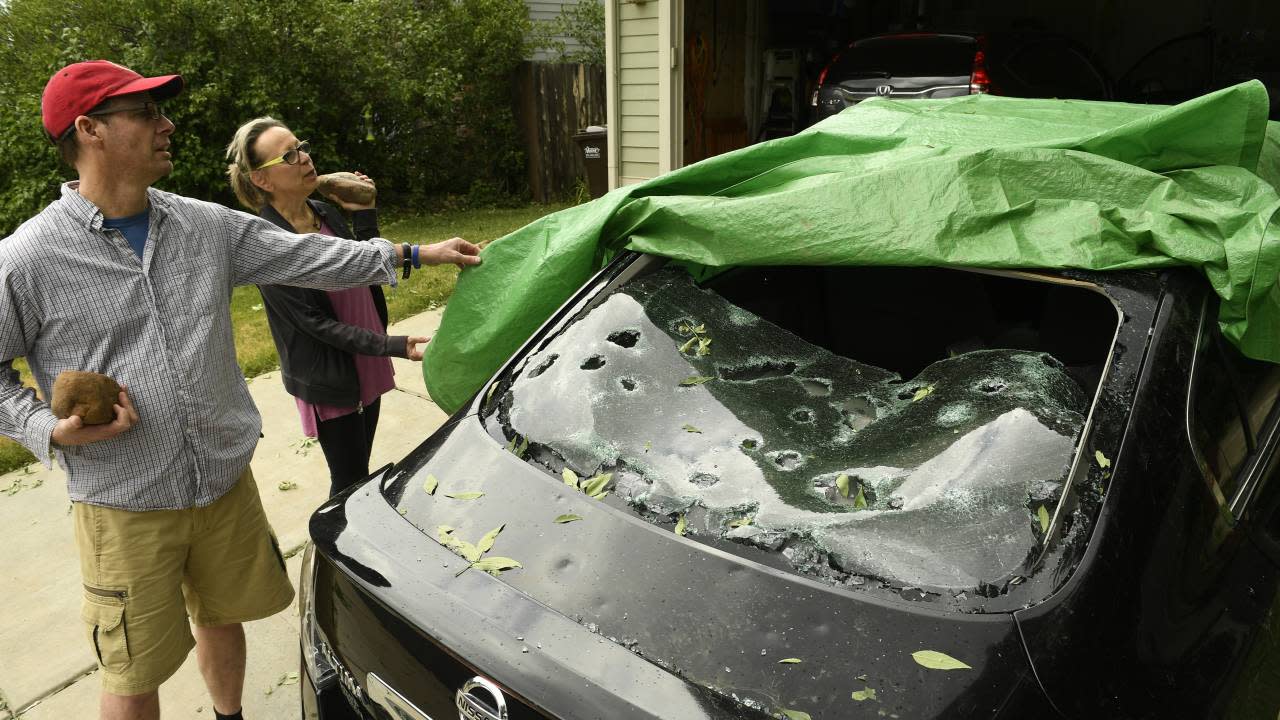
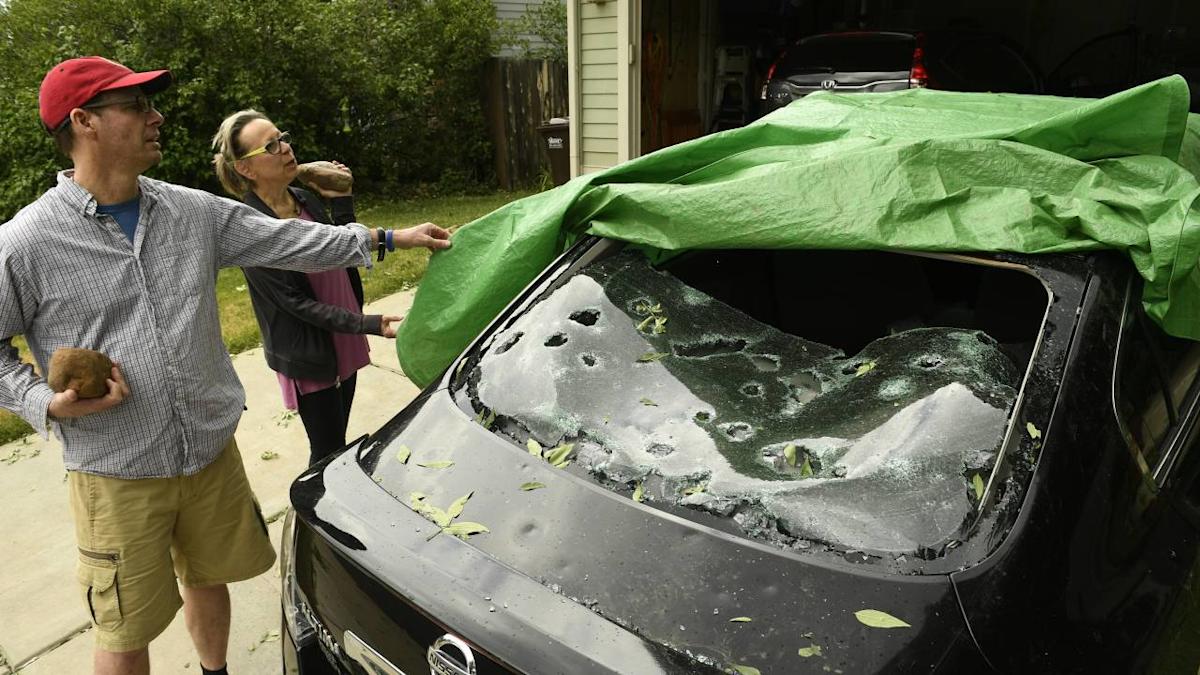
Hail is.

According to data from CBS Colorado, the state ranks second nationally in hail insurance claims (2).

The Colorado Division of Insurance found that hail accounts for 26% to 54% of the cost of homeowners’ premiums — compared to 1% to 25% for wildfires — even in areas that don’t regularly see large hailstorms.

A state bill last year would have added a fee to homeowners’ policies to fund state grants for hail-fortified roofs, but it failed. Now Colorado lawmakers are working on a new proposal to address the rate rises, but securing funding for the program remains challenging.

Colorado homeowners aren’t alone. Across the United States, extreme weather is driving up the cost of home insurance, with rates jumping 33.8% between 2018 and 2023 according to S&P Global Market Intelligence.

The average homeowner pays $2,181 per year for a $300,000 dwelling policy, according to Bankrate (3). By 2053, climate-exposed households could be paying $700 more, according to the National Bureau of Economic Research (4).

Thanks to Jeff Bezos, you can now become a landlord for as little as $100 — and no, you don't have to deal with tenants or fix freezers. Here's how

Dave Ramsey warns nearly 50% of Americans are making 1 big Social Security mistake — here’s what it is and the simple steps to fix it ASAP

Turning 50 with $0 saved for retirement? Most people don’t realize they’re actually just entering their prime earning decade. Here are 6 ways to catch up fast

While wildfires often grab headlines, there are other natural disasters driving up insurance claims and premiums:

Hail and severe storms: Common in Colorado and parts of the Midwest. Roof damage is expensive and frequent.

Hurricanes and windstorms: Coastal states like Florida and Texas face repeated storm losses.

Flooding: Even inland flooding can cause costly damage.

Tornadoes: States across “Tornado Alley” see regular claims from wind damage. (5)

On top of the weather, rebuilding costs have climbed.

Labor and materials are more expensive than they were a few years ago.

When insurers pay more for repairs, those costs often show up in future premiums.

For homeowners, that can mean higher monthly bills or, in some cases, difficulty finding coverage at all.

Read More: The average net worth of Americans is a surprising $620,654. But it almost means nothing. Here’s the number that counts (and how to make it skyrocket)

While you can’t control the weather, you can take steps to lower your risk and possibly your premium. Here are a few strategies that may help.

In Colorado, impact-resistant or hail-fortified roofs may help reduce rates. Some insurers offer discounts for upgraded roofing materials. In wildfire-prone areas, clearing brush, installing ember-resistant vents and using fire-resistant materials may lead to lower rates.

Check with your state insurance department for local programs that might help. For example, lawmakers in Colorado are exploring ways to help residents pay for hail-resistant roofs. If grant or rebate programs become available, homeowners may be able to offset the costs of upgrades.

Insurance rates can vary widely between companies. Get quotes from at least three insurers to make sure you're not overpaying. An independent agent can help you compare options.

Many insurers offer discounts if you bundle home and auto coverage. Others may offer small rate reductions for security systems or for modernizing your electric wiring or plumbing. Some providers offer discounts for older Americans.

Consider choosing a higher deductible to lower your premium. Just make sure you have enough savings to cover that amount if you need to file a claim (6).

Colorado’s insurance story shows that one risk, like hail, can quietly outweigh another that gets more attention, such as wildfire.

As weather patterns shift and rebuilding costs rise, homeowners nationwide may need to consider the specific risks where they live.

Robert Kiyosaki says this 1 asset will surge 400% in a year — and he begs investors not to miss its ‘explosion’

Dave Ramsey says this 7-step plan ‘works every single time’ to kill debt, get rich in America — and that ‘anyone’ can do it

Non-millionaires can now invest in this $1B private real estate fund for as little as $10. Here's how to get started in minutes

Warren Buffett used these 8 repeatable money rules to turn $9,800 into a $150B fortune. Start using them today to get rich (and stay rich)

Join 250,000+ readers and get Moneywise’s best stories and exclusive interviews first — clear insights curated and delivered weekly. Subscribe now.

We rely only on vetted sources and credible third-party reporting. For details, see our editorial ethics and guidelines.

Wildfire Risk (1); CBS News (2); Bankrate (3); CNBC (4); NPR (5); Insurance Information Institute (6)

This article provides information only and should not be construed as advice. It is provided without warranty of any kind.