buzzfeed Press
17 "Normal" Things Women Quit Doing After They Realized They Were Exhausting
Images

1 / 11
2 / 11

3 / 11
4 / 11

5 / 11

6 / 11

7 / 11

8 / 11

9 / 11

10 / 11

11 / 11
"The best decision I ever made was to stop being with family on holidays..."

"Just had this conversation with my therapist last week! It can be so taxing, and then you almost feel guilty for being so overwhelmed with your friend’s issues. I’ve started to let my friends know I have business hours now, and if I don’t get to them from 8 a.m. to 5 p.m., Monday through Friday, then they’re going to have to wait."

"It’s so liberating to have stopped doing that. If I want to see a movie? I see it alone. I’m single, but I want to go on a date? I dress up, go to a restaurant, and have a meal for one. I want to try a new sport or hobby, but don’t know anyone else doing it? Fine, no worries. A new cafe opened? Cool, I’ll check it out even if it’s just me.

Life is too short to wait on other people to permit you to do something!"

"It’s astonishing how often this happens. I’m also getting more comfortable with silence. The next step is putting them in an uncomfortable position by asking, 'What questions do you have for me?' Or forget about politeness and leave early if it doesn’t look like the guy is just too nervous to ask anything."

"Now I’m still the default parent just because of how my husband's work is set up, but it is much more balanced in terms of parental duties, and when he is around, he makes it a point to do the stuff they’re constantly asking me for."

"This is called 'emotional monitoring,' and it’s detrimental to relationships!

Once, I made a really bold decision that I knew might make my best friend unhappy. The truth is, she already held secret animosity towards me, so no matter what decision I made, the outcome would have been the same, and I’m glad I made that decision."

"This happened at my last job. I was essentially the mistreated sitcom housewife of that office.

My birthday happened, and I said nothing. One coworker remembered and brought in a mini pie because I don’t like cake. Cue everyone else feeling bad, so they tried to make me feel bad for not reminding them.

My response? 'No one has to remind me when it’s your birthdays. It’s called a calendar! I made a shared one that you all have access to.'

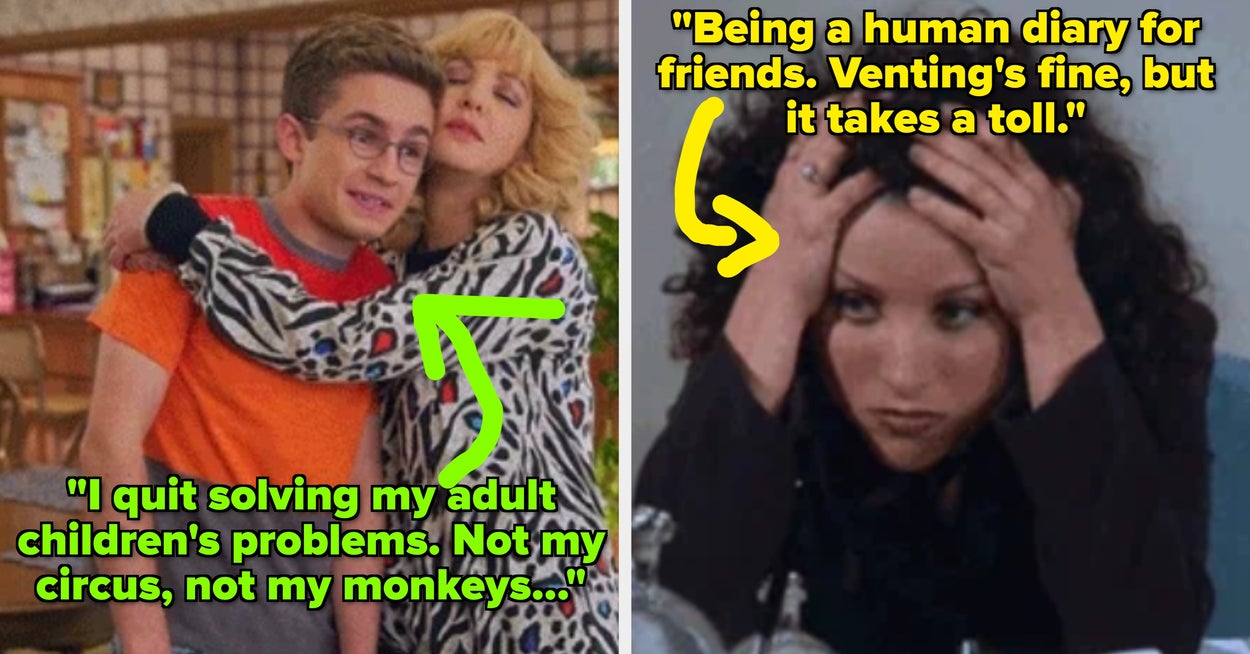
"It was stressing me out way too much. I've learned to step back and tell myself, 'Not my circus, not my monkeys.'

I'll still offer advice if asked, but otherwise I have to trust my kids to manage their own lives."

"The context in which an ex-friend and I met made us a good fit, but when that part ended, she became a drain. She always wanted a friend to lean on, but never wanted to go to the trouble of being that friend for someone else.

It was tough to have a 'friend breakup,' but it felt right instead of just ghosting her."

"I have become more assertive in general, so communication has become more concise and to the point since I’m not over-explaining myself all the time. Men seem to respect this (it took time to adjust), and it gives them less ammunition to 'mansplain.' I’m also able to relax more now and have comfortable chit-chat with everyone.

I've also noticed that in male-dominated settings, women tend to be more catty towards each other, and it’s saddening. I don’t believe this is purposefully done, so I try to keep the same attitude with everyone. I naturally gravitate towards women, but I can also tell when the vibe is off. Being more assertive has also helped with the more difficult personalities in this case.

Just make it about the work, get your stuff done, go home, and forget about it until the next morning."

"When I refused to apologize, she stopped talking to me forever. I have to say, though, she was emotionally draining in and of herself."

"Family is the people you choose to surround yourself with because they make you feel like a better person.

Sometimes they're blood relatives, sometimes not."

"I felt disheartened at the low effort I saw on the profiles I looked at, and even more so when it came to talking stages, where I'm trying to bring up interesting topics but getting bland responses, feeling like maybe I had to tone my personality down and try to decipher what they would find appealing. When I decided to be impulsive and go on a date with someone who asked immediately, wondering if skipping the talking stage altogether would help, it was perhaps the most boring and uneventful first date in history.

After a year, I felt particularly low, and when I told my friends, their only advice was to try a different app. I can't describe the feeling of the weight being lifted off my chest when I deleted the app. I realized I want someone to know me and fall in love, rather than see a few pictures and shallow prompts and make a quick decision without truly getting to know a person. Now, despite being 29, knowing I'll turn 30 this year and still never having been in a relationship, I know I'll never go back on a dating app, and I still feel so much happier without it."

"I'm trying hard to stop doing this. There comes a point with some people that they won't ever understand, so you need to switch to self-preservation mode.

Say, 'I do this because it works for me,' or even 'That doesn't align with my goals,' instead of explaining."

"Now, I just let people think whatever they want. I'll have good-faith conversations, but I see absolutely zero need to argue anymore.

If you want to believe the Earth is flat, that's none of my business."

"I didn’t realize how exhausting it was constantly thinking about how things would look. What to post, when to post, and how it would be perceived. Part of me was definitely trying to prove that I was doing well, that my life was interesting, and that I was okay. When I stopped posting to impress or keep up appearances, the pressure eased almost immediately, and I felt lighter."

"When I have a conversation with certain members of my family, they just want to talk badly about one another and trauma dump. Those conversations are exhausting and drain me every time. It just sucks the energy out of the room. I've started becoming more mindful of it and try to switch the conversation to something positive instead.

"And anytime I think about trauma dumping, I shelf it, and make an active choice to talk about something else. Those thoughts and conversations about things that happened months or years ago are so tiring. It's all a choice. It's a bit harder, though, when someone is trying to talk about those things and trauma dump, and they want you to engage in it; it's hard to steer the conversation away from that. So that's something I'm working on: not engaging in it.

I'm trying to get better, and it makes the conversation lighter, and you walk away feeling good and not crappy."

Note: Some responses have been edited for length and/or clarity.