Press
Why did US and Israel attack Iran and how long could the war last?
Images
1 / 13

2 / 13
3 / 13
4 / 13
5 / 13
6 / 13
7 / 13
8 / 13
9 / 13
10 / 13
11 / 13
12 / 13
13 / 13
Conflict across the Middle East has entered a second week after the US and Israel launched wide-ranging strikes on Iran, killing the country's supreme leader on 28 February.

Iran has continued to respond by launching attacks on Israel and US-allied states in the Gulf, which have extended to non-military targets, including civilian sites and energy facilities.

The fighting has escalated quickly, pulling in Cyprus and Lebanon, with casualties and damage mounting on all sides.

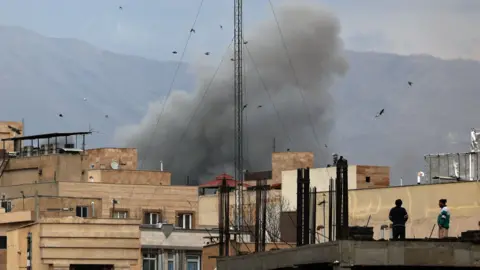
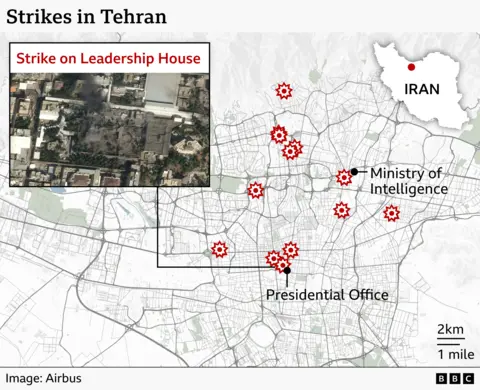
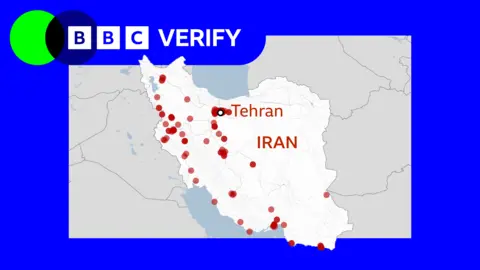
The US and Israel launched their attack on 28 February, targeting Iran's missile infrastructure, military sites and leadership in the capital, Tehran, and across the country.

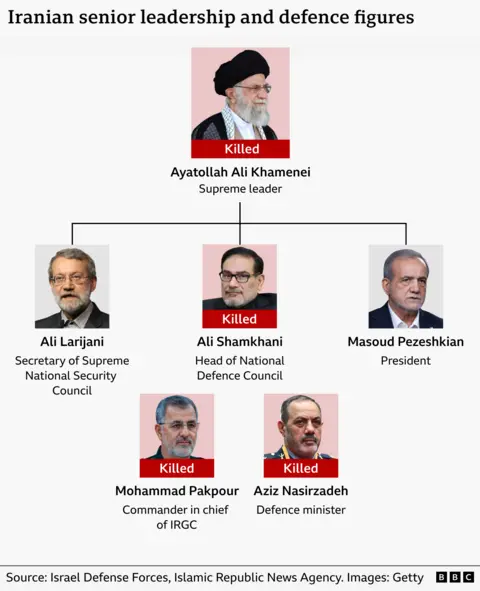
Iran's Supreme Leader, Ayatollah Ali Khamenei, who led the country since 1989, was killed during the first wave of strikes. Israel's military said dozens more senior figures in the powerful Islamic Revolution Guard Corps (IRGC) were also killed.

The US and Israel have continued to target key sites linked to Iran's nuclear programme. Iran has repeatedly insisted its nuclear programme is entirely peaceful.

As of 5 March, Iranian state-linked media Tasnim said 1,230 people had been killed, while the US-based Human Rights Activists in Iran (HRANA) group said 1,114 civilians had been killed and a further 926 reported deaths were under review.

Iran accused the US and Israel of launching an attack on a girls' school near an IRGC base in southern Iran on Saturday, saying more than 160 people were killed.

The US said it was looking into reports of the incident, while Israel said it was "not aware" of any military operations in the area.

Internet connectivity in Iran has been almost entirely restricted and its airspace has been closed, and there has been no updated death toll from Iran since 5 March.

Iran has described the US and Israeli strikes as "unprovoked, illegal and illegitimate", and has carried out widespread missile and drone attacks in response.

The IRGC said it had targeted Israeli government and military sites in Tel Aviv and elsewhere.

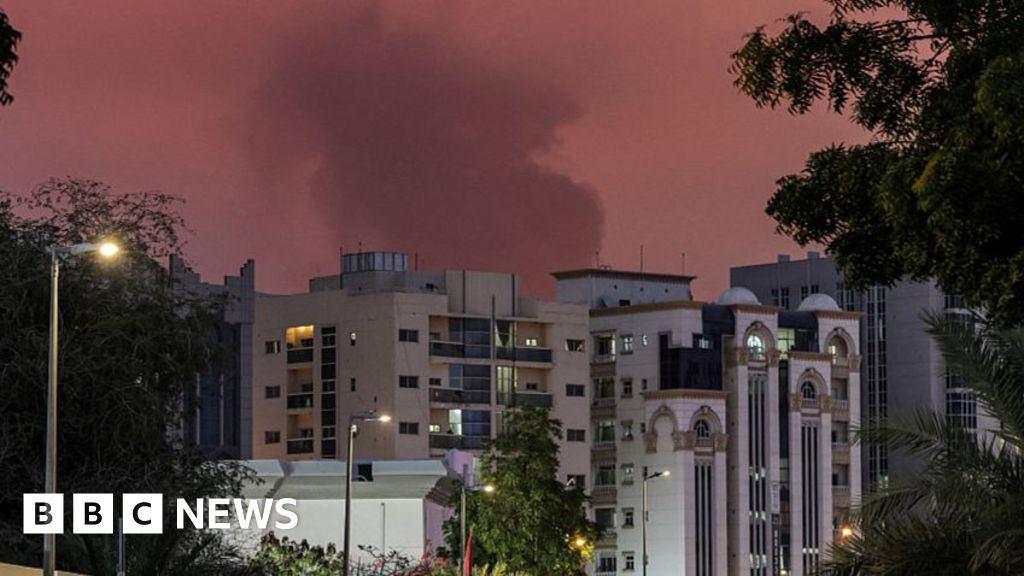
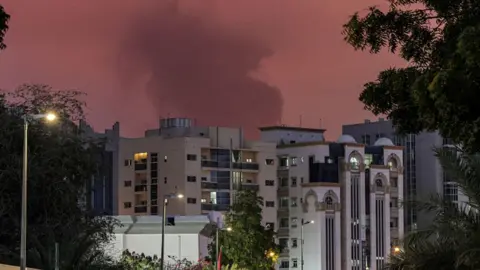
Iran has been accused of widening its attacks to include other targets, including shipping and civilian sites, such as hotels in Dubai.

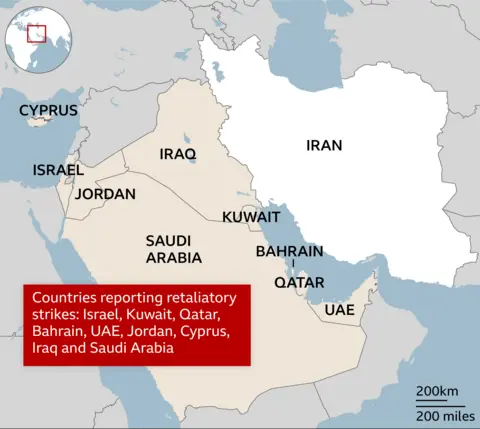
There have also been strikes in countries hosting US bases - Qatar, Bahrain, Jordan, the United Arab Emirates (UAE) and Kuwait - and US-allied Oman and Saudi Arabia.

Drones hit the US embassy in Saudi Arabia's capital Riyadh, and a drone also hit a car park adjacent to the US consulate in Dubai.

Iraq said it had been struck by Iran on 6 March after explosions at Erbil airport, while two days earlier Turkey said it had shot down an Iranian missile over its airspace. Azerbaijan accused Iran of attacking an airport with drones.

The US and its Arab allies issued a joint statement condemning Iran's attacks, saying "the targeting of civilians and of countries not engaged in hostilities is reckless and destabilising behaviour".

Elsewhere, a British military base in Cyprus was struck by a drone, according to the UK Ministry of Defence, which the Cypriot president blamed on Iran. Western officials later said the drone was not launched from Iran.

As of Monday 2 March, six US servicemen have been killed and 18 injured, according to Centcom.

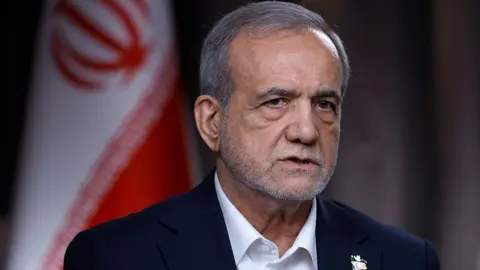
On 7 March, Iranian President Masoud Pezeshkian broadcast a video message on Iranian state television apologising to neighbouring countries that were attacked.

Pezeshkian said Iran did "not intend to invade neighbouring countries" and said the leadership has issued a decision to the armed forced that "from now on, do not attack neighbouring countries unless attacked first".

Israeli Defence Minister Israel Katz described the attacks on Saturday as a "pre-emptive strike" to "remove threats against the state of Israel", although he did not explain why there was a need to take military action at this time.

US Secretary of State Marco Rubio said on Monday the US knew there was going to be Israeli action, which meant America had to act "pre-emptively" in the face of expected Iranian attacks on American forces.

Israel Defense Forces (IDF) spokesman Brig Gen Effie Defrin revealed that the military operation was preceded by months of strategic deception that caught Iran off guard.

In the US, some lawmakers have called for President Donald Trump's administration to provide evidence that Iran posed a threat before Washington went to war.

But there are also underlying reasons.

Israel and the US - its closest ally - have been arch-foes of Iran since the Islamic revolution in 1979. The Iranian leadership has consistently called for Israel's elimination and denounced the US as its greatest enemy.

The two countries have led Western opposition to Iran's nuclear programme, claiming Iran is seeking to develop a nuclear bomb - something Iran has vehemently denied.

They attacked Iranian nuclear and military sites in June 2025 in a war which lasted for 12 days.

Since then, they have claimed Iran has been trying to rebuild its nuclear programme and develop missiles capable of delivering nuclear weapons.

Trump said these missiles could eventually reach the US, though this has not been supported by US intelligence assessments.

For its part, Israel considers Iran a threat to its existence and wants the complete removal of Iran's nuclear and missile programme, as well as regime change.

The US first openly talked in January about potentially attacking Iran when its security forces cracked down on protesters with deadly force.

But the US and Iran began negotiations and appeared to be making progress until Trump said he was "not happy" with the way the talks were going. Hours later the US and Israel began attacking.

On 6 March, Trump said there would be "no deal" with Iran unless it agreed to an "unconditional surrender.

The following day, in response to Pezeshkian's television statement, Trump said the Iranian leader had "apologised and surrendered ... because of the relentless U.S. and Israeli attack" but added later in his Truth social post "today Iran will be hit very hard!"

A new front in the war opened in Lebanon on 2 March when the militant group Hezbollah fired rockets at Israeli positions.

Israel launched attacks in response, hitting Beirut and parts of southern Lebanon.

Hezbollah is allied to Iran's government and said it was seeking to avenge Khamenei's assassination.

In Israel, the defence minister said on 3 March ground troops would "advance and seize additional strategic areas in Lebanon" in order to stop attacks from Hezbollah.

The United Nations said more than 30,000 people had been forced to flee their homes since the escalation of hostilities.

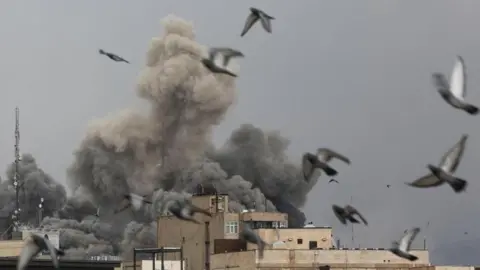
Israel launched a "broad-scale wave" of strikes against Beirut overnight on 6 March, saying it struck Hezbollah command centres and a facility storing drones in the capital's southern suburb of Dahieh.

Lebanon's health ministry said on 7 March the attacks had killed almost 300 people since the war front began.

Instability in the Middle East has begun to impact the global economy.

Iran has been accused of attacking ships in the Gulf, forcing the effective closure of the Strait of Hormuz - a key artery accounting for about 20% of global oil and gas supply.

Attacks have also been reported on major oil and gas hubs, including in Oman's Duqm commercial port and the UAE's Fujairah terminal.

The strikes have prompted some of the world's largest producers of oil and gas to suspend production, including Qatar's liquefied natural gas (LNG) facilities and Saudi Arabia's largest domestic refinery.

Oil and gas prices have surged, prompting warnings about the impact on the global economy and cost of living.

Trump said on March 3 that the US navy would protect ships in the region "if necessary" and "at a very reasonable price" in a bid to stop global energy supply issues.

A tanker off the coast of Kuwait was hit by a "large explosion", causing an oil spill, British maritime security agency UKMTO said on March 5.

Iran has said it will appoint a new supreme leader swiftly.

A transitional leadership council has been formed to run the country temporarily, consisting of: President Masoud Pezeshkian, judiciary chief Gholamhossein Mohseni Ejei and senior cleric Alireza Arafi.

The formal selection of a successor to Khamenei is carried out by 88 senior clerics, known as the Assembly of Experts.

Under the country's constitution, these clerics must appoint the new supreme leader as soon as possible, but this may prove difficult while the country is under attack.

The IRGC has already named a new commander-in-chief, Ahmad Vahidi.

Trump told US publication Axios that he wanted to be personally involved in selecting Iran's next leader.

Trump first said military action was expected to last "four to five weeks" but on 7 March White House spokeswoman Karoline Leavitt said the operations could last up to six weeks.

On the first day, Israeli Prime Minister Benjamin Netanyahu said the campaign would "continue as long as it is needed".

The war prompted one of the most serious disruptions to global travel since the Covid-19 pandemic, with airspace closures and thousands of flights grounded across the Middle East.

Since March 6, Etihad announced it will begin operating limited flights from Abu Dhabi to London, Manchester, Barcelona, Brussels, Dublin, Rome, Paris, and Milan.

Emirates also said it was working to restore full network operations, following the partial re-opening of regional airspace.

Airspace in Qatar partially reopened on March 7, in response Qatar Airways said it intended to operate repatriation flights.

The UK Foreign, Commonwealth and Development Office (FCDO) said anyone planning to travel to the Middle East should check its website for advice relating to their destination.

The UN Refugee Agency, UNHCR, says intensifying violence across the Middle East and beyond has already triggered significant population movement.

It said an estimated 100,000 people left Tehran in the first two days following the attacks. In Lebanon, it said 58,000 people were sheltering across collective sites.

In Syria, it said that nearly 10,000 Syrians and close to 1,000 Lebanese crossed from Lebanon on 2nd March, nearly three times the daily average.

With additional reporting by Olivia Ireland, Robert Greenall, Hafsa Khalil, Gabriela Pomeroy and BBC Persian.

Four people were killed in Michigan and two died in Oklahoma, officials say, as severe storms swept across parts of the US.

The apology may hint at a political repositioning inside Iran, writes BBC Persian's Amir Azmi.

Israel has continued strikes across Iran and Lebanon and the Iranian regime has carried out more attacks, as the war enters its eighth day.

Several US bombers have now landed at the airbase in order to launch strikes at Iran.

Sir Richard Knighton "completely rejects" criticism that the UK had been ill-prepared.