buzzfeed Press
People Are Using These Clues To Figure Out If Restaurants Are MAGA Or Not
Images
1 / 9
2 / 9

3 / 9
4 / 9
5 / 9
6 / 9
7 / 9
8 / 9
9 / 9
Like it or not, we “vote” with our dollars.

But the chaos stemming from Washington and spreading all over the country (and indeed, all over the world) has pushed many of us to “choose a side,” and the hospitality field is no exception.

“Many restaurants are trying to be as neutral as possible, but some (on both sides) don’t seem to care [about neutrality],” said Heather Turner, a hospitality consultant based in New England. “Their take on it is that they don’t want customers that lean in a direction they don’t agree with anyway.”

One such restaurant, the Old State Saloon in Eagle, Idaho, takes such pride in its MAGA beliefs that the owners made headlines at the end of last year for offering a month of free beer to any guests who could prove that they provided tips to Immigration and Customs Enforcement that resulted in the deportation of an undocumented immigrant.

On the flip side, Modern Times Cafe in Minneapolis spent Jan. 31 (the day of the ICE Out protests) offering free food and drink to protesters, rebranding as “Post Modern Times Cafe,” and announcing its intention to provide a “daily special” of a free meal to anyone in need until ICE leaves Minnesota.

Thanks to social media (more on that later), the public has plenty of opportunities to cobble together clues and try to figure out the political sympathies of their local businesses. But how reliable are these indicators? And if you do want to put on your detective hat and make an educated guess, what signs might suggest that a restaurant takes on a certain political persuasion? We asked a group of sociologists, political researchers and hospitality consultants to weigh in.

If you’re wondering why guests would care whether their local diner or bistro supports right-wing or left-wing causes, Stacy Rosenberg, associate teaching professor at Carnegie Mellon University’s Heinz College for the School of Public Policy and Management and the School of Information Systems and Management, spells it out succinctly: “Economic power is power.” That’s never truer than during tough economic times, when households need to be discerning about how and where they spend their money.

Emily Wagner, a doctoral researcher of sociology at the University of Nevada Las Vegas, explained that the nation’s polarization extends into all aspects of lifestyle, even something as simple as deciding where to go for dinner.

“I’ve been doing ethnographic research, [and through] participant observation for about three and a half years, I see some of the [people] I study intentionally seeking out bars for happy hours or restaurants that align with their views and who are receptive to them,” Wagner said. She adds that, based on her observations, we as a society “want to hang out with people who are similar-minded [and] watch media in places that are similar-minded.”

Arianna O’Dell, a New York City-based digital marketing consultant who focuses on hospitality and travel, sees these as the core reasons explaining why guests nowadays “are highly attuned to cues that suggest who a place is ‘for.’”

“I’ve seen a huge difference in [restaurant] decor and online/offline marketing in the last few years,” Turner said in reference to how politics informs restaurant concepts nowadays. “I have seen a change in shows/TV that they put on in the bar as well as any posters they make and allow to be posted in windows, [plus] literature placed in waiting areas,” Turner detailed. Other quieter signs about a restaurant’s political position may directly relate to their employees; for instance, “restaurants supporting undocumented workers may show that in subtle ways like [by] placing no-trespassing signs in kitchen areas.”

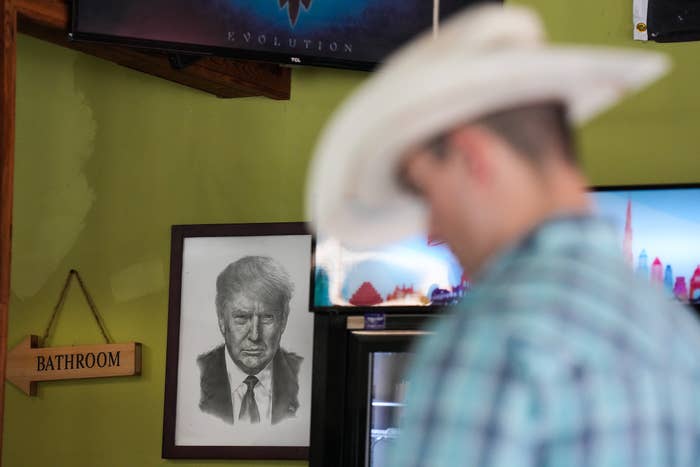
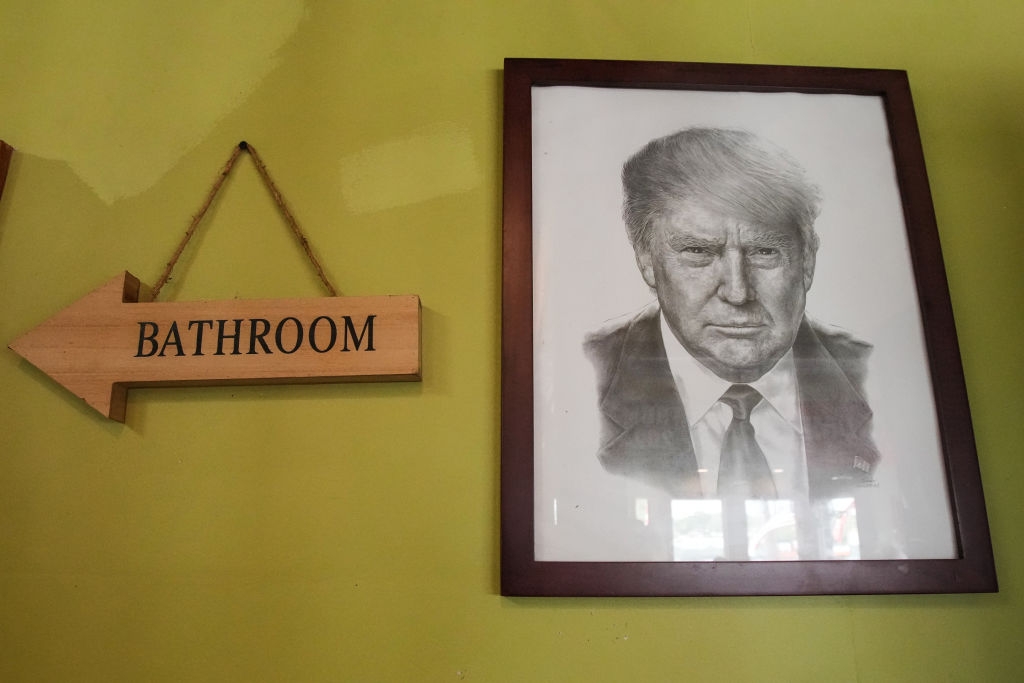
When it comes to stereotypical MAGA decor, it’s important to remember that this discussion involves common threads, not clear indicators. A restaurant that displays an American flag is not necessarily a MAGA establishment. But “nationalist or politicized décor choices, especially when the American flag or patriotic imagery is used prominently in ways that go beyond neutral civic symbolism” often show up in MAGA-aligned spaces, O’Dell told us. But it’s still not a definitive sign.

However, if a restaurant really wants to be considered a MAGA hangout, they’re not going to be especially subtle about it. So if you see overt symbols of white nationalism (like a Confederate flag, any Nazi iconography, or logos related to far-right groups like the Three Percenters), you can fairly assume that venue’s desired customer base.

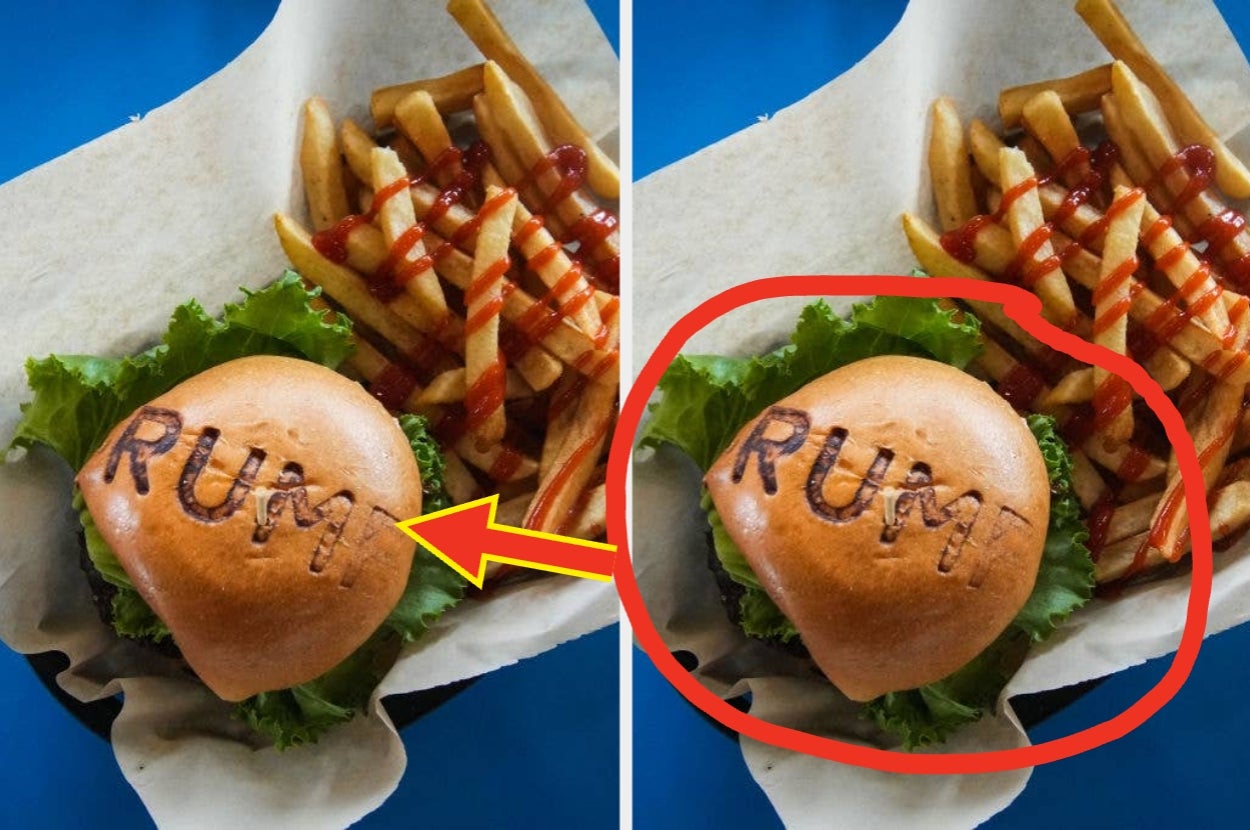
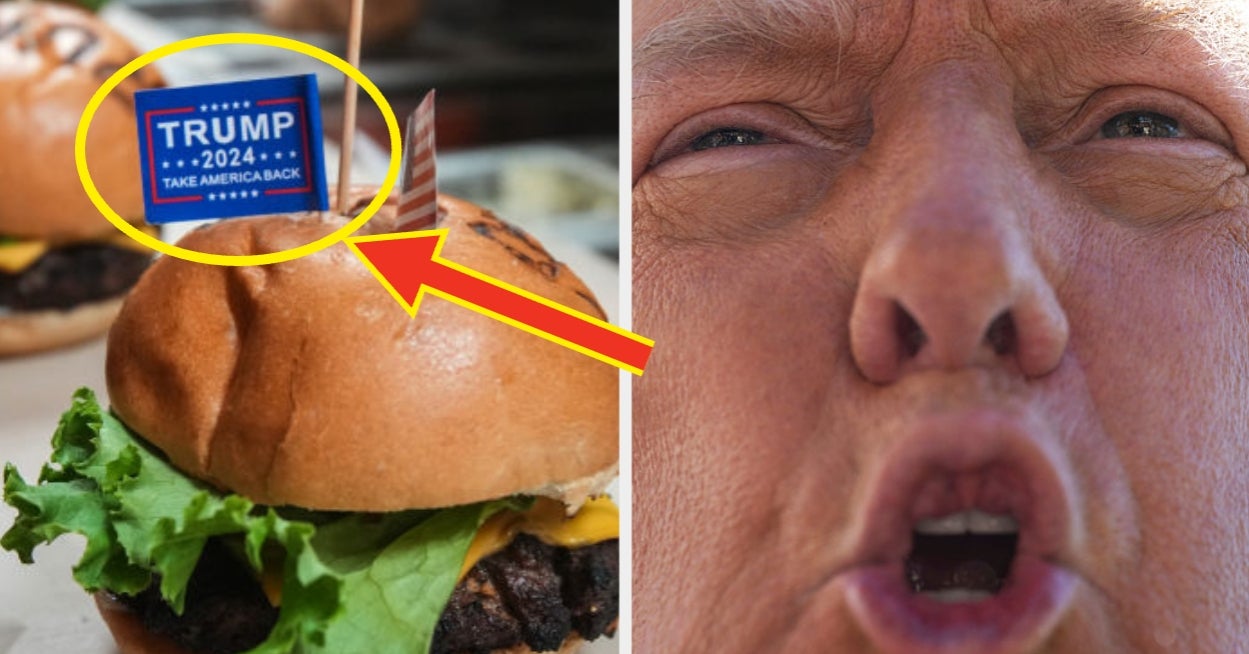
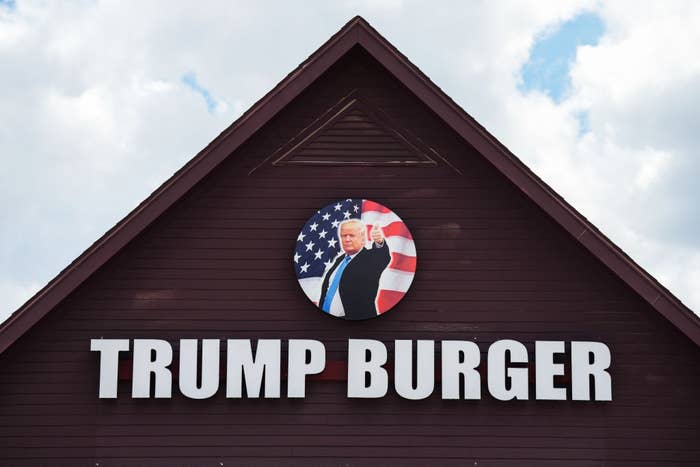
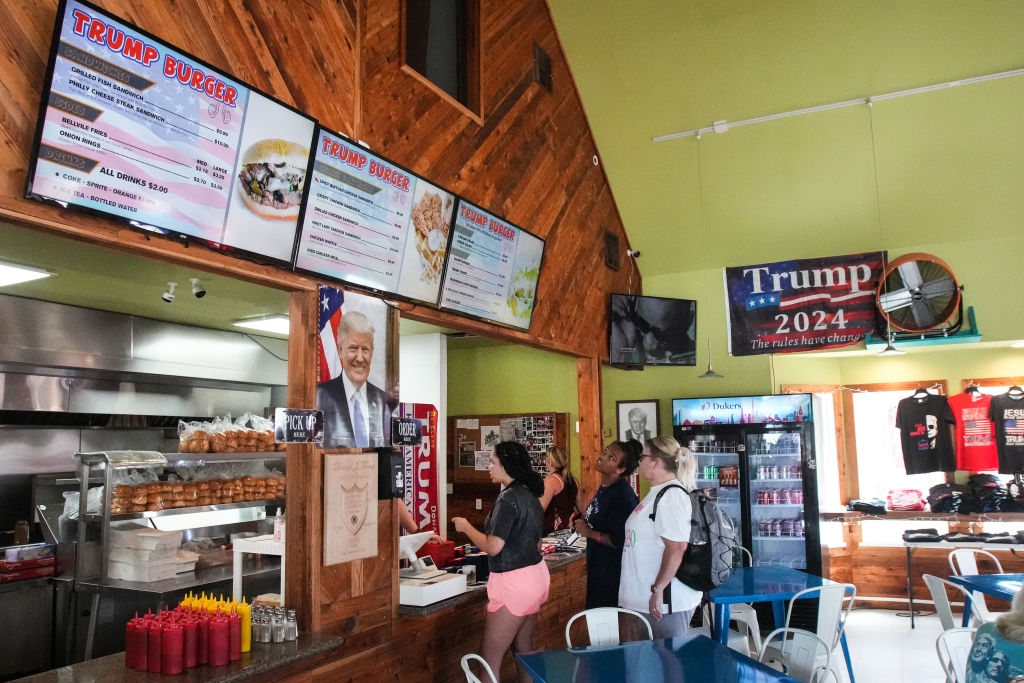
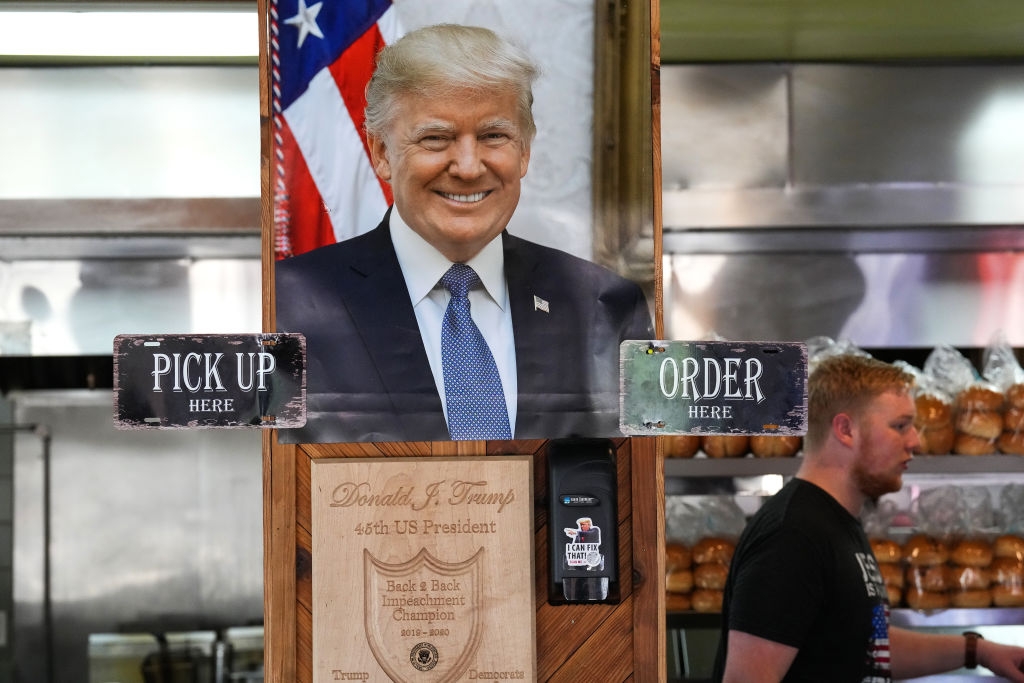
You can obviously serve a burger and fries without signaling a fondness for a certain party. But restaurants that cultivate relationships with the MAGA crowd tend to have certain cuisine choices in common. A prime example is Trump Burger, a short-lived fast casual chain in Texas with a menu starring Trump’s beloved well-done hamburgers and design choices themed after Trump’s campaign art (although these choices didn’t stop ICE from arresting Trump Burger’s founder).

Even high-end restaurants seeking to court MAGA guests seem to keep Trump’s very basic culinary preferences in mind when creating their menus. For instance, Butterworth’s, a D.C. bistro known as a see-and-be-seen destination for MAGA hopefuls and a favorite haunt of right-wing celebrities and administration officials like Steve Bannon and Marco Rubio, serves a brief menu with a “Cheeseburger Americain” featuring American cheese and special sauce at lunch. Butterworth’s menu otherwise leans in a posh French-American direction … but they still gotta have that burger.

If you’re hanging out at a sports bar or another venue with guest-facing TVs, determining what kind of environment you’re in could be as simple as looking up at the screen. “If they’re playing Fox News, that’s quite common among the places where [MAGA guests] tend to go,” said Wagner. The choice to screen an even more right-wing channel like OAN or Newsmax may be an even clearer sign.

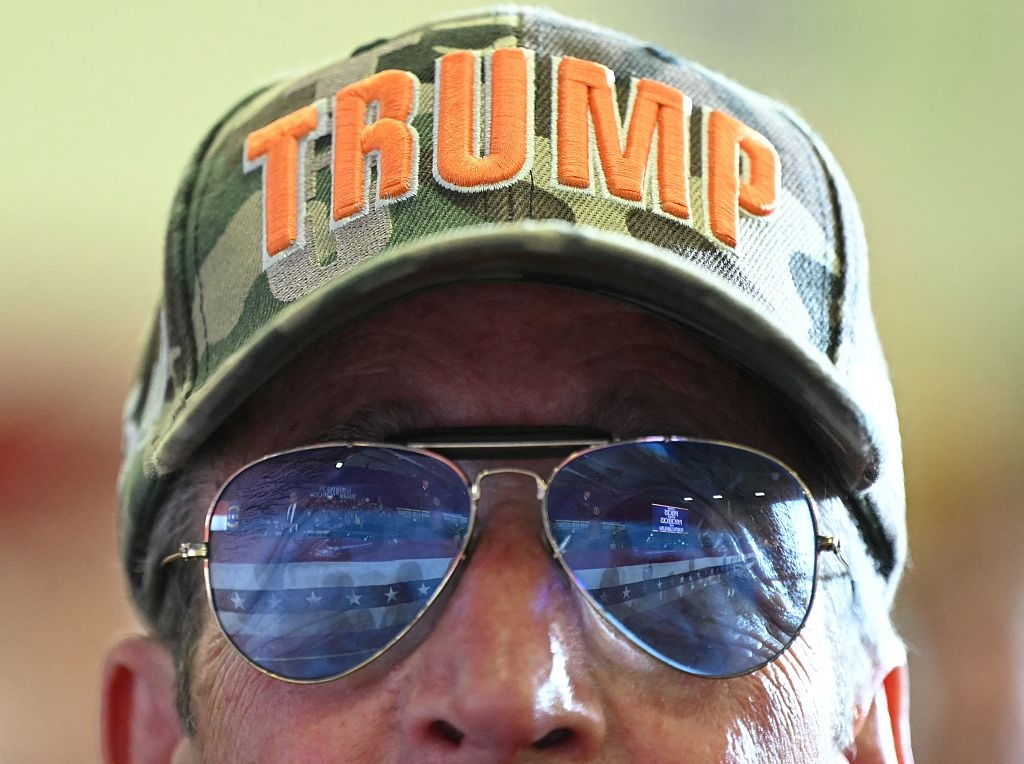
Another environmental factor to consider involves the folks sitting around you and the conversations you might overhear. “Who are the people there? Is it a younger crowd? Are they explicitly donning political clothing? Is it primarily older white males there, or is it a more diverse group of people?” are possible questions presented by Wagner that you might ask yourself. But again, it’s not always a clear indicator.

Most of the “evidence” we’ve considered thus far is pretty circumstantial and based on assumptions rather than clear facts. But the internet — and social media apps in particular — can provide more concrete proof of a restaurant owner’s political affiliations or sympathies.

According to O’Dell, some indicators to watch out for include “overt political social media behavior, such as publicly following or engaging with partisan political figures” or “online tone and captions that emphasize grievance, culture-war language, and ‘us vs. them’ framing.”

We’ve also recently seen actions promoted through social media that may suggest political views based on participation (or non-participation). News of the Jan. 31 “ICE Out” strikes to show support for the people of Minneapolis in the wake of Alex Pretti’s murder spread rapidly on social media because, as Rosenberg put it, “when individuals feel like they can collectively act to help move the dial closer to the politics that they feel are moral, then they will use social media to advance those campaigns.”

Many businesses chose to close their doors on Jan. 31 in solidarity with the protest, but even restaurants that didn’t close (many because they wanted to “support their staff who rely on their jobs and even losing a day of pay really mattered to those employees,” said Rosenberg) often posted on Instagram or X explaining their reasoning and emphasizing their support for Minneapolis and their disdain for ICE’s actions there.

But venues that made posts mocking the protests or even that declined to acknowledge them at all were, in the minds of many social media users in their communities and elsewhere, telling on themselves.

Ultimately, Rosenberg believes that the desire to figure out where a restaurant or bar “stands” on the political spectrum in 2026 has less to do with partisanship and more to do with shared values.

“We see this as sort of a moral reasoning,” Rosenberg said. Like it or not, we “vote” with our dollars, and using responsible methods to decide where to spend time and money (without jumping to snap conclusions) can help us make sense of a challenging economy and a deeply fraught political, social, and cultural environment.

This article originally appeared on HuffPost.