huffpost Press
ICE Detention Is ‘Hell On Earth.’ Trump Has A Plan To Keep Even More People Locked Up.
Images
1 / 7
2 / 7
3 / 7

4 / 7

5 / 7

6 / 7

7 / 7
After spending 20 years incarcerated in California state prisons, Gustavo Guevara Alarcon finally received parole. He had lined up housing and a job working with at-risk youth in the San Francisco Bay area.

“I had plans to return to society, be productive, just live the American dream,” he said in an interview in December.

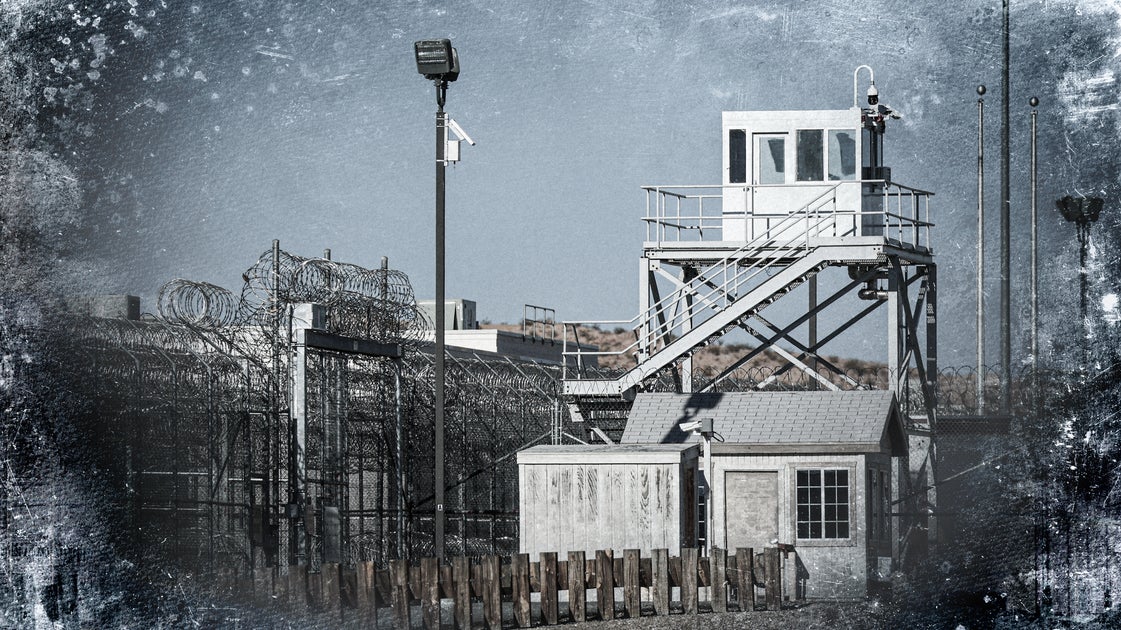
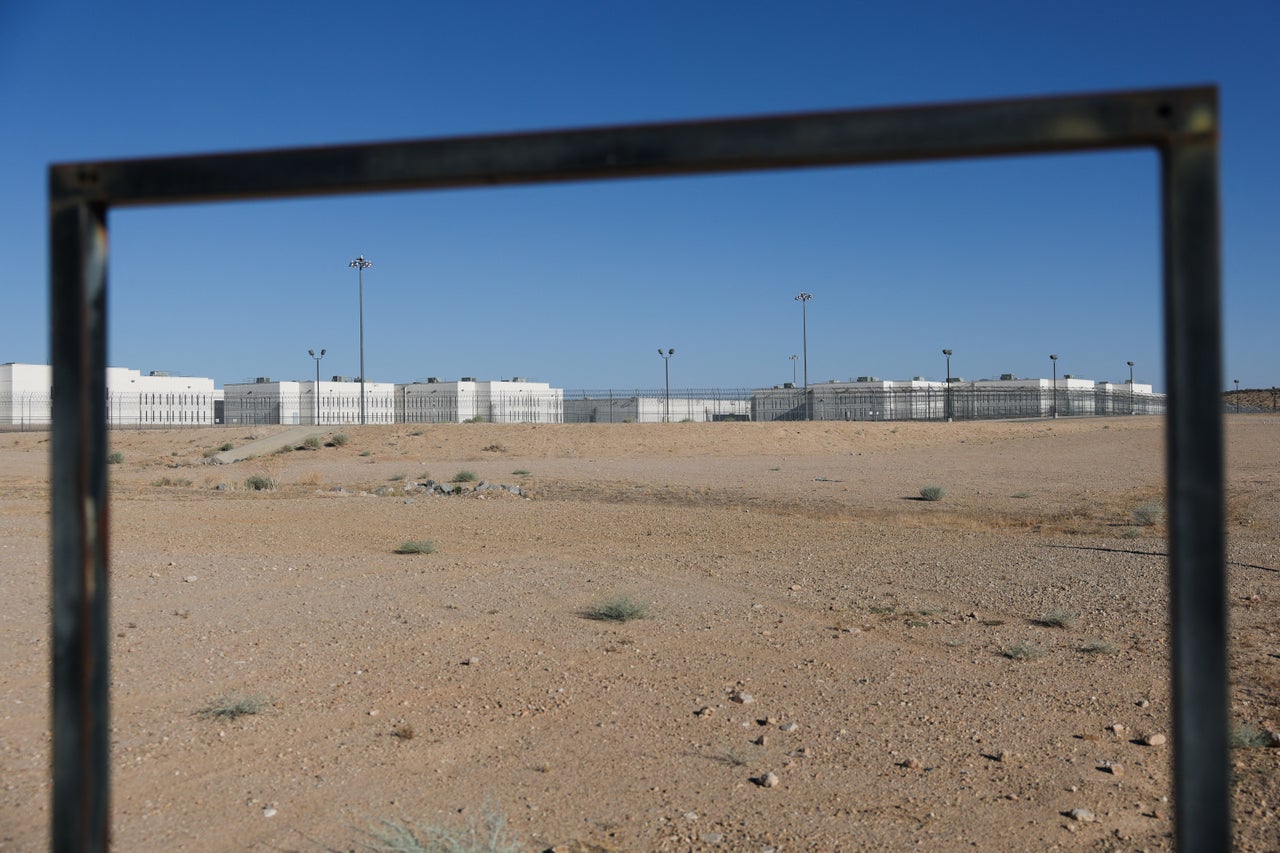
But as he was released on July 11, 2024, he found Immigration and Customs Enforcement agents waiting for him. He ended up at California City Detention Facility, the state’s largest immigration detention center, which operates out of a crumbling, shuttered state prison.

Guevara Alarcon was horrified to find that conditions in immigration detention were far worse than anything he had experienced before. In prison, he was able to hug his loved ones during visitation and had access to rehabilitative programming, a job that allowed him to spend time out of his cell, and free sweatshirts and sweatpants.

In immigration detention, he is separated from visitors by a wall of glass, and he has spent most of his time locked in his frigid cell, forced to buy expensive sweats from the commissary to try to stay warm. There isn’t enough food, detainees are forced to share nail clippers and the building has repeatedly flooded. Guevara Alarcon said he has been denied access to medical care. Those who protest their conditions of confinement are punished with pepper spray and prolonged solitary confinement, a recognized form of torture.

“Any [immigration] detention center in California is worse than being in [California Department of Corrections and Rehabilitation] custody, or being in prison,” Guevara Alarcon said, noting he spent four years at Pelican Bay State Prison, California’s infamous supermax.

“It was a violent environment, it was toxic, it was everything that you’ve heard. However, I had more freedom. I had more rights. I had more privileges while I was housed there.”

Immigration detention isn’t supposed to be punitive, and no one is sent to detention centers as punishment for committing a crime. Rather, people are supposedly held in these facilities to ensure they attend hearings in their civil legal cases to stay in the country — particularly if authorities claim they could threaten community safety — or, if they’ve exhausted their legal options, to wait to be deported.

But President Donald Trump has flipped this dynamic on its head, using the terrible conditions in immigration detention to pressure migrants to give up and leave the country on their own accord. Those who choose to stay risk becoming part of a rapidly increasing class of prisoners in administrative detention: not formally accused of any criminal offense but condemned to spend an indefinite time behind bars.

And the administration is rapidly scaling up its mass detention scheme, buying warehouses around the U.S. thanks to an influx of tens of billions of dollars from Congress. Hundreds of thousands more people are now at risk of being subjected to an inhumane — and sometimes deadly — system.

“The warehouses feel like a big shift, because it signals that this is an industrialization of this project of detention,” said Silky Shah, executive director of Detention Watch Network, a coalition group aimed at abolishing immigration detention.

California City is one of dozens of new immigration jails opened over the past year, powered by $45 billion in new funding from the 2025 One Big Beautiful Bill Act.

“By far the most significant thing that happened in the last year was the passage of the budget reconciliation bill in the summer,” Shah said.

“It basically took everything to another level. It’s the reason they’re moving on this warehouse plan right now. It’s the reason ICE has doubled in size in terms of the number of agents. Them having this slush fund for the next three years is pretty terrifying,” she added. “So much of this is about the building up of infrastructure, and they got the money to do that.”

As of January, the number of people in immigration detention was nearly double what it had been a year earlier, and was the highest it had been since ICE was created in 2003.

During the first nine months of Trump’s second term, at least 272,000 people were booked in ICE detention, according to Adam Sawyer, a data analyst at Relevant Research, the group behind Detention Reports, which breaks down government data on immigration detention facilities.

The administration has insisted that it is prioritizing the arrest of “worst of the worst” criminal offenders who happen to be undocumented people. (“Nationwide our law enforcement is targeting public safety threats,” an anonymous DHS spokesperson told HuffPost.) But in reality, ICE is stopping people on the street based on their accents and skin color, arresting people who show up to court dates, and raiding workplaces. Many of the ICE detainees who do have criminal records, like Guevara Alarcon, have already completed their prison sentences or been granted parole in recognition of their demonstrated rehabilitation.

The number of ICE immigration jails has more than doubled since Trump returned to the White House, Sawyer said. ICE owns some buildings, but the vast majority of immigration jails are privately owned and operated — and the new money from Congress has created a tremendous opportunity for private prison operators to profit even more than they already have.

Poor conditions and the potential for indefinite detention at the facilities have led an untold number of people to abandon their legal efforts to stay in the country and accept deportation. Leadership at those private firms has described a deportation machine running at full tilt.

GEO Group, the country’s largest private prison operator, has been “churning out deportations almost at the rate of approximately 100% of [the company’s detention facilities’] capacity per month,” executive chairman George Zoley said in an earnings call in November.

“We’ve never seen anything like this before,” Zoley said on the call. “Our existing facilities are full throttle.”

California City Detention Facility is run by CoreCivic, another private prison operator that contracts with ICE. Last year, ICE signed a $130 million per year contract with CoreCivic to detain up to 2,560 immigrants in a previously shuttered state prison in California City, a desolate city in the Mojave Desert.

Local officials had deemed the building unsafe for housing people, but CoreCivic pushed ahead with opening the facility.

In August, with CoreCivic’s business license application still pending because of a failed fire department inspection, ICE began sending detainees to California City Detention Center. (The license was not approved until Feb. 26.) The immigrants detained there in its early weeks of operation described it as a “torture chamber,” and “hell on earth.” Seven of them, including Guevara Alarcon, sued ICE in November, alleging they were being held in unconstitutionally inhumane conditions.

“The facility is decrepit. Sewage bubbles up from the shower drains, and insects crawl up and down the walls of the cells,” attorneys for the detained immigrants wrote in the complaint.

“The medical care system at California City is broken at every level,” the detainees alleged, describing inconsistent access to prescription medication, unanswered pleas for medical care, and denial of wheelchairs. Access to lawyers is heavily restricted, “leaving people bewildered and largely incommunicado.”

One detainee, Fernando Viera Reyes, suspected he had prostate cancer when he arrived at California City in August and immediately reported his symptoms and requested medical care. He was unable to get a biopsy until January — after a federal judge ordered the government to ensure he be seen by a urologist and receive a treatment plan. Although the biopsy results were available days later, Viera Reyes did not receive any information for more than a month. On Feb. 12, his fears were confirmed: The biopsy revealed he had high-grade prostate cancer. He has lost more than 25 pounds since arriving in California City and experiences increasing pain in his rectum, stomach, back and leg, he wrote in a Feb. 26 declaration.

“I am afraid that I will die at California City if I do not get the medical care that I need urgently,” he wrote. “I am scared that without the Court’s help, I won’t get any cancer treatment at all.”

CoreCivic public affairs manager Brian Todd said in an email that “any claim of a detainee being denied medical care is false” and that “all detainees have daily access to sign up for medical care and mental health services.” He also claimed that “no detainee has faced prolong [sic] lockdowns or been peppered [sic] sprayed for acts of disobedience.”

Guevara Alarcon said guards at California City treat immigration detainees worse than he was treated in state prison. In September, a detained person who had not received his diabetic medication passed out in his cell, Guevara Alarcon wrote in a declaration. Some of the other detainees who gathered to check on the man were sent to solitary confinement for not returning to their cells quickly enough, he wrote. Later that month, Guevara Alarcon was sent to solitary after asking permission to finish his shower before returning to his cell for a staff-mandated lockdown. He believes he was sent to solitary confinement as retaliation for speaking up about conditions at the facility and advocating for other detained people.

In October, Guevara Alarcon saw an officer pepper spray a non-English-speaking detainee who was walking away from the officer — something he never witnessed in state prison. He is aware of multiple suicide attempts at California City during its first several months of operation.

“It’s heartbreaking,” Guevara Alarcon said. “That just speaks to what people are being subjected to.”

“For myself and others that have spent prolonged periods of time in incarceration, we have an advantage in that we know how to do time. But I’ll be straight up with you. Not just me, but a lot of other guys that have done 10, 15, 20, even 30 years in prison are now at this facility — we have contemplated the possibility of just giving up and asking to be deported because of what we’re being subjected to.”

That is by design: Trump administration officials have consistently used the brutality of immigration detention to pressure people to give up their legal rights and “self-deport.” The administration has also changed longstanding policy so that all noncitizens who entered the United States without authorization are subject to mandatory detention without the opportunity to post bond if they are arrested by immigration agents — even if they have been living in the United States for years.

The Trump administration “asserts the authority and mandate to detain millions of noncitizens in the interior,” a judge on the Fifth Circuit Court of Appeals recently wrote in a dissent, when two other judges on a three-judge panel in that court allowed the policy to stand in Texas, Louisiana and Mississippi.

“Being in detention is a choice,” the DHS spokesperson told HuffPost. “We encourage all illegal aliens to take control of their departure with the CBP Home App.” They added: “The law requires those in the country illegally claiming asylum to be detained pending removal. You can look it up in the statute. The Trump administration is not going to ignore the rule of law or release unvetted illegal aliens into the country.”

Hundreds of district judges have rejected the mandatory detention policy.

“... a lot of other guys that have done 10, 15, 20, even 30 years in prison are now at this facility — we have contemplated the possibility of just giving up and asking to be deported because of what we’re being subjected to.”

Last month, the federal judge overseeing the California City lawsuit ordered ICE to improve access to medical care at California City Detention Facility while litigation progressed, and to work with a third-party monitor to ensure compliance. The judge also ordered ICE to provide detainees with confidential, in-person visits with their attorneys, to provide free temperature-appropriate clothing and blankets, and to let people outdoors for at least an hour a day.

It is not yet clear if ICE will comply. Lawyers for the detainees have already filed two notices of noncompliance with the judge’s December order to provide medical care for Viera Reyes.

“Even with that order, the government is still not able to comply and provide timely and adequate care to this one person. So that should give you a picture of what’s happening at the facility,” Carmen Iguina González, deputy director for immigration detention of the ACLU National Prison Project, told HuffPost.

“ICE has higher detention standards than most U.S. prisons that hold actual U.S. citizens,” the DHS spokesperson claimed, before insisting that immigration detainees are given medical care and other essentials.

The exploding number of people held in immigration custody means a far greater number of people are at risk of harm — or even death — in custody. More than 30 people died in ICE custody last year, making it the agency’s deadliest year since 2004. And ICE’s death rate has continued to climb this year.

Six people died in ICE custody in the first two weeks of January alone, including 55-year old Geraldo Lunas Campos, whose death was ruled a homicide by the El Paso medical examiner. ICE initially claimed that Lunas Campos died “after experiencing medical distress,” but the government’s story changed the following week after The Washington Post previewed the medical examiner’s ruling. The Post also quoted an eyewitness who said that he saw guards choking Lunas Campos and he heard the man repeatedly say, “No puedo respirar,” which translates to “I can’t breathe.” In response, then-DHS spokesperson Tricia McLaughlin claimed that Lunas Campos died after he “violently resisted” security staff as they attempted to stop him from taking his own life. Later, ICE said Lunas Campos “became unresponsive” after a “spontaneous use of force” by staff responding to his alleged attempted self-harm.

The DHS spokesperson told HuffPost, “Campos violently resisted the security staff and continued to attempt to take his life. During the ensuing struggle, Campos stopped breathing and lost consciousness.” They added: “This is still an active investigation, and more details are forthcoming.”

Lunas Campos died in Camp East Montana, which is in El Paso, and is the country’s largest detention facility. A tent encampment reminiscent of so-called “Alligator Alcatraz,” it was constructed in two months last year, and quickly racked up dozens of violations of federal standards for immigration detention.

Days after Lunas Campos’ death, a man named Victor Manuel Diaz died at the same facility. ICE claimed Manuel Diaz died of a “presumed suicide,” although the official cause of death was under investigation. Randall Kallinen, an attorney representing Manuel Diaz’s family, told HuffPost there is “a high level of suspicion” surrounding his death. Manuel Diaz’s family has commissioned an independent autopsy, he said.

Even with daily detention numbers at record highs, the administration is looking to detain even more people. Stephen Miller, Trump’s top immigration adviser, has long pined for “massive staging facilities” to facilitate deportations, but existing detention space is limited and divided among several mostly private operators. So the administration is pivoting to a new plan: detaining tens of thousands of people in warehouses.

In a document titled “ICE Detention Reengineering Initiative,” the agency calls for eight “large-scale” or “mega-center” detention centers capable of holding 7,000 to 10,000 detainees each, 16 “regional processing centers” that can hold 1,000 to 1,500 people, and the acquisition of 10 “turnkey” facilities — all “activated” by November. The Detention Reengineering Initiative refers to “standardized layouts” for the facilities that will provide “a unified, scalable solution” for immigration detention.

ICE has already purchased 10 such warehouses, a spokesperson confirmed to HuffPost, including in Romulus, Michigan; Roxbury, New Jersey; Social Circle, Georgia; Flowery Branch, Georgia; Tremont, Pennsylvania; Hamburg, Pennsylvania; Glendale, Arizona; El Paso, Texas; San Antonio, Texas; and Hagerstown, Maryland. Unlike the vast majority of current ICE detention centers, which are privately owned and operated, ICE owns this warehouse network, creating the potential to, as the American Immigration Council put it, “fundamentally reshape immigration detention more than at any point since detention exploded in the 1990s.”

The ICE spokesperson said the facilities would meet “our regular detention standards,” and added, “All sites undergo community impact studies and a rigorous due diligence process prior to purchase to ensure there is no detrimental impacts [sic] on local utilities or infrastructure.”

In practice, the shift could make it even easier for ICE to very quickly arrest people, transfer them to a local ICE-owned “processing site,” and then move them to a long-term “mega-center” jail. As the Reengineering Initiative document put it, the objective of the ICE-owned network is to “effectuate mass deportations” by building facilities to “handle the immediate surge capacity and sustained longterm operations.”

One warehouse ICE jail in Social Circle, Georgia, could detain anywhere from 7,500 to 10,000 people, despite serious concerns over local water and sewage treatment capacity, city officials said in a Facebook post last month.

A quiet change to ICE’s contracting procedure — specifically, routing tens of billions of dollars through a U.S. Navy program — has also made it quicker and easier to potentially supply the new facilities and staff them with private contractors. CNN first reported on the change in October, and others — particularly independent outlets such as Migrant Insider, Project Salt Box and The Handbasket — have reported further details.

The contracting change means warehouses could get up and running more quickly than before, and likely with even less transparency, according to the American Immigration Council.

Still, none of the warehouses are operational yet, and some proposed warehouse locations have been abandoned, seemingly because of local opposition and political pressure. Some potential detention center locations have even been hit with what appear to be sabotage attempts. Plans for possible detention centers in Kansas City, Oklahoma City, and Ashland, Virginia, for example, have seemingly been thwarted by local political opposition; a potential processing center in Arizona was set on fire, and plans for its future are still up in the air.

Statements announcing future immigration jails in Lebanon, Tennessee, and Chester, New York, were sent by “mistake,” DHS said last month, following local outcry over the facilities’ potential use by ICE. And as The New Republic noted, officials in several states are working to use procedural hurdles to prevent the construction of new immigration jails.

“The outlook is very grim when you think about detention, and about the scale of what’s happened,” Shah said. “But at the same time, the dissent, the resistance, and the strategy are growing, and we can really build on that.”

But despite the pushback, private prison operators still stand to profit from these jails, which will likely be staffed by contractors — a fact they’re using to assure investors.

During the February GEO Group call, one investor asked Zoley where things stood with the company’s efforts to manage the new warehouse facilities.

“We’re looking at some sites, predominantly in the Sunbelt states — predominantly in red states, to be very frank about it,” Zoley said. “We want to be careful as to where we extend our financial and operational commitments.”