yahoo Press
Viral Tesla FSD video shows why human drivers are a big problem
Images
1 / 5
2 / 5

3 / 5

4 / 5
5 / 5
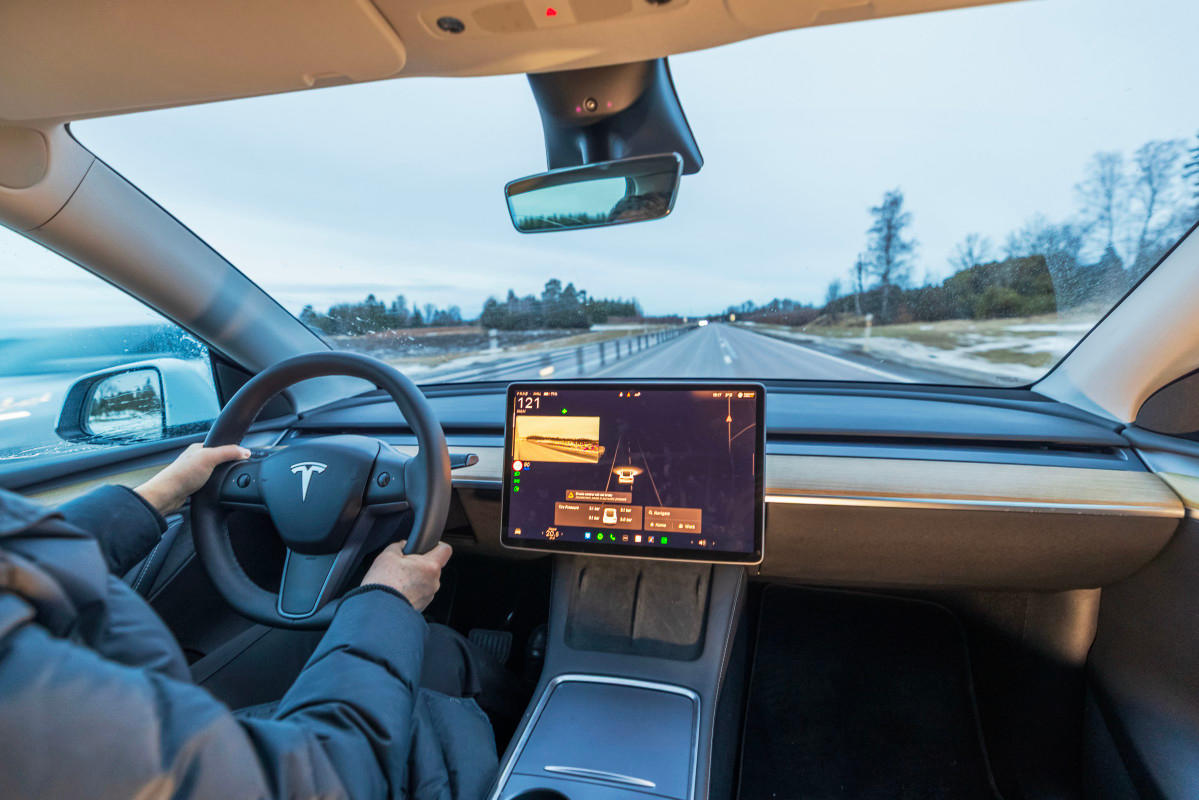
In 2024, Tesla finally admitted what most people who had used the technology already knew: Full Self-Driving was not the Level 4 autonomous driving experience that had been promised for years.

The company was forced to add "Supervised" to the official FSD name.

SAE International (formerly the Society of Automotive Engineers) considers advanced driver assistance systems, such as GM Super Cruise and Tesla Full Self-Driving, to be Level 2 automation, which requires the driver to remain engaged.

2025: 1.22 million

2024: 1.79 million

2023: 1.81 million

2022: 1.37 million

2021: 936K

2020: 499K

2019: 367K Source: Statista

Anything Level 3 and above is considered truly “autonomous.” This means no human intervention is required when the system activates features such as lane assist and automatic braking.

However, the system must be enabled by a present driver who must take over when asked to. J.D. Power lists Mercedes’ Drive Pilot as a Level 3 system.

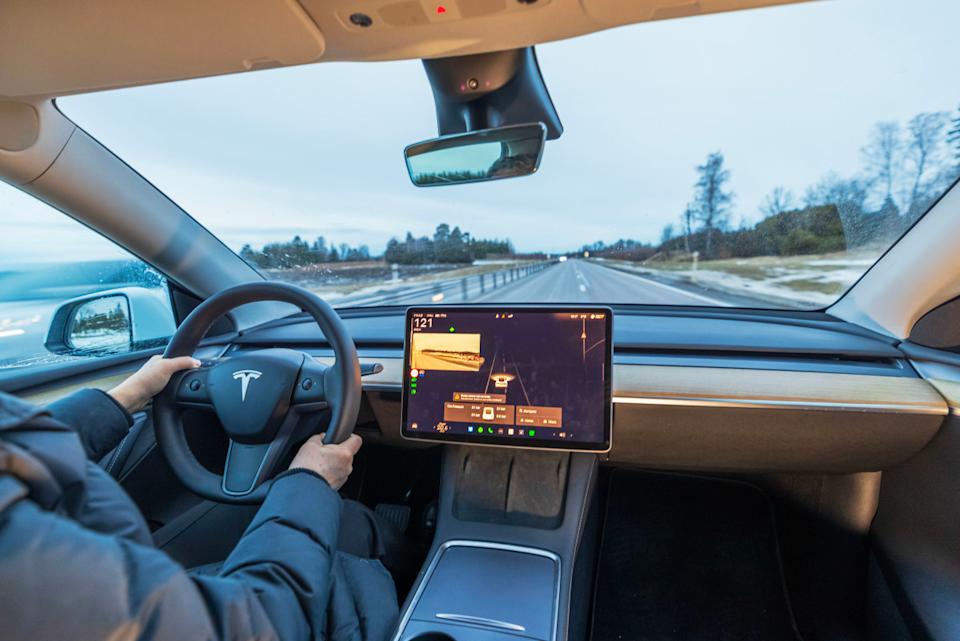
That's not what Tesla FSD (Supervised) is designed to do. While the term Full-Self Driving (Supervised) is an oxymoron, the Supervised part is incredibly important, because the vehicle needs its operators to pay attention to the road, even when the software is engaged.

The California Department of Motor Vehicles accused Tesla in July 2022 of making misleading statements about FSD and Autopilot. Back then, the California DMV threatened to pull Tesla’s vehicle dealer and manufacturing licenses, according to Bottini & Bottini.

In February, Tesla sued the California DMV to reverse its ruling that the company engaged in false advertising by using the terms "Autopilot" and "Full Self-Driving" to describe its tech.

A viral video from California over the weekend showed just how dangerous the misconception that FSD is actually full self-driving can be for people on the road.

Just because Tesla is fighting California over its claims regarding what the company's assisted-driving tech can actually accomplish doesn't mean CEO Elon Musk will stop making cars with this feature.

A March 3 post on X (formerly Twitter) shared an interview clip in which Musk claimed that Tesla drivers will be able to fall asleep and have their vehicles safely take them to their destinations.

Some X users have called out how dangerous Musk's exaggerations could be for current drivers, and a recent viral video shows the real-world consequences of his bluster.

Related: Tesla loses crucial Autopilot ruling that could cost hundreds of millions

A video from the 10 Freeway in Colton, Calif., appeared to show a Tesla driver asleep at the wheel while the vehicle raced down the highway.

The person who recorded the video around 3:30 p.m. on Sunday, March 1, told ABC7 that they immediately called the police about the driver, but the California Highway Patrol said it was unable to locate them.

Last August, a Florida jury ruled that the family of Naibel Benavides and crash survivor Dillon Angulo were entitled to the nearly quarter-billion-dollar award after driver George McGee crashed his Tesla into a vehicle they were standing outside of.

McGee testified that he had Autopilot engaged when he killed the 22-year-old Benavides in Key Largo in 2019, but that his eyes were also off the road while he looked for the cellphone he had dropped.

Related: New Tesla vision sounds almost too good to be true

“Tesla in the showroom tells you that they’ve invented the greatest full self-driving car the world has ever seen,” Brett Schrieber, the plaintiffs’ lawsuit litigator, said at the time.

“Mr. Musk has been peddling to consumers and investors for more than a decade that the cars are fully self-driving and that the hardware is capable of full autonomy. And those statements were as untrue the day he said them as they remain untrue today.”

U.S. District Judge Beth Bloom affirmed the jury’s initial verdict Feb. 20, saying that the evidence at trial “more than supports” the judgment and that Tesla raised no new arguments to warrant reconsideration.

On Dec. 16, 2025, Administrative Law Judge Juliet E. Cox for the California Office of Administrative Hearings had ruled that Tesla was deceptive in its marketing of Autopilot and Full-Self Driving, ruling in favor of the California Department of Motor Vehicles, which brought a complaint against the company in 2022.

The judge ordered that Tesla face a 30-day suspension of its selling and manufacturing licenses in the state.

However, California DMV Director Steve Gordon stated at the time that his agency had adopted the judge’s order with a modified penalty.

Related: Tesla proves it truly is a tech (not car) company with latest move

This story was originally published by TheStreet on Mar 4, 2026, where it first appeared in the Automotive section. Add TheStreet as a Preferred Source by clicking here.