yahoo Press
Oil prices steady after President Trump offers tankers protection through Strait of Hormuz
Images
1 / 4

2 / 4

3 / 4

4 / 4
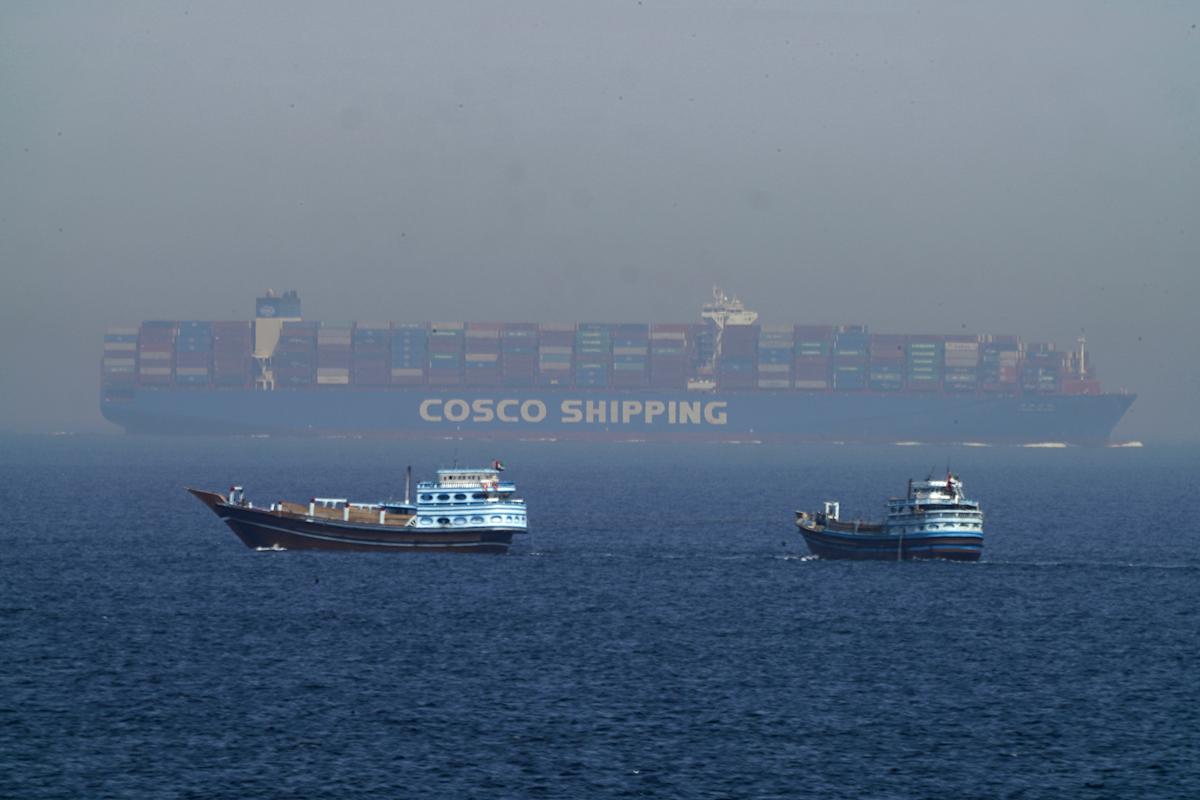
Fears of a full-blown shipping crisis were temporarily averted after President Trump said that the United States may provide security escorts and insurance guarantees to oil tankers and other vessels attempting to cross the vital Strait of Hormuz.

The assurances helped ease surging oil prices as transit through the Strait of Hormuz, a critical global shipping chokepoint that sees roughly one-fifth of the world's oil and LNG supplies pass through its waters every day, essentially dropped to zero, according to data from Kpler.

Shippers had stopped sending tankers through the area due to fears of being attacked and because war risk insurance had become increasingly difficult to obtain.

"Effective IMMEDIATELY, I have ordered the United States Development Finance Corporation (DFC) to provide, at a very reasonable price, political risk insurance and guarantees for the Financial Security of ALL Maritime Trade, especially Energy, traveling through the Gulf," the president posted to Truth Social on Tuesday afternoon, adding that insurance would be available to all shipping lines.

"If necessary, the United States Navy will begin escorting tankers through the Strait of Hormuz, as soon as possible," Trump wrote.

Futures on Brent crude (BZ=F), the international pricing benchmark, continued to rise, though they eased to $82 per barrel after reaching $84 on Tuesday. Futures for West Texas Intermediate crude (CL=F), the US benchmark, fell to $74 from $77. Meanwhile, stock futures rose on Wednesday.

Read more: How to protect your money during turmoil, stock market volatility

Strategists said that while the White House's move offered markets some temporary relief and could stabilize crude oil prices, it may not be a long-term solution.

“It helps obviously pare a lot of the losses … [but] I don’t know how viable that solution is long-term,” Baird Investment Strategist Ross Mayfield told Yahoo Finance.

As the conflict broke out on Saturday, major shipping lines began halting their ships from transiting the Strait, leaving millions of barrels of crude stranded on either side and unable to reach global buyers. On Monday evening, Iran's Revolutionary Guard Corps said the Strait was completely closed and that they would strike any ship that attempted transit.

The cessation of oil and LNG flows, along with the violence against ships in the area, has sent oil (BZ=F, CL=F) and gas prices soaring in recent days.

Insurance analysts who spoke with Yahoo Finance said major insurance companies are reworking policies as threats continue to build, making coverage conditional, imposing routing restrictions on contracts, requiring voyage approval, and refusing to give quotes for specific routes and situations.

As the conflict progressed, some of the world's major insurance clubs started refusing to offer war risk coverage to any vessel with plans to cross the strait. The result is that owners are "choosing not to transit rather than accept terms that make voyage economics unworkable," the insurance analysts said.

While the move by the White House represents a major intervention, the announcement “doesn’t fully ‘solve’ the war-risk,” Arsenio Longo, the founder of maritime intelligence platform HUAX, told Yahoo Finance. “The real question is whether that becomes executable cover at voyage speed.”

The market will look for three things, Longo said: how quickly these guarantees are available, what the policies actually look like, and whether escorts trigger escalatory attacks from the Iranian regime.

“Political risk” and “financial security guarantees” may not map directly to hull damage, crew deaths, or other potential threats, Longo told Yahoo Finance, and vessel owners will want clarity on what happens if their tanker is attacked. Escorts may coax some companies into sending their ships through the strait, but such an escort would “make every transit a high-visibility event, and potentially an escalation trigger.”

“Yes, this likely brings some capacity back, but until [Development Finance Corporation] terms are operationally clear and the first escorted transit happens without incident, serious operators will still ‘wait and watch,’” Longo said.

Even if the White House’s proposal is implemented quickly and comprehensively, other factors may negate much of its positive market effects.

The war's duration and sustained higher prices for oil are the main market risk factors right now, regardless of the White House’s guarantees, said Horizon Investments chief investment officer Scott Ladner, adding that the “conflict has to end for this to be really over.”

For example, if the US were to put American soldiers on the ground in Iran, a strategist told Yahoo Finance, “that's a whole different story” and could lead to a much deeper sell-off in US equity markets, warning that investors would likely take “more money out of the market, bring it to the sidelines.”

But the market liked the early symbol.

“Even if this is not a long-term solution," Baird’s Mayfield noted, "it’s reassuring the markets that they [the administration] are paying attention to this sort of thing [and] thinking through these solutions.”

—

Brooke DiPalma is a reporter for Yahoo Finance. Follow her on X at @BrookeDiPalma or email her at bdipalma@yahoofinance.com.

Jake Conley is a breaking news reporter covering US equities for Yahoo Finance. Follow him on X at @byjakeconley or email him at jake.conley@yahooinc.com.