Press
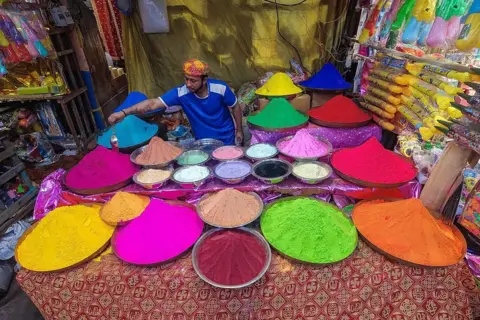
Celebrating Holi - the Hindu festival brings its array of colours to India and elsewhere
Images
1 / 20

2 / 20
3 / 20
4 / 20
5 / 20
6 / 20
7 / 20
8 / 20
9 / 20
10 / 20

11 / 20
12 / 20
13 / 20
14 / 20
15 / 20
16 / 20
17 / 20
18 / 20
19 / 20
20 / 20
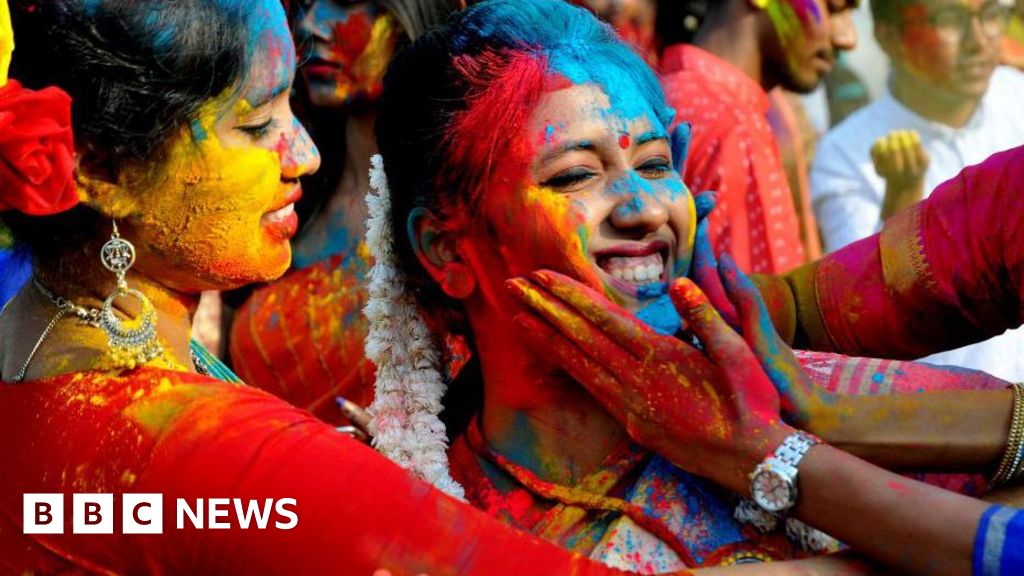
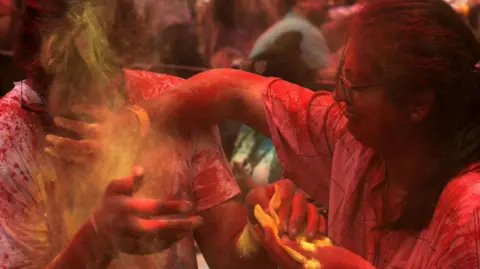
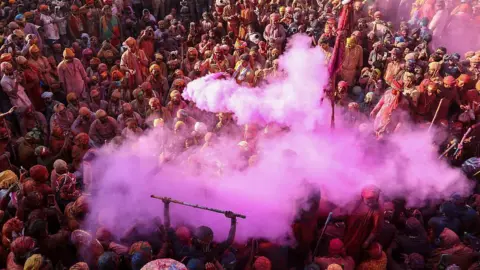
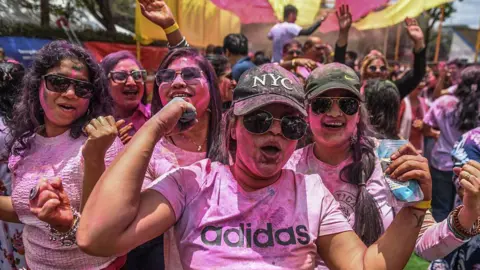
Millions of people are celebrating Holi, the festival of colours, in India and across the world.

The spring festival, which celebrates the victory of good over evil, also marks the end of winter.

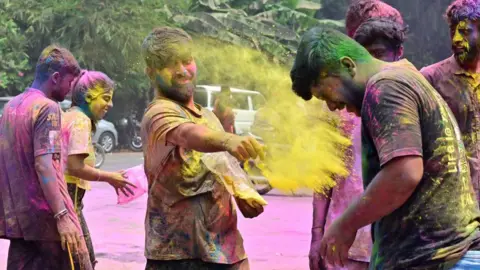
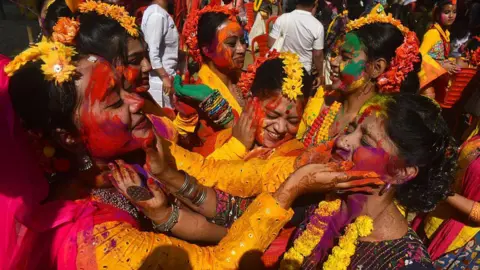
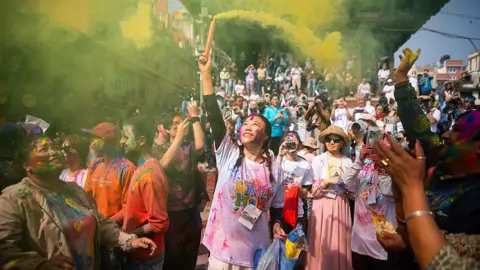
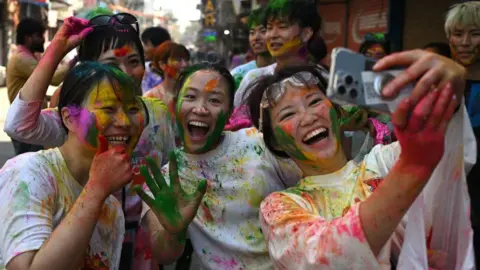
People offer prayers, smear bright colours on family and friends and eat traditional food and sweets to celebrate. They also gather on the streets and throw colours on each other.

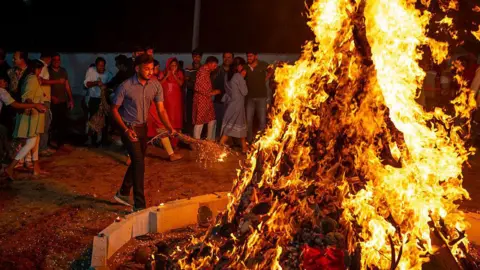
Holi is based on the Hindu legend of Holika, a female demon, who tries to kill her nephew Prahlad because he worships the Hindu god Vishnu. But Prahlad miraculously survives the burning fire even as Holika is consumed by the flames.

People light bonfires the evening before Holi in the belief this will destroy the bad so that good can triumph.

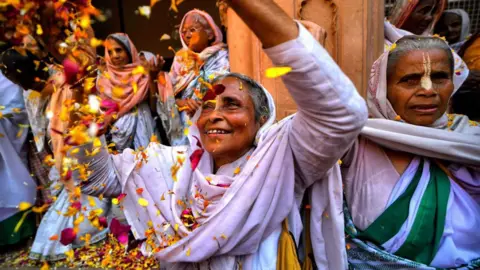
Many devotees also believe the festival honours the divine love of Hindu deities Radha and Krishna. Colourful celebrations are held in the northern Indian cities of Mathura and Vrindavan, which are associated with Krishna's birth and childhood.

Music plays a big role as people dance to traditional and film songs celebrating Holi as they throw colours.

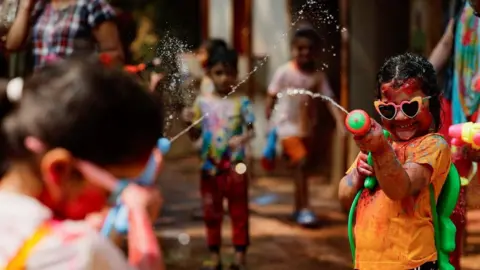
Children use toy pistols and dispensers to squirt coloured water at their friends.

A traditional beverage called thandai, a milk-based drink sweetened with dry fruits, is enjoyed on the day.

Holi is also celebrated with enthusiasm in Nepal, which has a majority Hindu population.

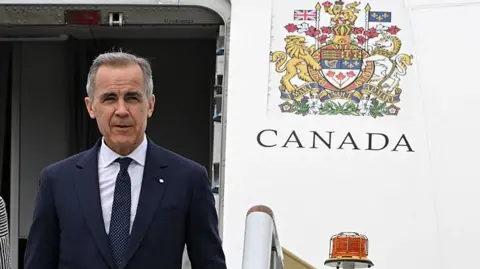
The prime minister said Canada has long supported "neutralising this grave global threat" that Iran poses, but called for a de-escalation of hostilities.

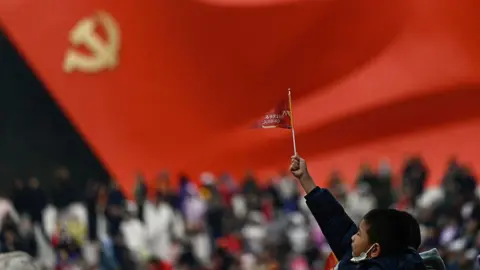
The carefully choreographed annual meetings signal the priorities of the world's second-largest economy.

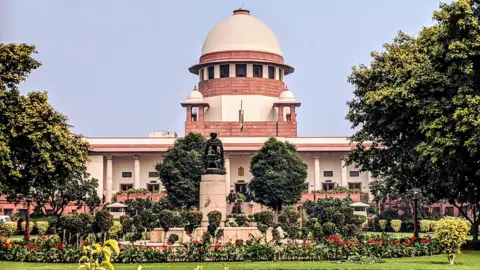
In several recent instances, AI has disrupted court proceedings in India and elsewhere.

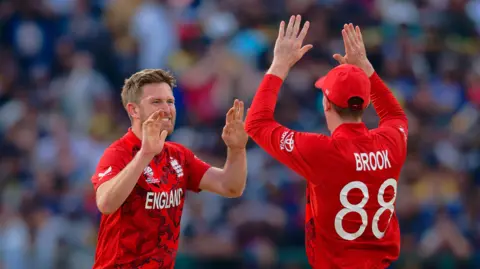
Former England captain Michael Vaughan says England have a better spin attack than India and he has a "funny feeling" Harry Brook's side will win Thursday's T20 World Cup semi-final.

Authorities gave no explanation for the ousters but they come as purges of military top brass pick up pace.