yahoo Press
Oil surges to seven month high as Iran war hits supply
Images
1 / 6
2 / 6

3 / 6

4 / 6
5 / 6

6 / 6
Oil prices have surged as Donald Trump’s war with Iran disrupts supply from the Middle East.

Brent crude jumped 13pc to around $82 a barrel when oil markets opened on Sunday night, as airstrikes on Iran continued for a second day. The jump took prices to a seven month high.

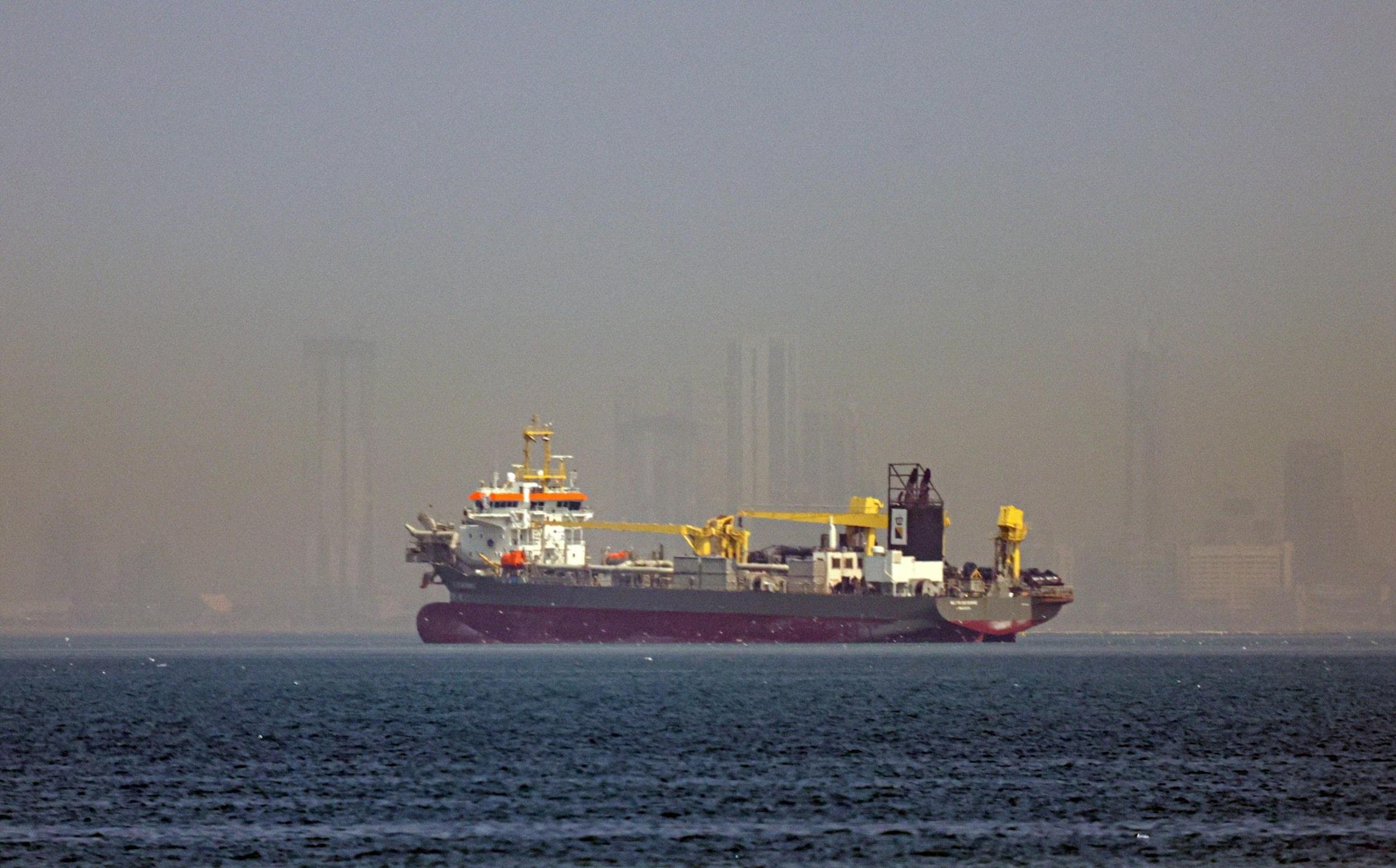
Investors are concerned about disruption from one of the world’s most crucial oil producing regions. Missile and drone attacks hit fuel ships in the Middle East on Sunday, while more than a hundred other ships were effectively stopped by the troubles.

President Trump has suggested problems could drag on for at least a month, saying he expected war with Iran to last for four weeks.

US stock futures also fell, pointing to a drop of around 1pc for major indexes on Wall Street when trading begins on Monday.

Oil-producing countries have pledged to pump more crude into the market as they aim to take advantage of a price surge triggered by the crisis in Iran.

The Organisation of Petroleum Exporting Countries (Opec) said on Sunday it would jack up output by 206,000 barrels a day, almost two-thirds more than the expected increase.

The cartel said the move would “provide an opportunity for the participating countries to accelerate their compensation”.

Opec, a producer cartel that includes Saudi Arabia, Iraq, Kuwait and the United Arab Emirates (UAE), took action amid fears that oil prices could ultimately race towards $100 a barrel, up from $73 on Friday.

If the price spirals towards $100, the ructions would be on par with the chaotic early-pandemic trading of April 2020.

Traders will be gauging the prospects for continued oil shipments continuing through the Strait of Hormuz, a crucial shipping lane where roughly a fifth of oil and gas destined for the world market passes through. If the Strait closes, the price will likely surge.

Tankers are still moving through the Strait but in much smaller numbers, with 150 vessels anchored just outside its mouth. Three vessels have already been hit off the coast of Oman, although the circumstances remain unclear.

Iran has not formally announced a closure of the Strait, and Donald Trump claimed on Sunday the US had sunk nine Iranian naval vessels raising questions about Tehran’s ability to enforce any blockade. But the uncertainty and threat is still expected to bring shipping in the area to a halt.

Risks were heightened after the Yemen-based Houthi militia, which is backed by Tehran, said it would restart attacks on shipping in the Red Sea corridor.

Amid fears of higher petrol prices in Britain, Howard Cox of campaign group FairFuelUK urged Rachel Reeves to freeze fuel duty for the remainder of parliament in Tuesday’s Spring Statement.

John Healey, the Defence Secretary, said the Chancellor was “watching very closely, as you’d expect, any movement in the oil price” but downplayed the prospect of immediate action. He told Sky News: “We’re less than 48 hours into this current conflict.”

Luke Bosdet, spokesman for the AA, said: “The magnitude and duration of pump price increases depends on how long the conflict goes on. Oil has been increasing in recent weeks with fears that there might be strikes. We will see how much of any increase has already been factored in.”

Investors are braced for volatility in oil prices and broader financial markets on Monday.

“There will be a significant reaction when markets open. We could see huge disruption to energy markets, as the conflict may widen and escalate further,” said Neil Wilson, a Saxo Bank strategist.

As well as oil, gold prices are expected to jump while futures suggest the FTSE 100 will fall by around half a percent.

Saudi Arabia’s benchmark Tadawul stock index fell 2.2pc on trading on Sunday. The UAE ordered its exchange to close on Monday and Tuesday as it continues to face the threat of missiles from Iran.

While Opec’s promise of more supply should theoretically temper surging oil prices, tankers from countries such as Saudi Arabia and the UAE must sail through the Strait – meaning the certainty of supply is in doubt.

Commercial shipping companies have already started suspending ship movements not only through Hormuz but also across the Middle East.

Global shipping giant Hapag-Lloyd said its suspension of shipping through Hormuz, announced over the weekend, would continue “until further notice” and warned of “delays, rerouting and schedule adjustments”.

France’s CMA CGM has suspended passage through the Suez Canal, and Japanese giant Nippon Yusen has reportedly told its fleet to avoid Hormuz.

Maersk has also suspended shipments through Hormuz, and is redirecting container traffic from the Middle East to the longer route around Africa. MSC has suspended all bookings for worldwide cargo to the Middle East.

Analysts said the Strait of Hormuz’s potential closure could push prices towards $100 a barrel.

“It’s an extremely fluid situation but as things stand right now, we believe we will probably test that level on Monday. How long the spike lasts would depend on how the situation unfolds,” Amarpreet Singh, a Barclays analyst, said in a note.

Opec had been holding output back, with many oil-exporting countries worried that a potential supply glut would push prices down to uneconomic levels for their producers.

But the price has instead climbed almost 20pc this year, as Mr Trump moved warships to the region and buyers and traders began pricing in the risk of a US-Israeli strike on Iran.

Saudi Arabia has spare production capacity of 1.8 million barrels a day, and the UAE may also be able to loosen the spigot by up to one million barrels a day. Most other producers might struggle.

Richard Bronze, of market analysis firm Energy Aspects, said: “We think the group can only manage about half the announced increase given many countries lack spare capacity. Saudi Arabia will account for most of this volume.”

Mr Singh said the US could potentially ease the price squeeze by releasing stocks from its strategic petroleum reserve. However, a US energy official told the Financial Times at the weekend there had been “no discussions at all” about tapping the reserve.

An oil price of $100 a barrel, if sustained, would prompt faster inflation and prevent central banks from any further interest-rate cuts. It would drive up costs for businesses, potentially putting a brake on economic growth.

The crisis has already fuelled chaos in the global aviation industry, which would suffer further as a result of higher oil prices.

Airspace over the Middle East remained closed and flight cancellations continued to disrupt some of the world’s busiest air transport hubs.

Emirates, Etihad and Qatar Airways are yet to resume flights, leaving tens of thousands of passengers stranded at three of the world’s busiest airports: Dubai, Abu Dhabi and Doha.

Many other airlines are caught up in the chaos, which has left passengers and crew stranded across the network.

None of the airlines gave any indication as to when flights would resume, saying they would issue fresh updates early on Monday UK time.

Try full access to The Telegraph free today. Unlock their award-winning website and essential news app, plus useful tools and expert guides for your money, health and holidays.